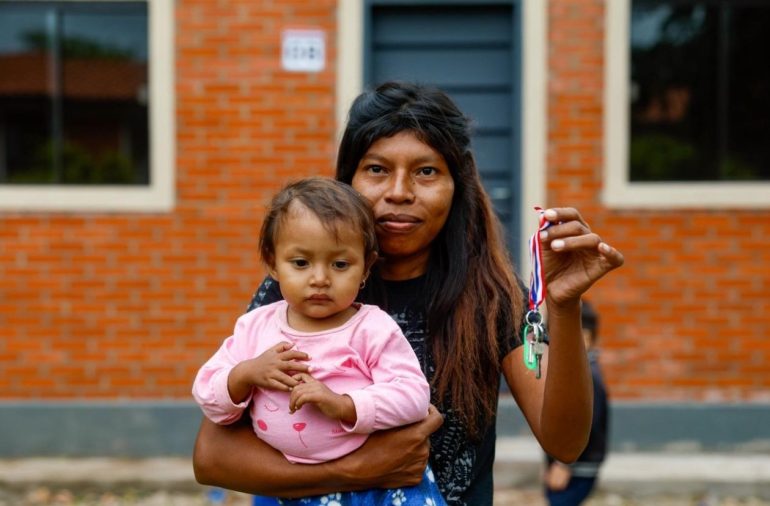

Paraguay’s indigenous population officially numbers 140,049 people, according to data released by the National Institute of Statistics (INE). The figures, published to mark the International Day of the World’s Indigenous Peoples on 9 August, 2026, are drawn from the IV National Population and Housing Census for Indigenous Peoples 2022 and the Community Census 2022, INE states.
The report confirms the presence of 19 distinct indigenous peoples within the country. These groups are further classified into five major linguistic families. The data highlights the diversity among the nation’s original inhabitants, who reside in communities spread across both major regions of Paraguay.
Paraguay’s indigenous population and distribution
The census results show that the Guaraní linguistic family is the most numerous, comprising 76,506 individuals. Among the 19 recognised peoples, the largest by population are the Mbya Guaraní, Ava Guaraní, Nivaclé, and Paĩ Tavyterã. These groups maintain distinct cultural practices and languages, contributing to the nation’s diverse heritage.
A total of 557 indigenous communities, villages, or neighbourhoods were recorded nationwide. Of these, 428 are located in the Eastern Region, while 129 are in the Western Region, also known as the Chaco. The department of Canindeyú has the highest concentration of communities in the East, with 119. In the West, the department of Boquerón hosts the largest number, with 54 communities.
Legal status and land ownership
A significant majority of the communities have formal legal recognition. According to the census, 506 communities, which equates to 90.8%, possess legal personality. This status is crucial for negotiating with state bodies and non-governmental organisations.
Regarding land tenure, the data indicates that 83.5% of these communities have access to land. Within this group, a substantial portion, nearly 87%, hold official property titles. Despite these figures, land rights and access to natural resources remain a critical issue for many indigenous groups, whose traditional livelihoods are often dependent on their ancestral territories.
Access to essential services
The report also sheds light on the provision of health and education services within these communities. In terms of healthcare, 33.8% of communities have a dedicated health clinic on-site. A much larger number, 77.1%, receive services from a Family Health Unit, with 78.1% of these units providing medication to residents.
Furthermore, 39% of communities benefit from the presence of indigenous health promoters, who act as a vital link between traditional practices and the national health system. Additionally, 23.2% have community health agents. In education, 72.2% of indigenous communities, villages, or neighbourhoods have a school facility.
Traditional economic activities
Traditional practices remain a cornerstone of indigenous life and economy. The census found that 89.2% of communities engage in hunting or fishing, while 83.8% participate in the gathering of wild foods. These activities form the primary sources of sustenance for several groups, including the Ache, Sanapaná, and Tomáraho peoples.
Craftsmanship also plays a vital economic role, with 66.9% of communities involved in producing artisan goods. For peoples such as the Ybytoso, Maká, Qom, and Guaná, the creation and sale of crafts represent their main economic activity. These traditional skills not only provide income but are also integral to cultural identity and expression.
Also read: International Day Of Indigenous Women: Paraguay’s Celebration Of Heritage And Resilience.