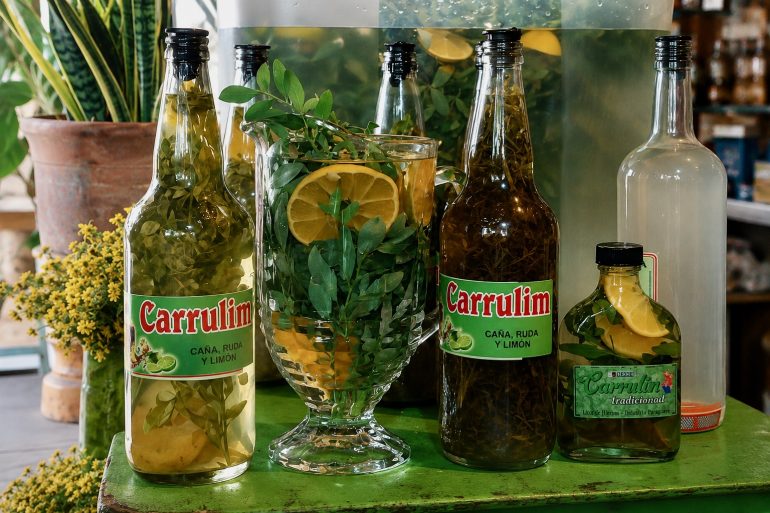

As the second half of the year begins, the people in Paraguay revive one tradition on almost every corner. On 1 August, thousands of people raise a shot of Carrulim, the country’s iconic herbal drink, believed to bring good fortune and protect against illness during the coldest and driest part of the year.
The name carrulim comes from its three traditional ingredients: caña (sugarcane spirit), rue (ruda macho) and lemon. Tradition encourages people to drink carrulim first thing in the morning on an empty stomach. Seven sips are believed to bring protection and strength for the months ahead.
The tradition
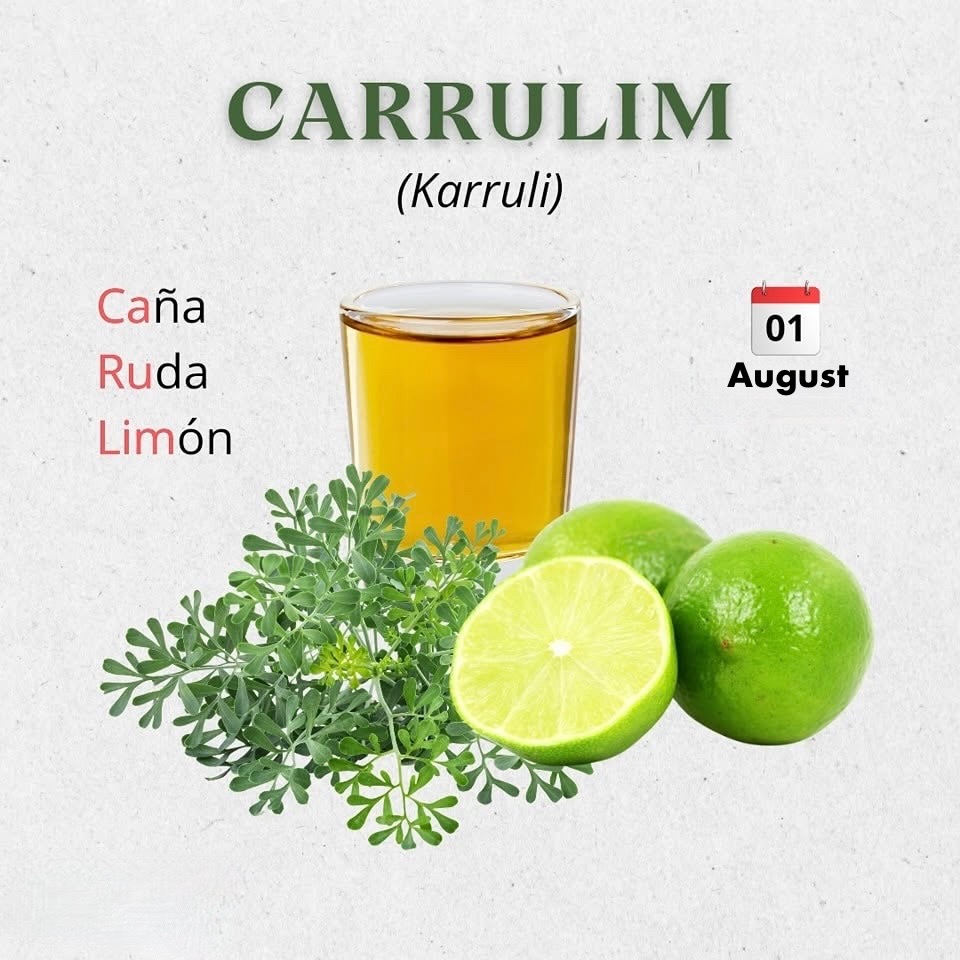
The custom is tied to an old Guaraní saying: “Agosto, vaka piru ha tuja rerahaha” (“August takes away the skinny cows and the elderly”), echoing the belief that the month bring hardship, illness and scarcity. Before modern medicine, medicinal plants were Paraguay’s first line of defence against seasonal ailments. Many people still rely on them today. Over time, these remedies merged with sugarcane spirits introduced during the colonial period.
Although there is no scientific evidence that carrulim prevents disease or misfortune, its cultural significance has only grown. In 2019, the tradition was officially recognised as part of Paraguay’s Intangible Cultural Heritage, honouring not only the drink itself but also the traditional knowledge surrounding medicinal plants that has been passed down through generations.
Not just a drink
For decades, carrulim belonged to family kitchens and neighbourhood herbalists. Paseo de los Yuyos, inside Asunción’s Municipal Market No. 4, remains one of its best-known homes. Vendors there spend weeks preparing the annual batches. Today, however, the ritual extends well beyond traditional markets.
Major distilleries and artisan producers now release bottled versions every year. Supermarkets, liquor shops and convenience stores across Paraguay now stock them. What was once almost exclusively a homemade remedy has become a seasonal product that still retains its cultural value while reaching a much wider audience.
New flavours, same tradition
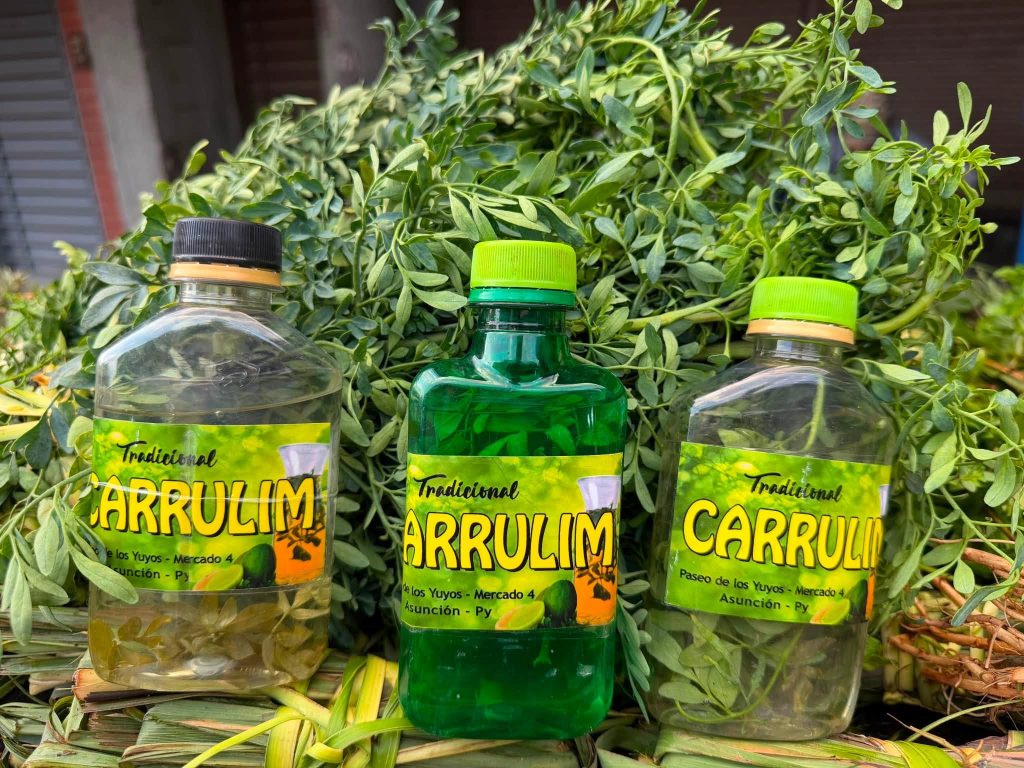
While the classic recipe remains the benchmark, recent years have brought a wave of creative reinterpretations. Among the most popular are Levantol, which combines the traditional blend with catuaba leaves and honey, and Antipirevai, featuring orange peel and native guaviramí for a sweeter, more aromatic flavour.
Other producers have experimented even further, introducing fruit-infused versions with blueberries, red berries and other seasonal ingredients. These modern variations are particularly popular with younger consumers and those who find the original recipe too strong, proving that even one of Paraguay’s oldest traditions can evolve with changing tastes.
The recipe may have changed, but the ritual has not. One small glass on 1 August still represents hope, protection and the promise of health and prosperity. Whether you are a traditionalist or tempted by a berry-infused twist, one question remains: which carrulim will you choose to send bad luck packing and kick off August on the right foot?