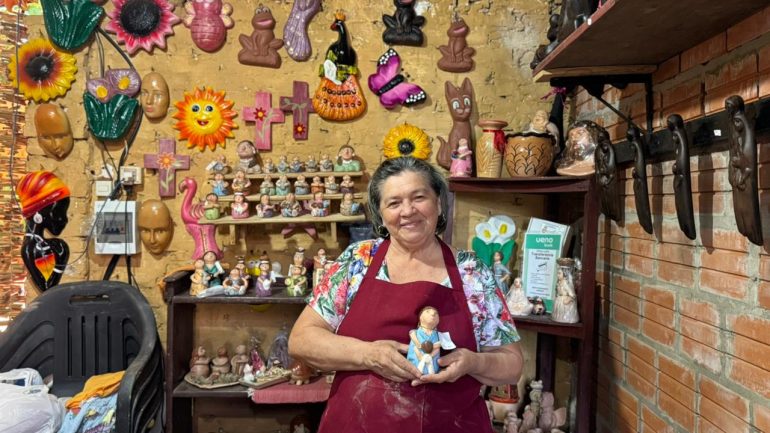

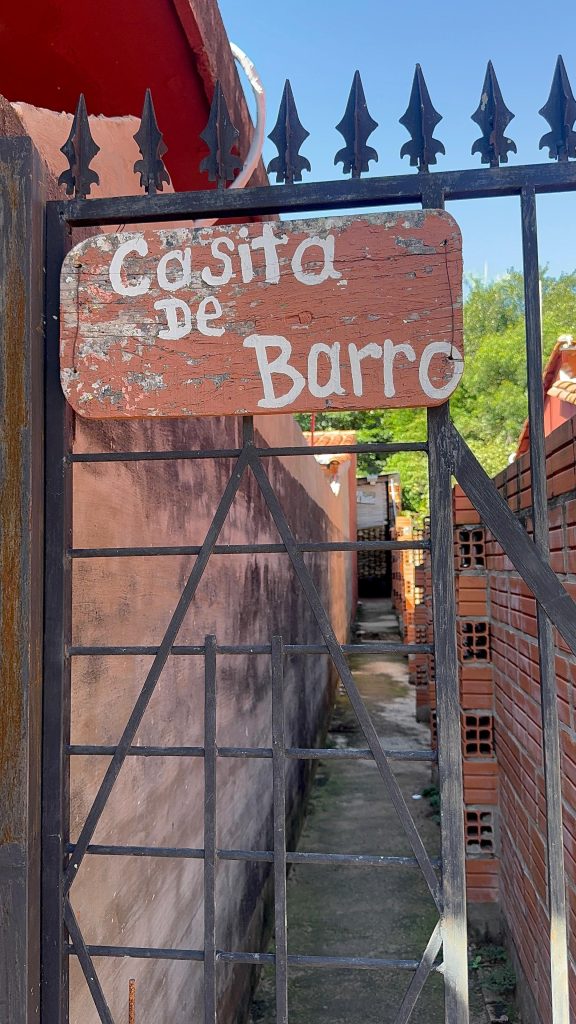
One hour from Asunción, Areguá continues to establish itself as one of the main cultural and artisanal centres in Paraguay. Known for its pottery tradition, natural surroundings and calm rhythm, the town has also become a place where art is part of everyday life. In this context, La Casita de Barro (The Little Clay House) is a small ceramics workshop where creativity, tradition and learning coexist in a close and familiar environment.
Behind the space is Agustina Rejala, a local artisan from Areguá who has dedicated much of her life to ceramics. The Asunción Times looked her up.
A life connected to clay
In Paraguay, traditional painting is closely linked to craftsmanship and everyday life. Painting is often applied to ceramic pieces and rooted in local identity. This distinguishes it from more academic approaches found in other contexts.
“My first connection to art was through traditional painting, before I moved into clay modelling,” Agustina starts. “At first, I was drawn to the colours and the details, but with clay I found something different, because you create directly with your hands.”
Learning from tradition
In 2008, with the creation of the first hand-modelling school in Areguá, the Association of Areguá Artisans (Triple A), she found a space that would shape her path. “I had the opportunity to learn from local master artisans. That is where I learned the traditional hand-modelling technique, working only with my hands, without tools.”
This technique forms part of a long-standing tradition passed down through generations, where manual work remains central. Over time, she became more involved in the organisation. “Today I am a full member of the Triple A board and also a certified teacher at the Paraguayan Institute of Handicrafts.”
Agustina Rejala and the beginning of a personal space
La Casita de Barro was established five years ago. Before opening her own space, Agustina Rejala taught within the association, but with the arrival of a new generation of potters, she decided to continue her work from home.
“It was a challenge. I was already over 60, and I wanted to work at my own pace,” she explains.
The response was immediate. With the support of a promotion by the Paraguayan Institute of Handicrafts, ten students arrived on the first day. “For me, that was a very positive sign. It gave me the confidence to continue.”
Since then, the workshop has grown in an organic and steady way.
Growth rooted in community
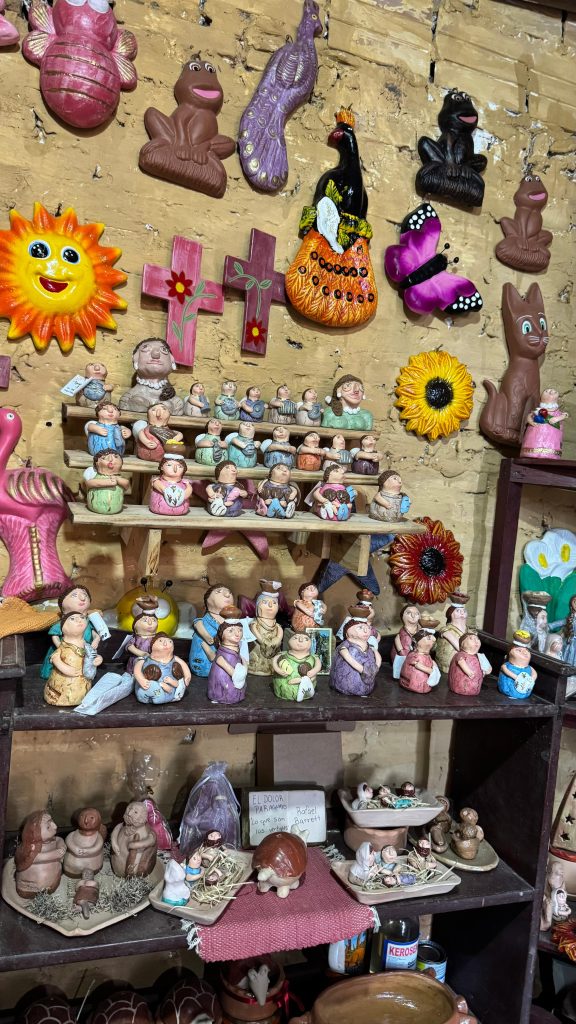
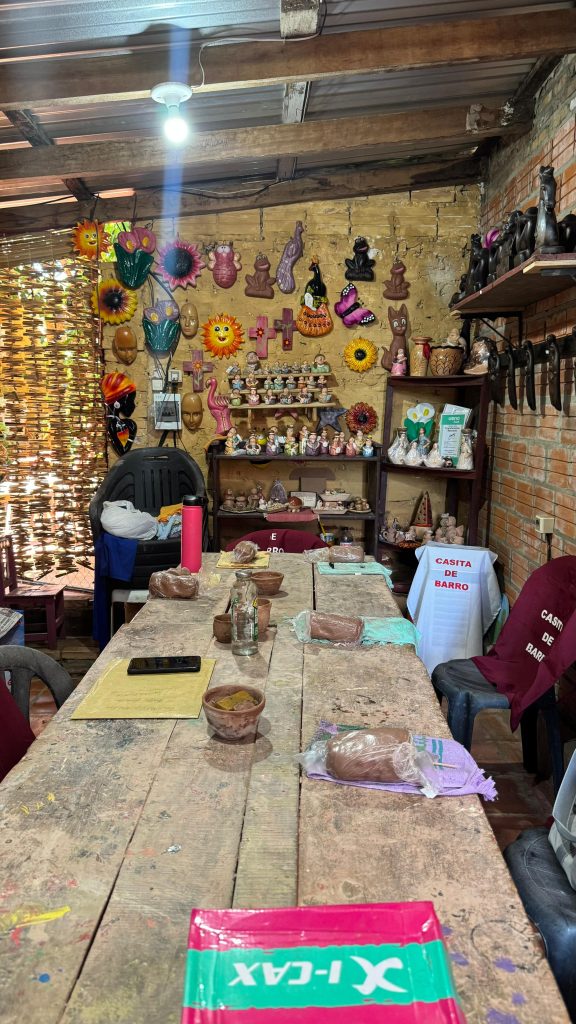
Today, La Casita de Barro functions as a workshop, a school, and a small space where her pieces are sold. People of different ages come to learn, create, and spend time working with clay.
Its growth, however, has not depended on formal marketing. “I am not very confident with technology,” Agustina Rejala admits. “It is the young people who come here who share everything on social media.” Thanks to this, the workshop has reached a wider audience, often through word of mouth or what people see online.
Learning with the hands
Classes are open to everyone. “You do not need any previous experience, only the willingness to learn and a good attitude.”
The technique is entirely manual, without modern tools. It is a slow process, but one that allows for a strong connection with the material, with each person progressing at their own pace. Students create traditional Paraguayan figures such as mamis, kuña guapa, and nativity scenes, all closely linked to local identity.
For Agustina Rejala, every piece matters. “Each piece is important, because with every one there is also the hope of selling it.” Beyond technique, the workshop is about the experience. “I want people to leave happy with what they made, and to feel satisfied.”
That close and personal approach has made La Casita de Barro a place that people value. Looking ahead, she hopes to expand the space and make it more spacious, while maintaining its intimate character.
A tradition that remains alive
For Agustina, pottery is not only a tradition, but a living craft. “If you love clay, it becomes something magical in your hands. You can create and move forward with it.” Her story reflects Areguá itself, where ceramics remain part of everyday life.
Today, La Casita de Barro shows how that tradition continues to evolve, staying alive through new hands and new experiences. A place where anyone, even without experience, can begin again with a piece of clay.
To learn more about the artist’s work, you can find Agustina Rejala on Instagram. On that platform she shares her pieces, her creative process, and moments from the workshop at La Casita de Barro.