
Paraguay exports more electricity than soybeans or beef, yet power cuts remain part of daily life across the country. For Félix Letkemann, 31, one of the founders of Chaco Solar, that contradiction is not theoretical. It is something he has lived on both sides of the Atlantic.
Chaco Solar, founded in 2023, specialises in designing and installing durable solar power systems tailored for homes, farms, and businesses across Paraguay. For anyone frustrated with Paraguay’s unreliable grid despite its abundant hydropower exports, Chaco Solar offers a cost-effective, sustainable alternative that turns sunlight into a money-saving asset.
Born in Germany, raised in Paraguay
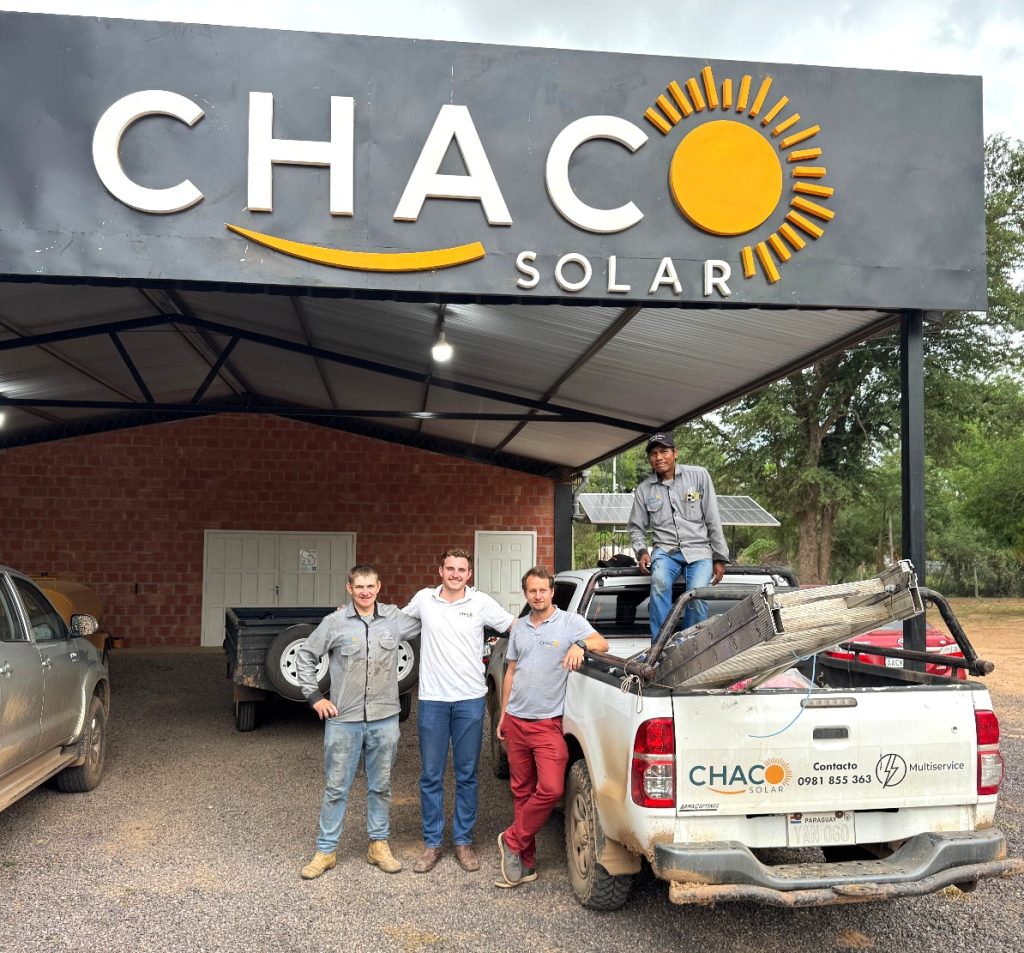
“I was born in Germany, raised in Paraguay, then moved back to Germany, and now I am back in Paraguay”, Letkemann explains. “It always gave me the opportunity to look into different markets.”
What struck him most, he explains, was not technology but reliability. “When I moved to Germany in 2010, electricity was just stable. It was a big difference. In Paraguay, we had power outages of up to three days in a row.”
From that comparison emerged a question that still defines his company’s mission: “Is this really the best way to do it?”
A country rich in energy, poor in stability
Letkemann describes Paraguay as an energy-exporting country with a structural contradiction. “Energy is actually our number one export product. More than soybeans, more than beef. Yet despite that abundance, the grid struggles under growing demand. Roughly between 60% and 70% of the energy is consumed by air conditioning. That correlates very well with solar production.”
Instead of absorbing that peak with distributed generation, Paraguay often responds with diesel. One experience in the Chaco became decisive.
“I visited a friend, and he brought me to a generator station with about 16 megawatts of diesel generators,” Letkemann recalls. “They spun up two of them and synchronised them to the grid. There was no power outage. They were doing it because the grid was overloaded.”
He asked about the cost. “I said, ‘Given the diesel price, this must be over 1,000 guaraníes per kilowatt hour.’ And he said, ‘A lot more than that.’”
Standing there, watching diesel burn under the midday sun, Letkemann remembers thinking: “This cannot be the answer.”
The Chaco as a starting point
Chaco Solar was founded at the end of 2023, formally coming together in December. Today, the company has five shareholders, a sixth joining, and a team of twelve.
The Chaco was the obvious place to begin. “It is the furthest away from Itaipu, so it has the longest power lines. At the same time, the Chaco has enormous economic growth.”
That growth brings rising demand. “Power consumption in the Chaco region is increasing by roughly 7% a year. I calculated that would mean about 15,000 panels a year just to keep up with demand.”
But the opportunity came with an unexpected challenge. “Half a year after we started, the cooperatives themselves started selling panels. That was something we did not expect.”
Facing competition from the very entities managing local grids, the company broadened its focus. “We decided to shift from only the Chaco to cover as much of Paraguay as possible. The Chaco market is more mature, but the rest of the country is catching up.”
From off-grid Survival to hybrid solutions
Chaco Solar’s early work focused on isolation. “When we started two years ago, we were completely focused on remote installations, fully off-grid. Estancias (ranches), water pumping, places where there was no viable grid connection.”
That focus has shifted rapidly. “In the past year, it moved to hybrid and then on-grid. This year, we have done the first real on-grid installations in Paraguay.”
The key technology, he says, is the hybrid inverter. “Going full off-grid does not make sense with cheap electricity. Full on-grid does not make sense with unreliable electricity. Hybrid inverters are what enabled the Paraguayan market to start.”
Most installations now combine solar, batteries, and grid connection. “Between 70% and 80% of our systems are hybrid, with batteries. It is more expensive, but you save the generator.”
The economic logic behind the shift
One project, in particular, illustrates that logic.
“There was a farmer in San Pedro whose electricity line crossed his neighbour’s land,” Letkemann recounts. “The line broke a couple of times, and finally the neighbour said, ‘Not anymore. You remove this line.’”
The alternative was costly. “To rebuild the line while staying on public land would have cost about 130 million guaraníes (approximately US$19,175),” he says.
Chaco Solar proposed another option. “We offered him a solar power plant with batteries for 55 million guaraníes (approximately US$8,115). So from the start, without even considering electricity prices, we were cheaper.”
For Letkemann, the story captures what solar represents in rural Paraguay. “That was probably one of the fastest payback projects we have had.”
Misconceptions and the generator mindset
Despite the numbers, resistance remains. “The biggest misconception is that people think it is either grid or solar. Like a generator. When the power goes down, you switch.” That misunderstanding leads to oversizing. “People think they need to cover 100% of their consumption. That makes it too expensive and does not make sense.”
In reality, most systems are designed to complement the grid. “The ideal solar setup is smaller than your total consumption. You prioritise what you really need during an outage.”
He compares solar to diesel generators. “With a generator, you want to exceed your maximum consumption. With solar, you want to match it.”
How Chaco Solar builds, finances, and guarantees its systems
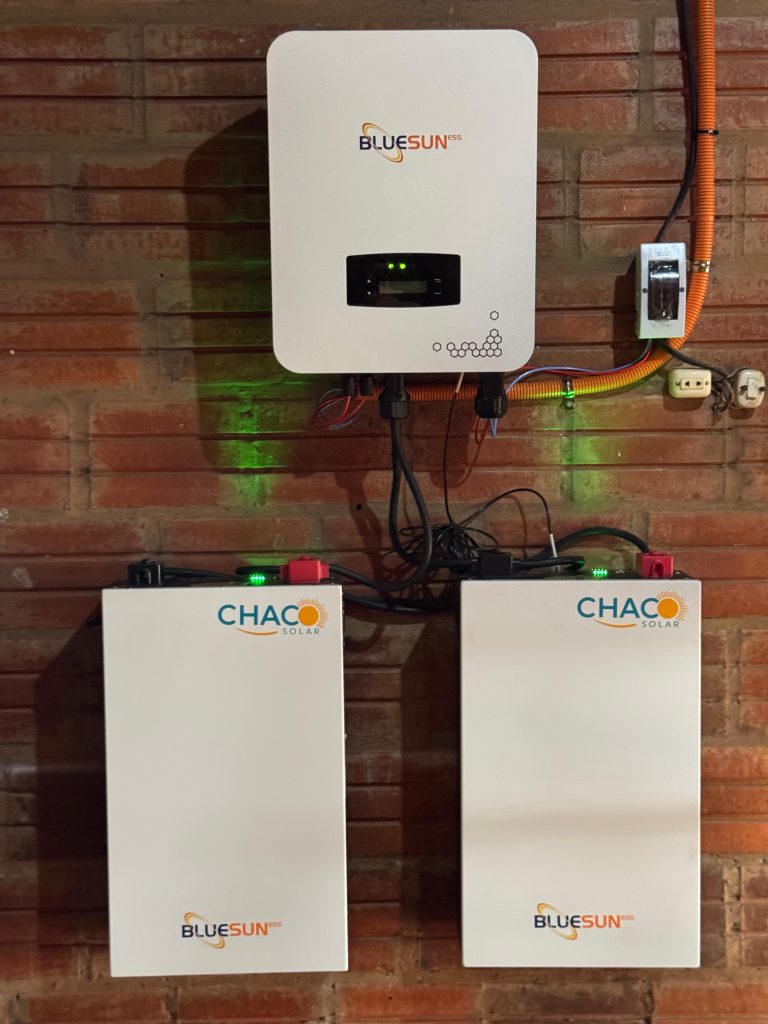
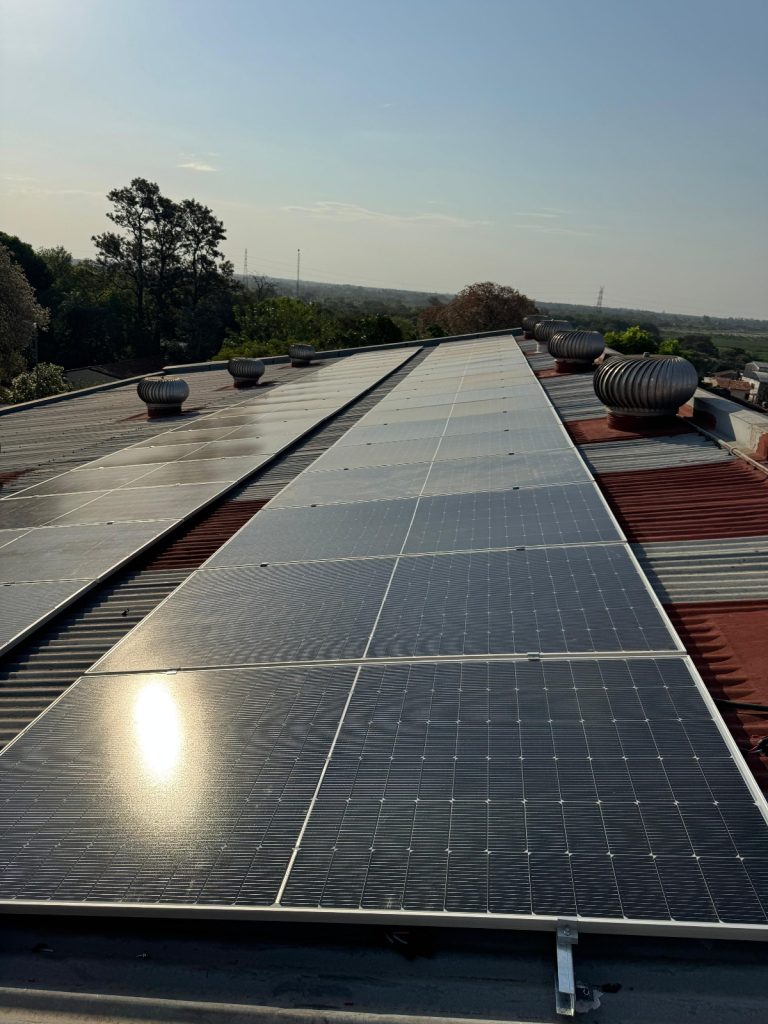
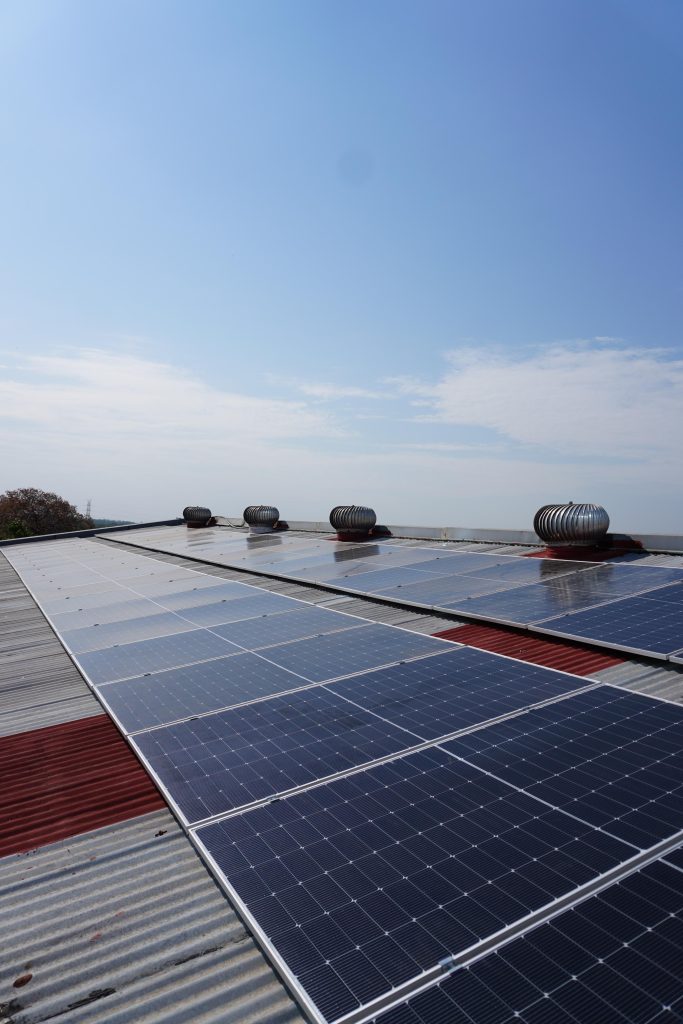
Chaco Solar’s installations prioritise durability and long-term use rather than short-term savings. “Most of what we do is rooftop installations. One reason is that it is cheaper, because you need less support structure.”
There is also a thermal advantage. “The panel actually takes out part of the energy. It cools better than a simple metal shade.” Letkemann recalls measuring his own roof. “At noon, the difference between sheet metal exposed to the sun and sheet metal below the panel was about 15 degrees Celsius.”
Financing, he says, is central to adoption. “Interest rates are the biggest brake for solar deployment. So we decided to solve that ourselves.”
Chaco Solar offers direct financing to clients. “We give the customer three or five years to pay back the power plant. The good thing is that during that time, the system already produces electricity with positive value.”
That logic underpins the business model. “We are selling something that generates money. The power plant itself generates the value the customer needs to pay us back.” Guarantees form the final pillar. “We give five years of guarantee for everything. Batteries, panels, inverters, installation.”
Technology choices make that possible. “We never sell lead-acid batteries. They are not compatible with a five-year guarantee. After five years, the power plant has usually already paid back the investment.”
Competing with cows, not companies
Chaco Solar’s main competition is not other solar firms. “Our biggest competitor is other investments, like cattle or tractors.”
“If you buy a cow and it reproduces in a year, that is a great investment. So the farmer thinks: do I sleep with air conditioning, or do I buy two more cows?”
Looking Towards 2026
Letkemann believes the market is approaching a tipping point. “In 2025, solar became cheaper than ANDE for some systems. By mid next year, I expect it to be the norm.”
Competition, he says, will follow. “In 2026, companies from Brazil and Argentina will enter the market,” Letkemann predicts. “That actually proves the market is viable.” For Chaco Solar, the goal is scale and stability. “I want to grow our power purchase agreements. To become a power plant operator.”
Stop, and do the calculation
Asked what potential customers should consider, his advice is simple. “If you are thinking about buying a generator, stop and do the calculation. You can buy a noisy machine, or you can buy a money-making machine.”
In Paraguay’s sun-drenched landscape, the choice, he believes, is becoming harder to ignore.
To check what Chaco Solar has to offer, take a look at Chaco Solar official website, available in English, German, Spanish, French, Portuguese, and Guarani. Also, contact Chaco Solar on Whatsapp at +595 994 606499.