
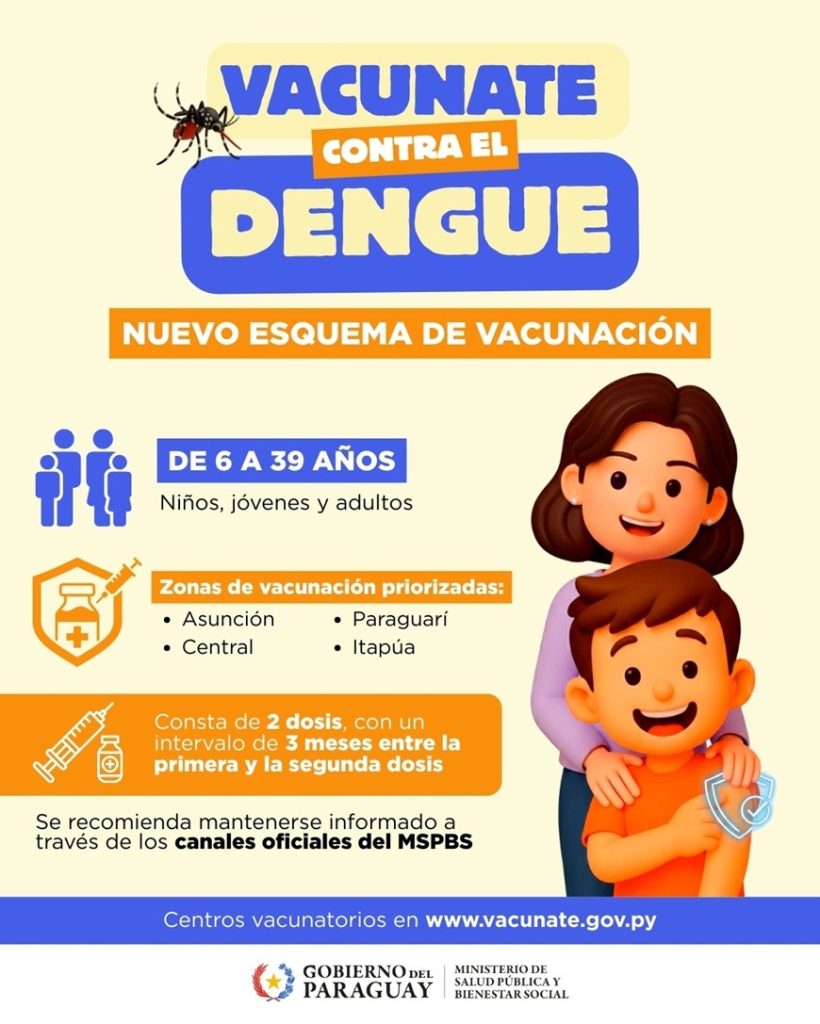
Paraguay has significantly expanded its dengue vaccinations programme to include people aged 6 to 39 years, marking a major step forward in the nation’s immunisation strategy. The Ministry of Health and Social Wellbeing announced that citizens in this age group can now access two doses of the vaccine free of charge across 16 prioritised municipalities.
The decision follows previous phases of the campaign. As reported earlier, Paraguay initially launched vaccination efforts targeting younger populations. The recent expansion announcement signalled that health officials were preparing to broaden the programme’s scope. This latest development delivers on that commitment.
Why dengue vaccinations expanded to younger groups
The expansion is based on epidemiological data showing that dengue affects teenagers and young adults at particularly high rates. Between 2019 and 2024, the age group 20 to 39 years accounted for more than 108,000 dengue cases in Paraguay. This represents one of the highest infection rates across all demographic groups in the country.
Health officials recognised that dengue vaccinations for this population is essential for reducing overall transmission. Younger adults often have more contact with broader communities and travel more frequently. The programme therefore prioritises vaccinating them to achieve wider public health benefits.
How the dengue vaccinations programme operates
The expanded dengue vaccinations rollout uses the TAK-003 vaccine, also known as Qdenga. This one is developed by the Japanese pharmaceutical company Takeda. The vaccine provides protection against all four dengue virus strains: DENV-1, DENV-2, DENV-3, and DENV-4.
The vaccination requires two doses administered three months apart. Clinical trials have demonstrated that the vaccine offers strong protection against symptomatic dengue and serious complications requiring hospitalisation.
Dengue vaccinations are being administered in 16 municipalities across four health regions: Capital, Central, Paraguarí, and Itapúa. These locations were selected based on historical dengue transmission rates over recent years.
Important restrictions and contraindications
The Ministry of Health has published clear guidance about who cannot receive the vaccine. Because Qdenga contains live attenuated virus, it is unsafe for immunocompromised individuals. People with weakened immune systems cannot adequately control the vaccine virus, increasing the risk of adverse effects.
The following groups should not receive the vaccine: pregnant women, nursing mothers, people with allergies to vaccine components, and those experiencing acute severe febrile illness. Individuals currently undergoing chemotherapy or taking high-dose corticosteroids should also avoid vaccination.
The Ministry recommends waiting at least three months after receiving immunoglobulins or blood products before being vaccinated.
Accessing dengue vaccinations services
Vaccinations are provided free through the Expanded Immunisation Programme (Programa Ampliado de Inmunizaciones, or PAI). For detailed information about dengue vaccinations schedules and to locate vaccinations centres in your area, visit www.vacunate.gov.py.