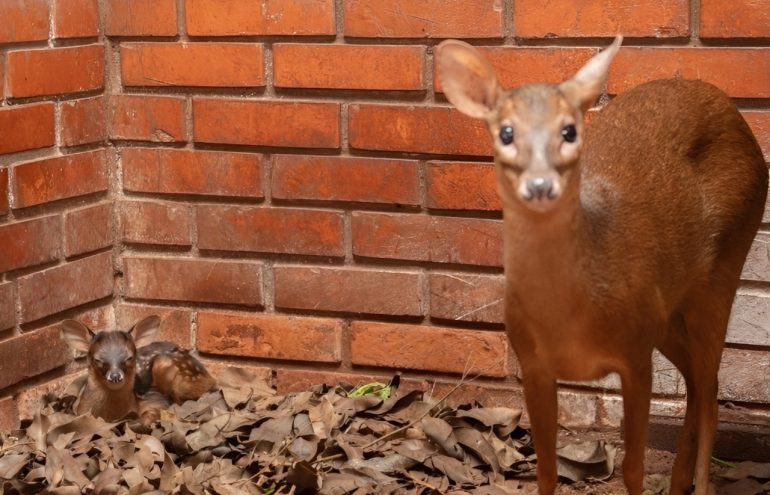

Paraguay’s commitment to safeguarding Atlantic Forest biodiversity has gained momentum with two births at the Itaipú Biological Refuge in recent weeks. Located in Bela Vista, roughly 15 kilometres from Ciudad del Este, the facility, managed by the Itaipú Binacional authority, celebrated the arrival of a red brocket deer and a tapir in rapid succession during early January.
On 12 January 2026, staff at the refuge observed a young deer emerging for the first time. The calf, christened Bambi and fathered by Skol and borne by Bambina, represented a significant addition to the institution’s conservation breeding programme. Just three days later, a tapir calf named Jamelão arrived, born to Mandioca, a young mother whose reproductive capacity surprised researchers familiar with established breeding patterns.
Survival prospects at Itaipú Biological Refuge
The earliest hours following birth determine much of a newborn animal’s future. At Itaipú Biological Refuge, trained caregivers remain present yet unobtrusive, tracking subtle indicators of development whilst respecting the animals’ natural behaviours. Veterinarian Aline Konell underscores that successful nursing in the first hours is crucial for long-term survival.
Young animals face considerable biological challenges during their initial existence. Inadequate warmth, dehydration, and poor nutrition pose persistent dangers. Within designated maternity areas, expectant mothers occupy isolated spaces that facilitate undisturbed parenting. Once born, calves receive careful attention to umbilical hygiene. The mother’s milk establishes the feeding rhythm for subsequent months. Progressive weaning introduces plant matter gradually, with bananas forming a dietary staple.
Bambi and Jamelão: contribution to genetic preservation
The deer calf occupies position number 218 in the refuge’s cumulative deer registry. Red brocket deer possess temperament characteristics that require considerable expertise from handlers: easily frightened and inherently cautious, the species demands quiet and patience. Bambi’s successful entry into the world furthers the institution’s overarching mission: establishing self-sustaining populations with sufficient genetic diversity to eventually reclaim their native territories.
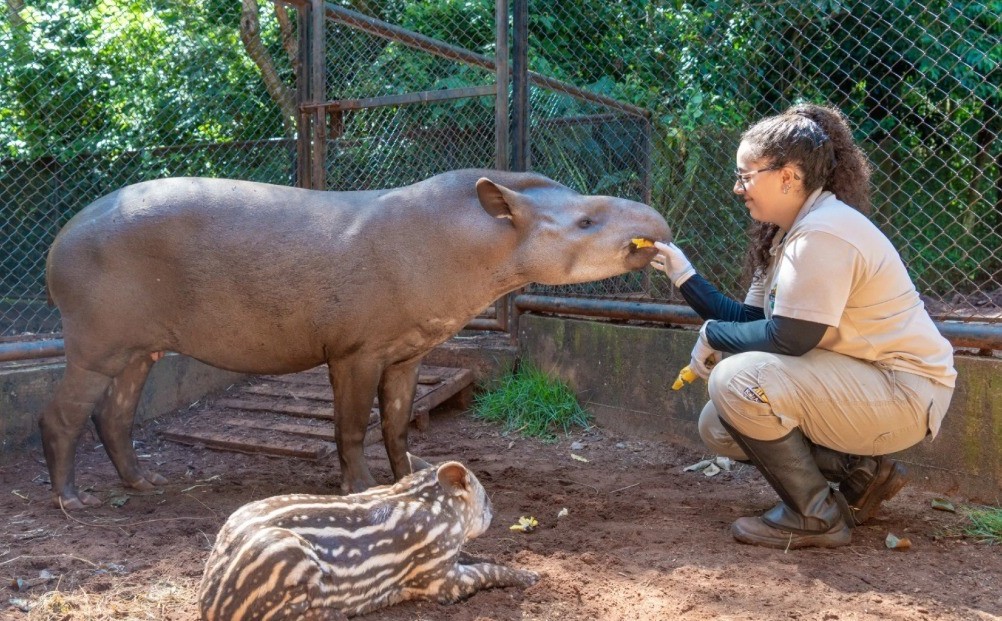
The tapir’s emergence carries layered significance. At 36 animals bred at Bela Vista, Jamelão represents ongoing reproductive success. His arrival proves particularly notable because his mother, Mandioca, became pregnant earlier than scientific precedent suggested possible, indicating broader physiological possibilities than previously documented.
Additionally, Jamelão’s birth coincides with a pivotal transition. His father, Pepeu, retires from active breeding following substantial genetic contributions spanning years. Tapir reproduction demands patience, thirteen months elapse between conception and birth, yielding only one calf per pregnancy. Consequently, each newborn possesses exceptional value for population recovery. Jamelão joins siblings born in December, including Ipê and Rabanete, with further births anticipated before the year’s end.
Linking captive success to wild recovery
Itaipú Biological Refuge functions as a production centre for Atlantic Forest conservation. Carefully matched breeding pairs destined for relocation support population augmentation in other protected zones and facilitate reintroduction into wilderness areas. Each animal represents not merely a statistical achievement but rather a genetic contribution essential for restoring ecosystem balance across the region.
The refuge operates under a dual mandate: advancing species preservation whilst furnishing visitors with meaningful environmental interaction. Tourism access operates on a paid basis, with bookings available via the dedicated portal ingressos.turismoitaipu.com.br.
As one facility within Itaipú Binacional’s extensive network, the refuge participates in a comprehensive regional strategy. The corporation administers attractions throughout the Triple Border zone, encompassing both Paraguayan and Brazilian territories. Complementary experiences include tours of the hydroelectric installation, illuminated evening spectacles, and additional nature reserves distributed across Alto Paraná.