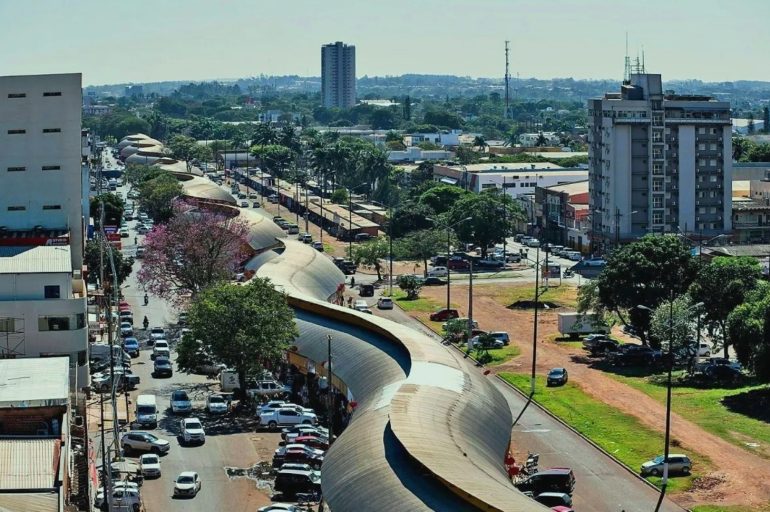

Every 1st December, Pedro Juan Caballero, the capital of the Amambay Department, celebrates its anniversary. In 2025, the municipality turned 126 years old, amidst growing economic and cultural development. Sacha Aníbal Cardona Benítez, Head of the Municipal Department of Culture, a writer, historian, genealogist, teacher, and cultural manager born in this city, highlighted this growth. This positive growth is evident in the rich calendar of cultural events held in 2025.
“The City of Pedro Juan Caballero has developed significantly compared to other cities of the same age,” Cardona says. “The city location was ideal, because the frontier location facilitated development. From a small settlement, it grew into a town and then the departmental capital. Today, it is among the main cities of Paraguay.”
Different stages in economic history
“Pedro Juan Caballero has gone through different stages in its economic history, but always progressed and developed despite the distances; because we are far from the capital city, and that factor, proximity to the central government, is paramount. But even so, it has been able to advance. Today, that is evident in the road and building infrastructure, in commercial development, and in civic culture,” he states.
“We will continue with the calendar of cultural events, developing workshops to listen to the community, and forming a cultural council to reach more sectors of society. The Culture Office occupies a historic location in the city, a fully restored mansion that was the old PJC municipality.”
“Here, in addition to the cultural offices, we have the Regional Museum, the Art Gallery, the Municipal Library, the Municipal Dance School, and the Municipal Band, which is also linked to the Municipal Conservatory of Music and the Municipal Choir – areas that are developed in conjunction with the Culture Department.” Apart from that, each year, the Expo Amambay is organised.
The origins of Pedro Juan Caballero
Cardona offers the following synopsis of the origins of the city of Pedro Juan Caballero, the highest city in Paraguay with an elevation of 607 meters (1,991) ft). The locality originated on a plateau in the Amambay Mountain Range. The 1st of December marks the 126th anniversary of a presidential decree that transformed the former settlement of Punta Porá into a city.
The pioneers arrived with their carts and untie the oxen so they could drink. They rested at a place they called “Paraje Punta Pora.” Now, the Brazilian city on the other side of the border is named Ponta Porã.
“This name was recorded on the maps of General Francisco Isidoro Resquín when, in 1862, he charted the routes of this area, the destination of the old Jeréz Ñu, now called Mato Grosso by the Brazilians. Due to its strategic location – the road that crossed the Chirigüelo mountains forked, heading north and southwest – it was the scene of the initial and final actions of the War of the Triple Alliance.”
“The defeat of Paraguay forced us to accept the borders imposed by the secret treaty agreed upon by the allies.” Consequently, Punta Porã, after the completion of the Boundary Commission’s work in 1874, became the border with Brazil.”
The growth of the city
“Ready to invest in the area, the Argentine, Don José Tapias Ortiz, arrived at this border and founded a ranch in what is now the town of Portera Ortiz. He also built a house in Punta Porã on land belonging to Don Jorge Casaccia, where he established his business in what is now Block 36, Sector I, 70 metres northeast of the Punta Porã lagoon. This establishment already had strong ties with the landowners of Mato Grosso by 1892, and following Ortiz’s example, others built ranches and houses where they opened businesses, thus giving rise to the town that would later become the departmental capital.”
“These residents appealed to the Minister of the Interior, initiating a titanic struggle that they ultimately won when fortune turned in their favour with the repeal of the free trade agreement with Mato Grosso in 1898, and the land they occupied was donated to the State by Jorge Casaccia in 1899. Later, on 30 August 1901, the Department was created, thus losing the historical name of Punta Porã and becoming Pedro Juan Caballero by decision of Congress.”
In 1956, the Municipal Intendency of Pedro Juan Caballero was created. Carlos Domínguez was appointed as its first mayor by Decree No. 18,387. On 10 July 1945, the city of Pedro Juan Caballero was designated as the capital of the Department of Amambay.