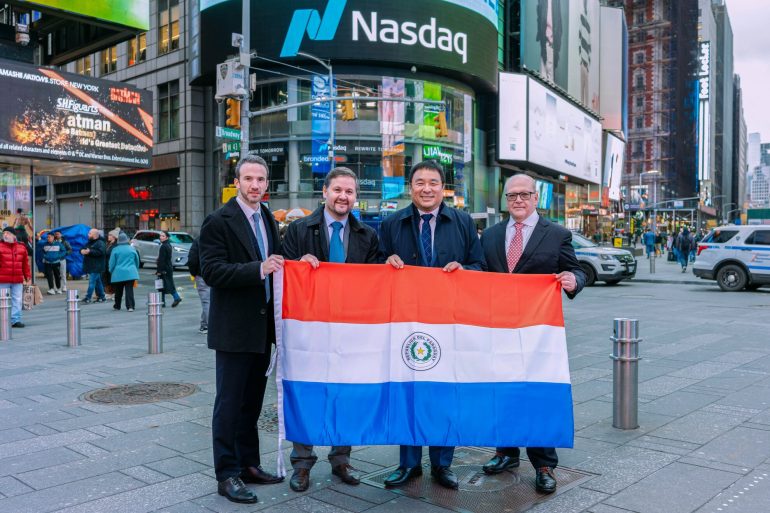

Four representatives of Paraguay’s stock exchange, the Asunción Stock Exchange (BVA), stood inside Nasdaq’s headquarters in New York City for an institutional photograph. The image, taken late Match 2026, captures more than a diplomatic visit. It reflects a transforming market and shows that international investors are beginning to take the country seriously.
The occasion was the three-month mark of a landmark shift: since January 2026, the BVA, Paraguay’s only stock exchange, has been running on a Nasdaq-powered trading platform, the United States-based technology giant that powers some of the world’s most advanced financial markets. The results so far have been encouraging. Market participants have reported a better trading experience, and volumes have grown steadily since the platform went live. For a capital market long considered too small and too isolated to attract foreign attention, that is a meaningful shift.
Years in the making
The transition did not happen overnight. Planning and technical coordination began more than a year before the January launch, involving the BVA, the Paraguayan Central Securities Depository (Cavapy), brokerage firms, and other sector participants. Raymundo Mendoza, president of Basa Capital and a prominent figure in Paraguay’s financial sector, told local media that the process included technical meetings, working groups, and an agreed calendar shared among all institutions.
The restructuring also redrew institutional roles. The BVA now handles trading, while Cavapy manages custody, clearing, and securities settlement. That division aligns Paraguay’s market structure more closely with models used by mature financial markets worldwide.
What it means for Paraguay’s Stock Exchange
Nasdaq hosts major tech companies like Apple and Microsoft and ranks among the world’s leading exchange technology providers. Adopting its platform means the BVA now operates with software designed for speed, traceability, and compatibility with the standards that international brokers and investors expect.
Since its implementation, the new platform has received a positive reception from market participants, contributing to an improved trading experience and accompanying sustained growth in trading volumes.
With this infrastructure, Paraguay can now appear on global trading screens and in publications from markets like New York. Industry figures call this visibility a significant reputational gain for a market that has long struggled to attract foreign attention.
A delegation travels to New York
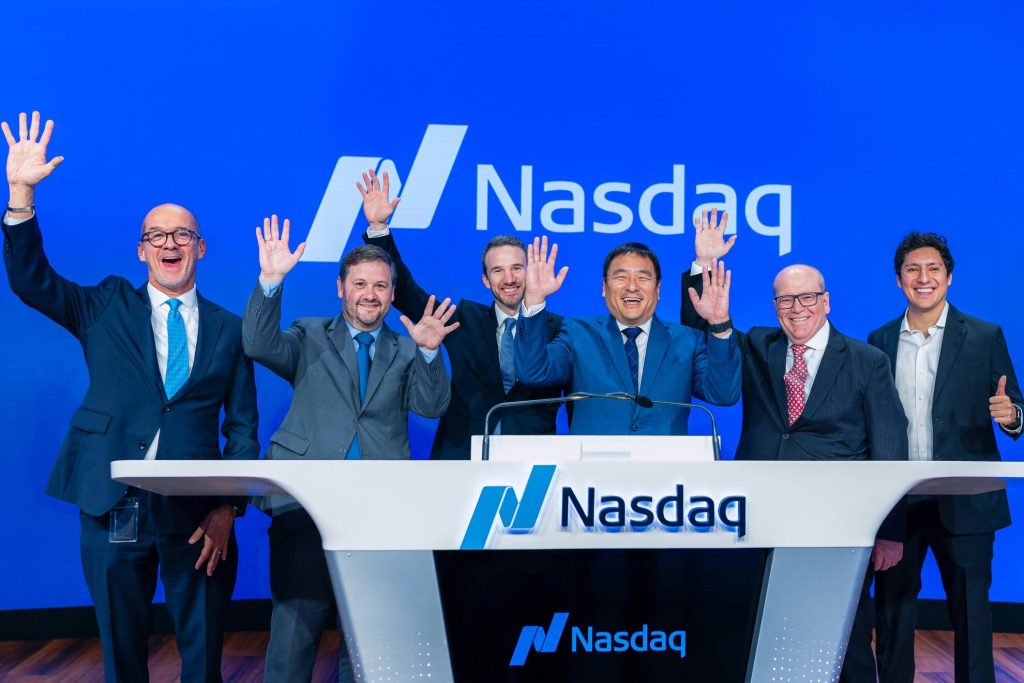
The partnership was formally celebrated when four representatives of the BVA travelled to New York City and were received at Nasdaq’s headquarters, where the traditional institutional photograph was taken, a symbolic gesture that marks the consolidation of the alliance between the two institutions.
The visit functioned as a signal to the outside world: Paraguay is moving in the right direction. For a country long seen as peripheral, its exchange delegates at Nasdaq’s New York offices signaled more than ceremony.
Why this matters for investors and companies
Before this upgrade, Paraguay’s incompatible financial infrastructure limited foreign investor access to its stock exchange. International investors had not been operating in Paraguay because of barriers related to infrastructure and securities custody. The new platform directly addresses those obstacles.
The implementation creates new opportunities to develop financial products, attract investment, and integrate Paraguay into global markets. For Paraguayan companies that list on the BVA, greater international visibility could translate into a broader investor base and improved access to capital.
Mendoza spoke directly about the signal the market is sending. “It is not a coincidence that international players are interested,” he said in a recent interview. “They see a financial system that is modernising.”
A broader vision
The BVA drives this process as part of a broader vision to position Paraguay’s stock exchange as a pillar of economic growth, focusing on innovation, transparency, and sustainability.
Paraguay’s economy has grown steadily in recent years, driven largely by agriculture and energy exports. However, its capital markets have remained small relative to regional peers such as Brazil, Chile, and Colombia. Officials and market participants hope that the Nasdaq partnership will help close that gap, not by changing what Paraguay produces, but by improving how it finances itself.