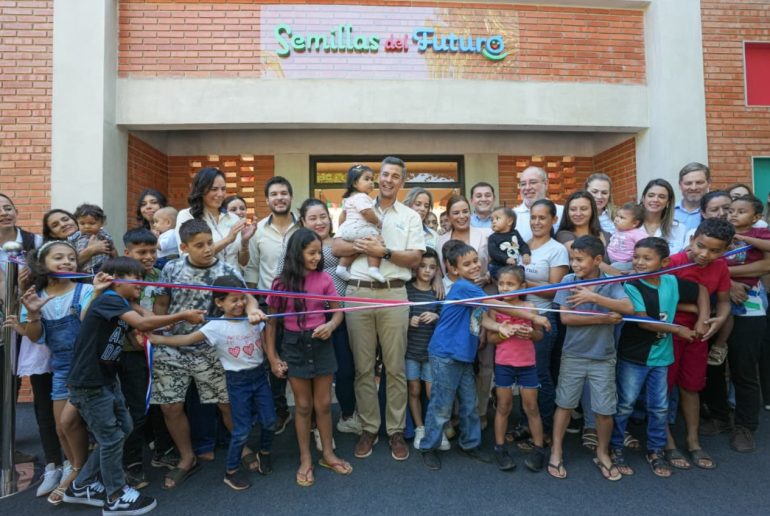

The Government of Paraguay has officially opened the country’s first Comprehensive Early Childhood Care Centre (CAIPI) in the city of Capiatá, around 20 kilometres southeast of the country’s capital, Asunción. The inauguration of the first National Early Childhood Centre, led by Paraguayan President Santiago Peña and First Lady Leticia Ocampos, marks a significant milestone in the implementation of the national programme, Seeds of the Future (Semillas del Futuro). Paraguay Presents Trilingual Book Collection For Early Childhood Development
This initiative is the first of 50 such centres planned for construction across the nation in 2026. The programme aims to provide holistic care for children from birth up to the age of three years and eleven months. Consequently, it integrates early education, health services, nutrition, and family support within a single facility.
A new model for child development
During his address at the first National Early Childhood Centre opening ceremony, President Peña emphasised the project’s national importance and long-term vision. He stated that the goal is to create a lasting impact that extends beyond individual communities.
“This is the first comprehensive early childhood care centre of 50 that we are going to inaugurate this year. This seeks to generate an expansive wave, because finally when a state policy is embraced by everyone, the departmental authorities, the municipal authorities and by the community, that policy becomes permanent,” Peña stated.
Peña also described the centre as being more than just a physical building, suggesting it symbolises a fundamental belief in the potential of the Paraguayan people. “We came to do what has never been done before, we came to challenge ourselves and to challenge Paraguayans,” he affirmed.
Comprehensive facilities and services
The newly opened first National Early Childhood Centre in Capiatá has the capacity to care for 120 children, who are organised into three separate rooms according to their age. This structure allows for tailored developmental activities and appropriate care for each group. The facility is equipped with a wide range of amenities designed to support both children and their families comprehensively.
The integrated services available on-site include:
- A dedicated breastfeeding room and a playroom (ludoteca);
- A common area for parents to gather and receive support;
- An office for the Civil Registry to assist with official documentation;
- Two consulting rooms: one for medical check-ups and another for psychological and psycho-pedagogical support;
- A full kitchen and dining area to provide nutritious meals for the children.
A national strategy for early years support
The network of CAIPIs that the government plans to expand will feature dedicated spaces for child development. These areas will offer services such as early stimulation programmes, daily nutrition, and general childcare. Furthermore, the centres will integrate crucial health services, including regular paediatric check-ups, vaccinations, and psychological care.
A key component of the programme is the provision for referrals to specialised medical services when required. In addition to facility-based care, the initiative includes direct support for families through home visits. These visits are designed to strengthen positive parenting practices, improve family nutrition, and promote healthy child development within the home environment.
Prioritising access for vulnerable families
Access to the services provided by the CAIPIs will be prioritised for families most in need. The selection process will be guided by a set of technical criteria established to identify and support vulnerable households. These factors include children of adolescent mothers, children of working mothers, and families with low income levels.
The criteria also give priority to single-parent families and those living in close proximity to a centre, ensuring that the support reaches those who can benefit most. This targeted approach underscores the government’s commitment to reducing inequality and providing a strong foundation for the country’s youngest citizens, ensuring that comprehensive care and support are accessible from the very beginning of life.
Also read how Paraguay, in line with the national Seeds of the Future programme, recently presented a trilingual book collection for early childhood development.