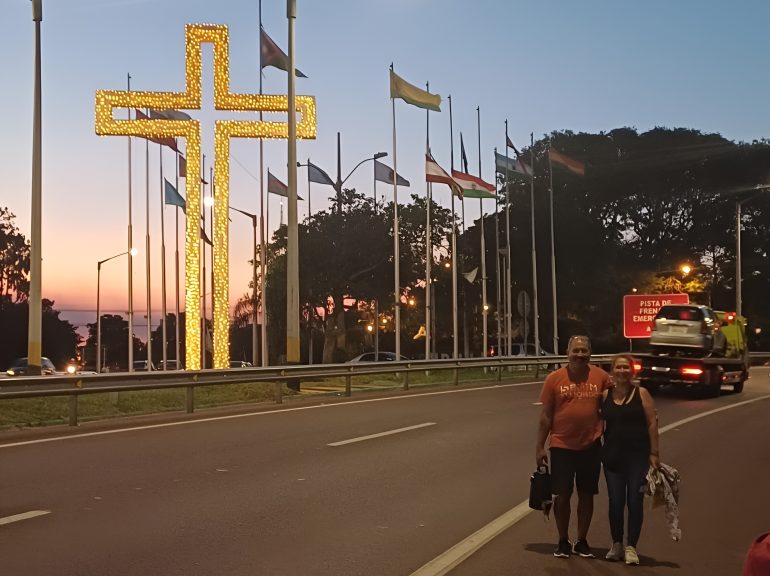

The pilgrimage to Caacupé is a very important religious tradition in Paraguay, held in honour of the Virgin of the Miracles of Caacupé. Thousands of people of all ages, from young to old, walk from different parts of the country. Some take long hours to complete the journey, to fulfil promises, ask for health, or to thank for favours received.
Many walk for several hours, sometimes at night because of the Paraguayan heat, and some perform acts of sacrifice, such as walking on their knees. On arrival, masses, processions, and vigils are held, creating an atmosphere of shared faith and community.
Up to 2.5 million pilgrims
Each year on 8 December, it is estimated that up to 2.5 million pilgrims participate, making Caacupé the most massive pilgrimage in the country. In addition to its religious significance, the pilgrimage represents a symbol of national identity, uniting people from different regions and generations in an act of devotion and cultural tradition. Volunteers and authorities take care of the logistics, providing health care and services to the pilgrims. The experience reflects the faith, hope, and gratitude that characterise Paraguayan society.
For many pilgrims, walking to the Basilica of the Virgin of Caacupé is a promise kept, a tradition renewed, and a miracle remembered. Among them is Fátima María Arguello de Saucedo, 56, who has been making the pilgrimage for over three decades, guided by devotion and an unbreakable family bond.
A path that is never walked alone
“We usually start our pilgrimage from Km 45 route PY02, Cerrogy, before going up the hill of Caacupé,” Fátima explains. “We walk ten kilometres, and we do it in two hours, sharing and praying.”
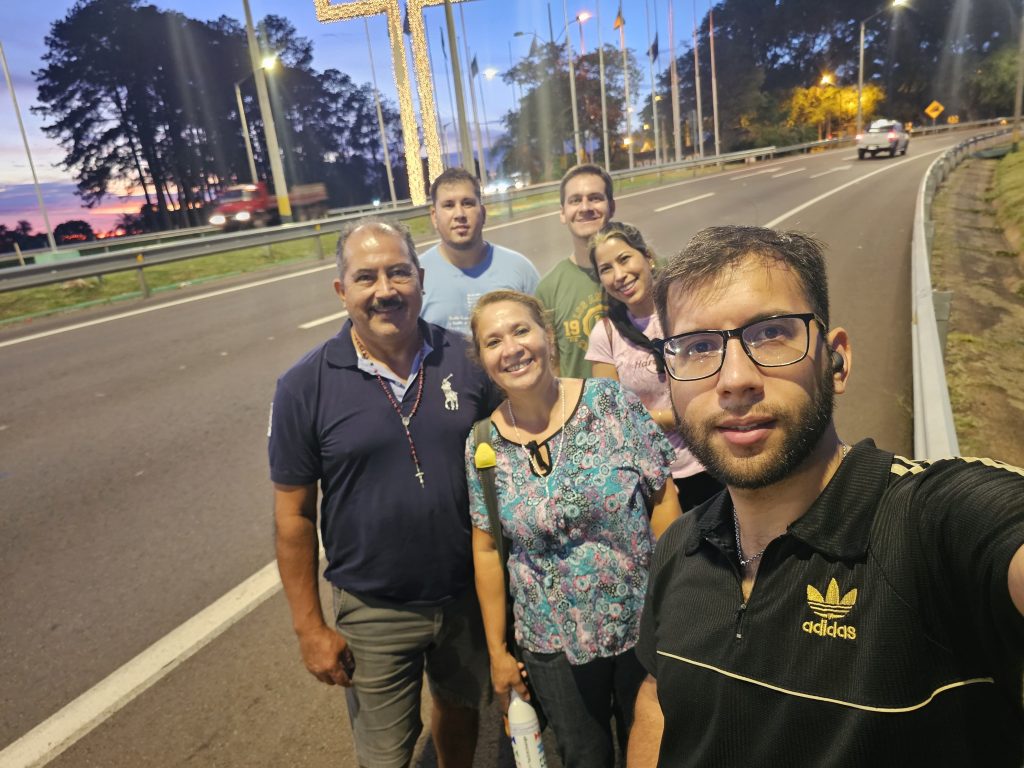
The route to Caacupé is rarely silent. Families walk hand in hand, friends sing hymns together, and strangers exchange words of encouragement. “We always go as a family with our children and grandchildren, and sometimes friends and neighbours join us. We coordinate a day and time, usually in the late afternoon and evening.”
This shared rhythm gives the pilgrimage a special energy. Every step feels accompanied. There is a sense that no one is truly walking alone, even when the road stretches endlessly ahead.
Traditions that span generations
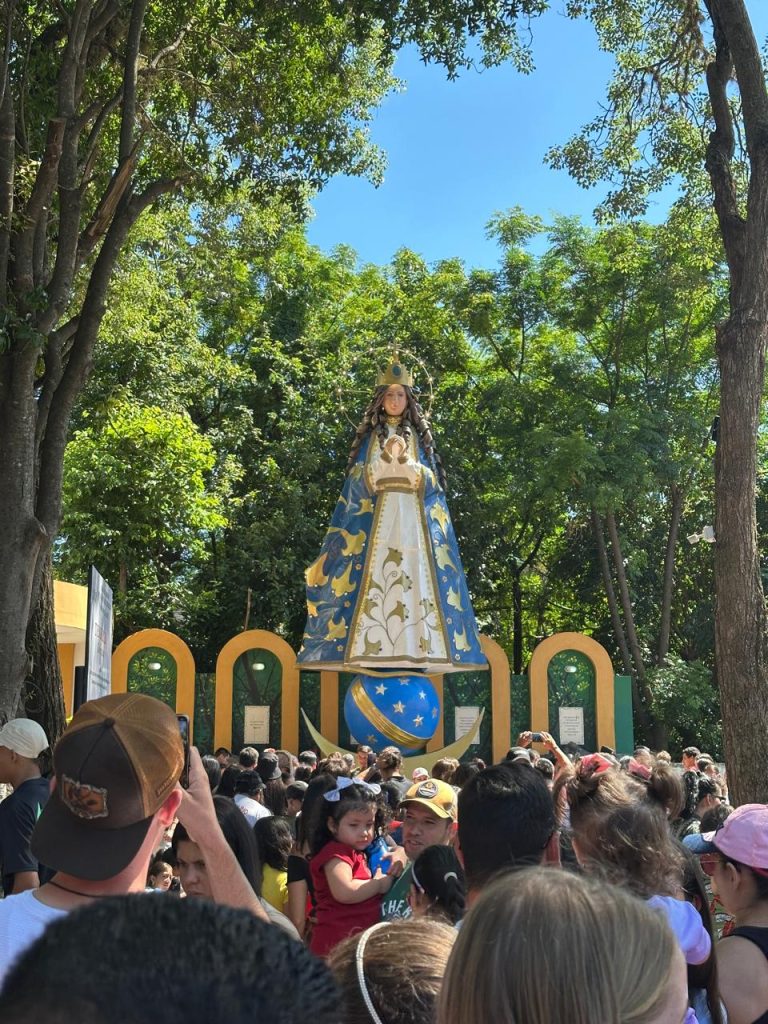
According to tradition, the devotion has an indigenous-Guarani origin: an indigenous man reportedly fled persecution, hid ‘behind the mountain/grassy hill’ (ka’aguy kupépe), and promised to carve an image of the Virgin if he survived; this promise gave rise to the venerated image.
Fátima’s story is also a story of inheritance. “We have been making the pilgrimage together for 36 years. Previously, we did it from Km 33. In our childhood, we always did it with our parents.” Her memories reveal how faith is passed down, quietly, between generations.
For many families, the pilgrimage is not an occasional ritual but an annual appointment with the Virgin. The promise becomes part of personal history, a living thread connecting childhood, adulthood, and old age. The pilgrimage is a tradition that teaches patience, resilience, and hope.
“First of all, the tradition of being able to arrive every year and the devotion with which we do it to give thanks to the Virgin,” she adds, when asked what motivates her the most during the journey.
Hospitality on the roadside
As pilgrims make their way to Caacupé, the road transforms into a corridor of solidarity. Small stands appear with chipa, cocido, and fresh water offered to tired walkers. Volunteers, neighbours, and local organisations step forward to help.
“About the people, what impresses me is the hospitality. People offer water, ice, and there is health assistance.” In between footsteps and prayers, one can hear stories of miracles, promises, and gratefulness.
Security also plays a key role. There is a visible police presence throughout the area, ensuring the safety of the thousands who move along the highway. Ambulances and medical teams remain on standby, prepared for any emergency. This network of care is an essential part of the pilgrimage experience.
“You hear that people go with great devotion, asking for a miracle or thanking for one.” The atmosphere is filled with trust, vulnerability, and unexpected kindness.
Caacupé pilgrimage: The moment of arrival
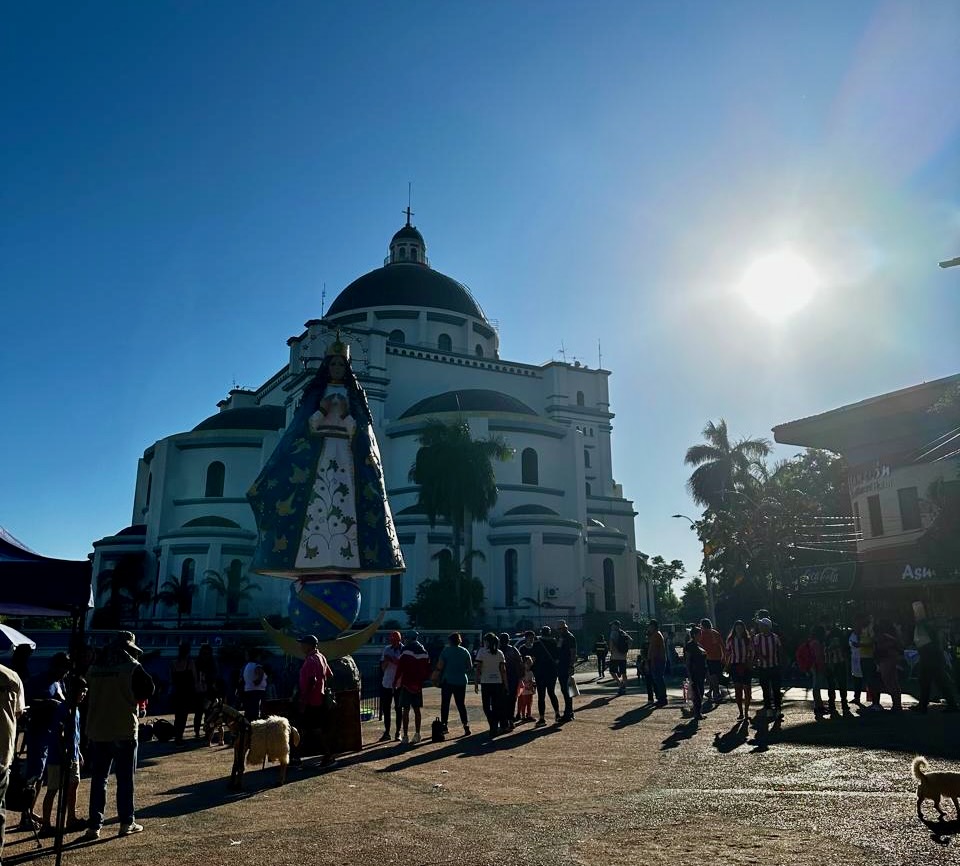
After hours of walking, the Basilica of Caacupé finally comes into view. Exhaustion is replaced by emotion. For many, tears appear before words can form.
“The emotion is indescribable. You feel that you are fulfilling the Virgin Mary when you arrive at her house with great faith and devotion.” In that instant, the pain in the legs fades away. Only gratitude remains.
Pilgrims kneel, pray, embrace their loved ones, and quietly thank the Virgin for the year that has passed. Others whisper their hopes for the upcoming months, placing their worries and dreams in her hands.
Dates marked by faith
While pilgrims can arrive throughout the year, certain dates carry deeper meaning. “Generally, we go on the octave before Virgin of Caacupé day, or before Christmas Eve,” Fátima explains. “As a family, we always go on those dates.”
These days sees the highest number of visitors, and Caacupé prepares carefully to welcome them. Streets are cleared, areas reorganised, and spaces opened for prayer and rest. The city adapts its rhythm to the flow of believers, becoming a place of reflection, silence, and collective devotion.
“And we do it as grateful children for all the grace received during the year. Asking again for the following year in the field of health, work, and all the needs.”
In every prayer murmured along the path, in all cups of water offered, and in each hymn sung under the Paraguayan sky, the spirit of the Virgin of Caacupé walks beside her people.