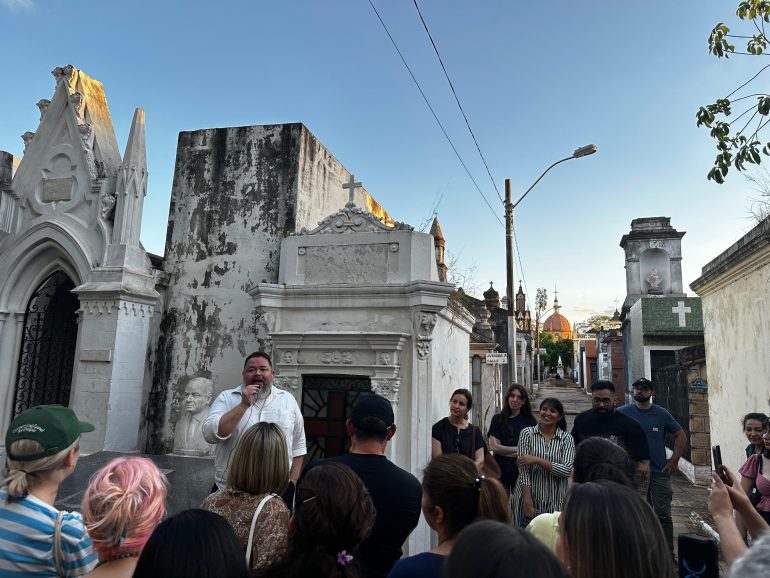

As people gather at the Recoleta Cemetery gate, tour guide Eduardo Ortíz Mereles shares a powerful thought: “History, even when some believe it should not be political, cannot be edited. We cannot change what happened here, and the story belongs to everyone.”
As night blankets the Recoleta Cemetery, voices echo between the stone mausoleums, lanterns illuminate the paths, and the past becomes vivid. Thanks to guided, dramatized tours by the Municipality and cultural groups, visitors experience history rather than simply hear about it.
A living classroom at dusk
Many of these tours, often free, are part of a wider cultural initiative led by the Directorate General of Culture and Tourism of the Municipality of Asunción. Alberto Vera Maciel, who heads tourism products, notes that nearly 10,000 people have participated in these tours this year. One of the favourites is the Tour Necrópolis at Recoleta Cemetery, which regularly draws in 200 to 300 participants, especially during evening tours that add a touch of mystery.
“People are curious, and that’s enough,” the guide remarks at the beginning of the walk. “You don’t have to be a history buff. Just let yourself discover something new.”
A resting place beyond the living city
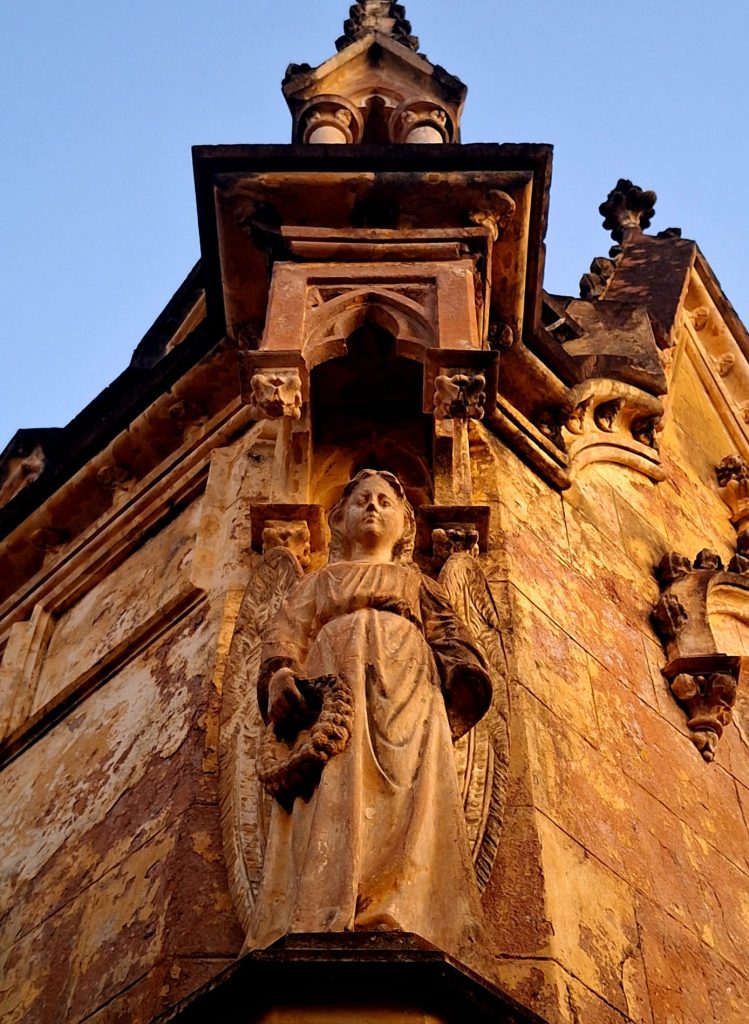
Founded back in 1842, Recoleta Cemetery came about because Asunción, a once small colonial town, needed a burial site away from overcrowded churches and neighbourhoods. The subtropical climate forced burials outward, and a remote graveyard became the nineteenth century’s most prestigious resting place for elites.
One of its oldest areas, known as Patio 3, contains some of the cemetery’s most notable and historical tombs. Here rest influential figures who shaped Paraguay’s politics and culture, many also featured in the tours’ dramatised performances.
History brought to life
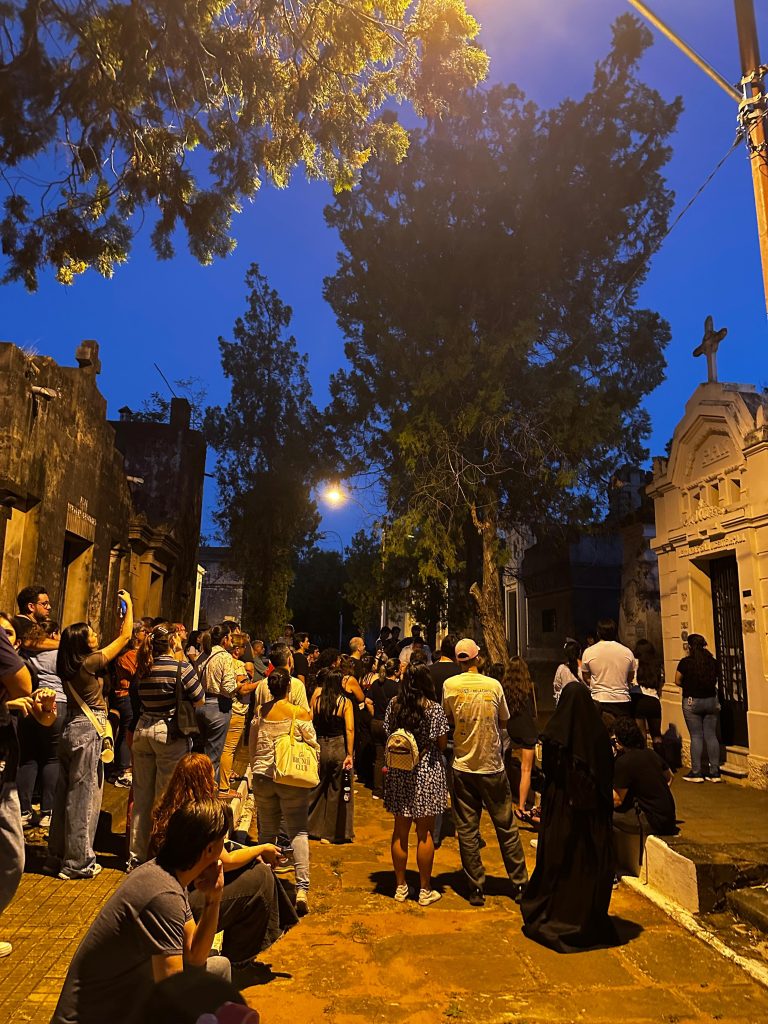
Actors dressed in period clothing embody historical personalities, standing beside their tombs to recount their lives in the first person. These performances, organised for years by the Cultural Association Mandu’arã and now continued by other groups, have become a defining feature of the Recoleta experience. Through short monologues, visitors encounter presidents, musicians, pioneers of aviation, and reformers who once walked the streets of Asunción.
Silvio Pettirossi’s tomb is among the most visited, honouring the aviation pioneer who brought Paraguay international recognition in the early twentieth century. Nearby rests Herminio Giménez, a central figure in Paraguayan music, as well as the mausoleums of former presidents Eusebio Ayala and Eligio Ayala.
Presidents, artists, and national figures
Eligio Ayala’s legacy centres on the Panteón “18 de Octubre”, located near Portón 4 of the Recoleta Cemetery. The site commemorates the failed but historically significant Liberal Revolution of 1891, which laid the groundwork for the Liberal Party’s rise to power in 1904. Ayala’s remains rested there until 2011, when they were transferred to the National Pantheon of Heroes, reaffirming his status as a key reformer who stabilised the economy and prepared the country for the Chaco War.
Another striking stop is the Dávalos family mausoleum, widely known as the Mausoleum of the Weeping Women. Its sculpted figures of mourning women have made it one of the most photographed and commented-upon monuments in the cemetery. The site is linked to Serafina Dávalos, one of Paraguay’s first female lawyers, and symbolises both the elegance and fragility of the country’s funerary heritage.
Architecture, memory, and respect
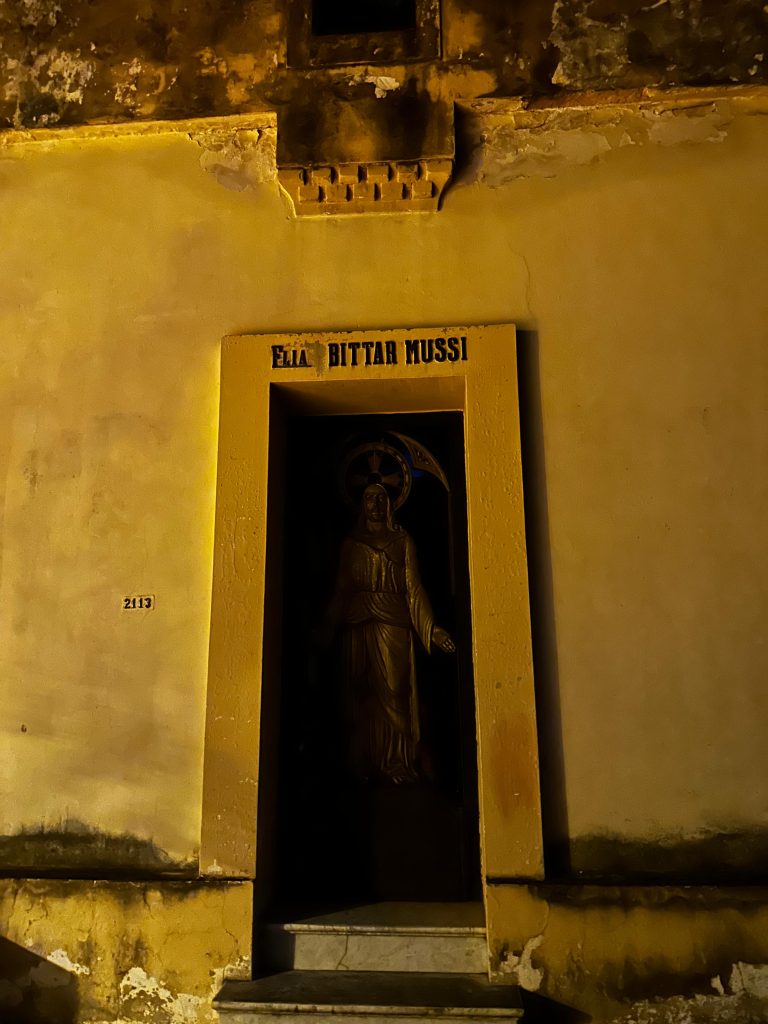
The Recoleta also preserves the memory of the Solano López family. Although Solano López and Elisa Lynch rest elsewhere, family mausoleums here, including Corina Adelaide Lynch’s, reflect a debated Paraguayan dynasty.
Beyond individual tombs, the tours emphasise architecture, urban development, and social customs surrounding death and burial. “To understand history, it is not enough to read books,” the guide explains. “We must also visit the places those books mention.”
Recoleta as part of Asunción’s cultural revival
The experience is designed as a respectful, educational, and family-friendly journey. Organisers stress that the tours are not political ceremonies or religious acts, but cultural encounters rooted in documented history. “We speak only about what is written,” the guide says. “And we do so with respect for those who rest here.”
As Asunción revalues its historic centre, the Recoleta Cemetery stands out where memory, art, and education intersect. Through guided walks and theatrical storytelling, the city encourages residents and visitors to engage with its past, experienced as lived stories rather than distant dates and names.