In Paraguay, every 6 January is a date filled with magic, emotion, and anticipation. Following the celebrations of Christmas and New Year’s, Three Kings’ Day (Día de los Reyes) marks the final festivity of the season’s early days. And the reason why children in Paraguay write letters to the Three Wise Men and leave them in their shoes.
Much like the nativity scene, Three Kings’ Day did not originate in Paraguay. However, it holds a special place in Paraguayan culture, particularly for children. The celebration revolves around writing letters, preparing small offerings, and patiently waiting with faith that wishes will come true. Early in the morning, families wake to homes filled with excitement as they open the gifts left by the Three Wise Men.
Three Kings’ Day reflects Paraguay’s colonial past and deep religious roots, introduced by the Spanish and shaped by biblical tradition. Although families celebrate the day in different ways, the spirit of gift-giving remains the same across the country, making 6 January a date that many Paraguayans look forward to each year.
The history of Three Kings’ Day
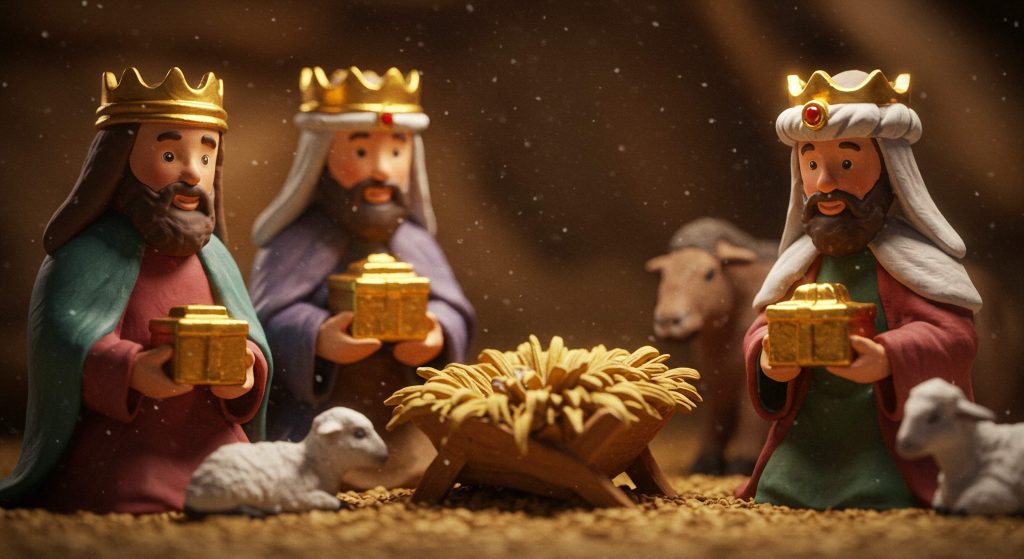
Franciscan missionaries introduced the celebration of Three Kings’ Day in Paraguay during the colonial period.. Along with the tradition of the nativity scene, they incorporated the figures of the Three Wise Men: Melchior, Gaspar, and Balthazar. According to Christian belief, they followed the Star of Bethlehem to honour the newborn Jesus with gifts.
Historically, these figures are also described as astrologers, magicians, or wise men from the East. In ancient times, astrologers in the East often acted as priestly advisers and experts in the art of magic. Over the centuries, people came to recognise them as the Magi. According to the Bible, King Herod sent the wise men, driven by fear and jealousy, to locate the “new king.”
Instead of obeying Herod’s malicious intentions, the Wise Men protected the newborn child. They offered symbolic gifts: gold, the metal of kings; frankincense, an offering associated with divinity; and myrrh, symbolising future suffering. Over time, the Three Wise Men were given names, and traditions began to take shape. This is where the story of the Magi bringing gifts to children originates.
Three Kings’ Day traditions in Paraguay
In Paraguay, the tradition begins with children writing a letter to the Three Wise Men, asking for a gift. Some children write the letters themselves, while others receive help from an adult. This moment is usually very special, as children, full of innocence and faith, hope that their wishes will come true.
On the night of 5 January, children place a pair of shoes by the manger or near a window for the gifts, and many also leave grass and water for the camels, believing the Magi arrive riding them. Early on the morning of 6 January, families wake up as early as possible to open the gifts.
Although rooted in religious practices, Three Kings’ Day is also a time for families to come together and share moments of magic, joy, and happiness. Because of the sense of wonder surrounding the celebration, some families keep the tradition alive by exchanging gifts regardless of age. In this way, Three Kings’ Day remains a shared moment of magic, celebrated and cherished across generations.