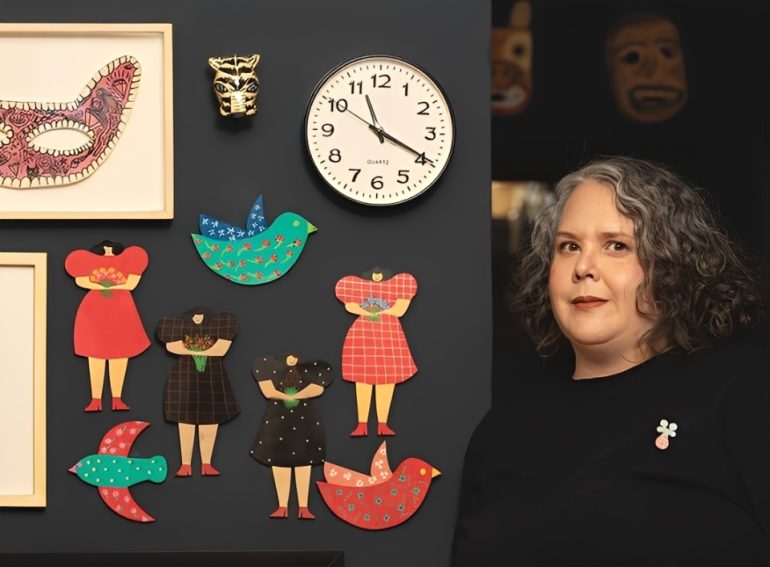

Illustrator and industrial designer Regi Rivas has become one of Paraguay’s most recognisable visual voices. Through bold colours, curved forms and an unmistakable sense of humour, her work explores intimacy, femininity, desire and everyday life with honesty and warmth. In a conversation with The Asunción Times, she reflects on her path, her process, and the power of drawing as both refuge and expression. And invites everyone to her Open Studio event in Asunción’s Las Mercedes neighbourhood, on 20 and 21 December from 16:00 to 20:00.
Growing up drawing in Asunción
Born and raised in Asunción, Regi Rivas has lived in the city her entire life. Her connection to drawing began early and, unlike many others, it never disappeared. “We all draw as children, but the difference is that some of us do not stop.”
For Regi, the moment when many abandon drawing usually arrives during secondary school. “School imposes a perfectionism that nobody can reach. People get frustrated and stop drawing. Some of us decided to continue anyway.” That decision, she believes, often marks the beginning of a lifelong creative practice.
From industrial design to illustration
Although illustration was always present, Regi initially imagined a different professional future. “I wanted to study architecture when I was at school. I liked it, but it did not completely fulfil me.” She later discovered industrial design, which was a relatively new degree in Paraguay at the time. “I thought, well, I will try this.”
She studied, graduated, and worked in the field for years. However, after some time, something shifted. “I realised I wanted to draw,” she explains. That moment, around 2008 or 2009, marked a turning point. “I started drawing, and I just kept drawing. Then the work started coming.” From then on, illustration became her main focus.
An exuberant visual language
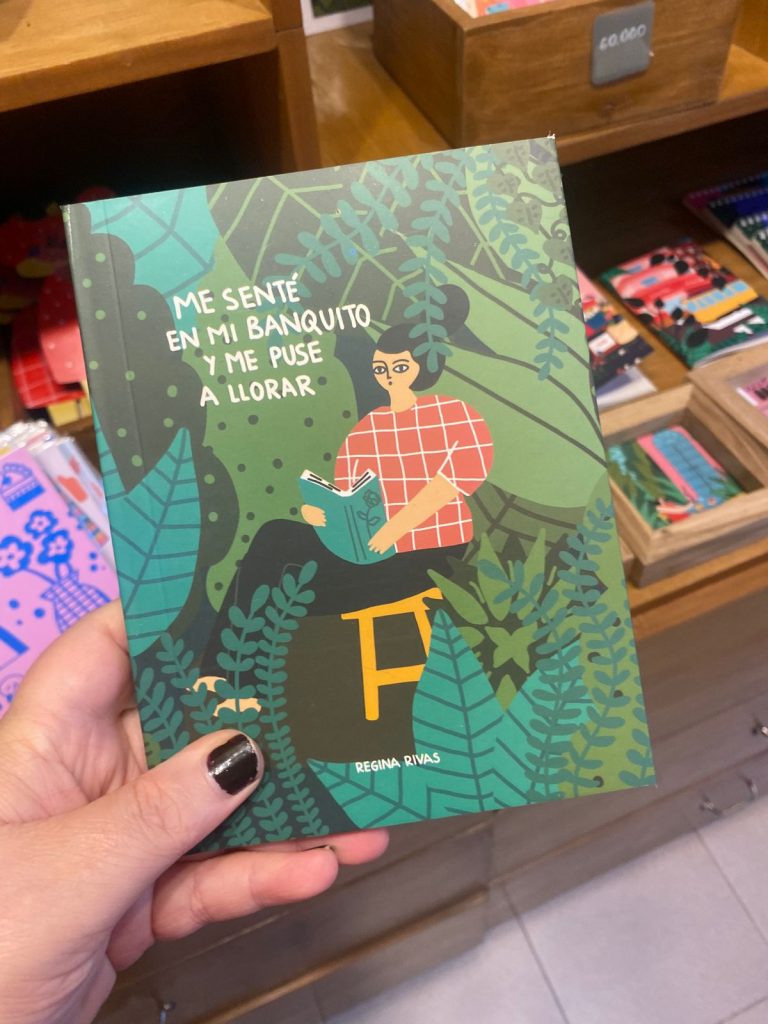
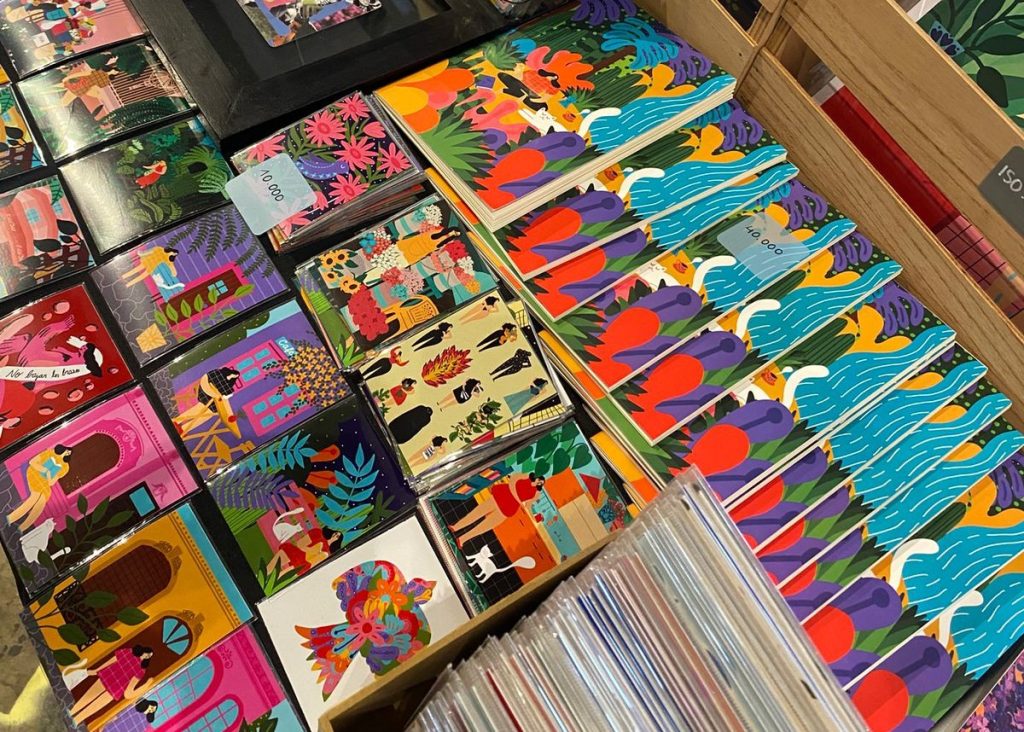
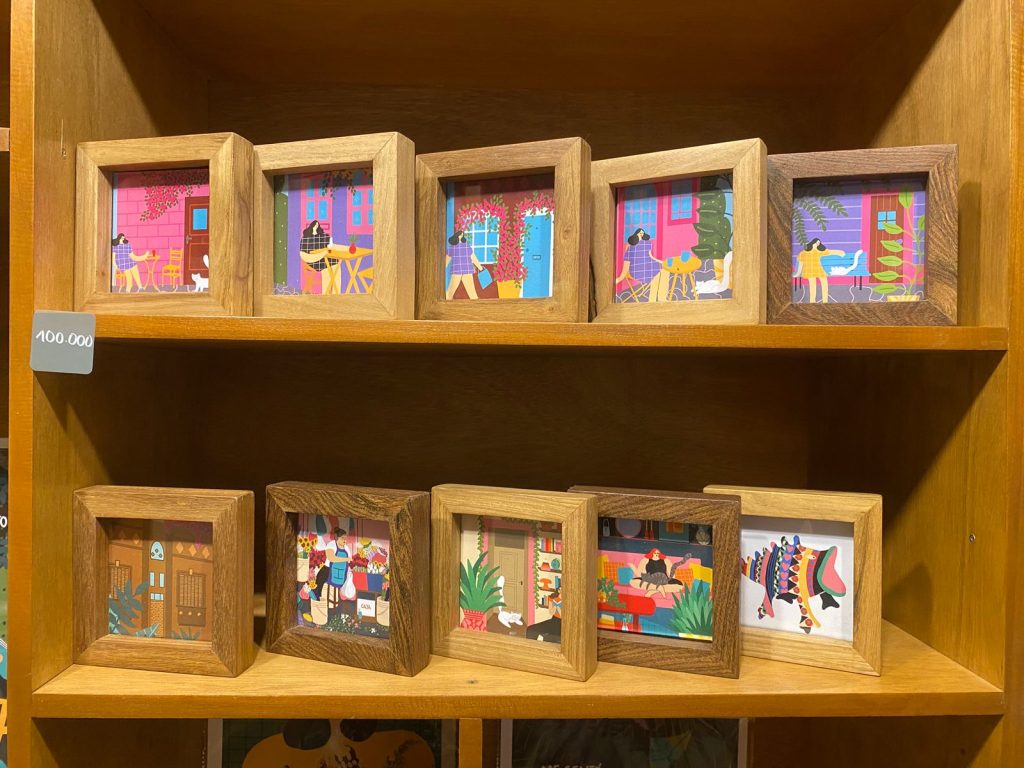
Regi describes her style as both simple and exuberant. “My style is quite synthesised, with very simple lines. There is an exuberance of colour, and it is exuberant in its shapes as well.” Curves play a central role in her work. “There are lots of curvy women, and a lot of nature.”
Living in Paraguay has shaped her visual world. “We are surrounded by beautiful, exuberant nature. That appears in my drawings.” Her work has travelled far beyond the country, with projects in Mexico, Argentina, Brazil, and Colombia, as well as in Europe, including Spain and Germany.
Early recognition and online platforms
One of Regi’s first moments of artistic validation came online, long before Instagram dominated visual culture. She remembers a pattern she created around 2010, featuring a yellow background and a merman figure. “It was a very silly drawing, but some illustrators I admired liked it.”
At the time, she was sharing her work on Flickr, which she describes as “the place for artists, photographers and illustrators at that time.” That recognition, however small, had a lasting impact. “I thought, maybe something interesting is happening here.”
Mamacitas Club and the female gaze

In 2016, Regi launched Mamacitas Club, a personal series centred on eroticism from a female perspective. “It was about the female gaze on sex, eroticism, and sensuality.” At the time, she says, discussing sexuality openly in Paraguay was still deeply taboo, especially for women.
The response from women was immediate. “They told me they finally saw bodies like theirs. They felt represented.” The reaction from men was very different. “They did not see the concept behind it.”
Regi believes this reaction revealed how deeply the male gaze has shaped ideas of desire. “We have learned to understand beauty, sensuality, and sex through a male gaze. For a long time, men created our image. Where was our voice?” Despite criticism, the series became a turning point. “Those drawings opened many opportunities for me. I owe a lot to that project.”
“I want people to find a bit of peace”
At this stage of her life, Regi hopes her work offers calm. “I want people to find a bit of peace.” She describes herself as being in a quieter moment, shaped by reflection and acceptance. Still, emotional connection remains central. “If people feel something, anything at all, then I am already happy.”
Today, Regi works with strict routines and values solitude. “I am very structured.” Her days begin early at 05:30 and are centred on long hours of drawing. “My solitude is drawing. That is my place.”
Solitude, routine, and opening her home
She has also explored new ways of connecting with her audience through Open House and Open Studio events held in her home. “People do not come only to buy art. They come to meet you, to talk, to know your space.” For her, the experience is intimate and respectful. “It is not the same as a gallery,” she adds. “It is your home.”
Regi invites everyone to her Open Studio event at Valois Rivarola. “This 20 and 21 December, come from 16:00 to 20:00 to visit my home/studio. See all my drawings, but the best of all is that in this edition I will not be alone! Joining me as guests are artists Anita Dice, Clari Lezcano, IaMajou, and Laura Mandelik.” The event will be held at Valois Rivarola 691, between Perú and Washington, in Asunción’s Las Mercedes neighbourhood.
Together, Regi’s illustrations and her friends’ art invite the audience to slow down and find their own voice.
For more information, follow Regi Rivas on Instagram