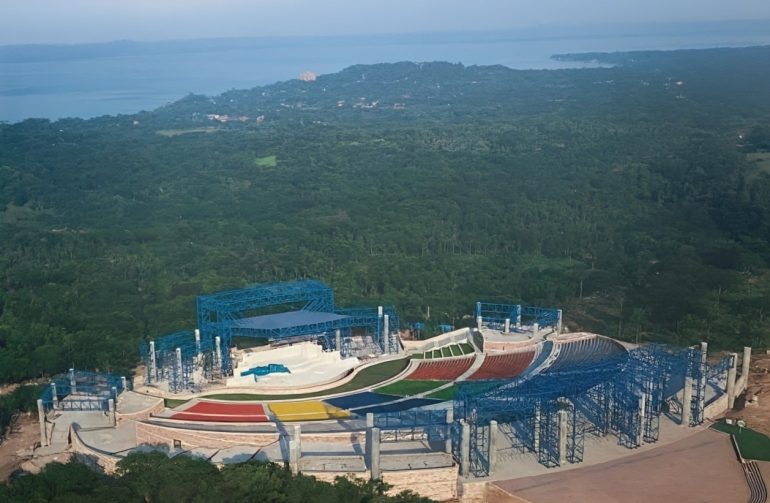

The José Asunción Flores Amphitheatre, better known as the Colosseum of Paraguay, is one of the country’s most iconic cultural landmarks. Looking to dive into the history of Paraguay’s golden years? This is where the story truly comes alive. Artists from every corner of the world have stepped on its stage, leaving behind unforgettable memories.
Located in San Bernardino, a town founded over a century ago by German immigrants, the amphitheatre sits in the middle of what has long been known as Paraguay’s favourite summer escape. San Bernardino evolved naturally into a glamorous, vibrant holiday hub, and the amphitheatre became one of its proudest centrepieces. To understand how it became a cultural giant, you have to go back to the time it was built.
Founded on 24 September 1992, the amphitheatre was created during a period when Paraguay was experiencing a wave of sophistication, ambition, and cultural expansion. The 1980s and early 1990s were marked by an energy that pushed the country to dream bigger. In that environment, Rubén Darío Hug de Belmont, a visionary businessman, decided to build an entertainment space inspired by Chile’s legendary Viña del Mar International Song Festival. His goal was to create an epicentre of festivals, concerts, and showcases that would attract both regional and international attention.
A stage for the world
From the moment it opened, the amphitheatre set a new standard. Artists from all over the world came to perform. The opening featured international singers, orchestras, dancers, and television personalities who helped introduce Paraguay’s new jewel to the rest of the continent. For many who attended, the inauguration felt like witnessing the beginning of a new cultural chapter.
The amphitheatre quickly became the stage for major international festivals. Events like El Gran Festival, which was produced by the same team behind Rock in Rio was one of them. Also, the Festival Internacional brought artists from across the continent and helped establish San Bernardino as a cultural hotspot. These festivals filled the venue with energy, music, and international audiences, marking some of the most memorable nights in its early years.
Continental recognition for José Asunción Flores Amphitheatre
Shortly after these landmark events, the amphitheatre expanded its cultural reach even further. The venue became the home of OTI Festival, an international singing competition televised across South America. OTI brought performers from various countries and gave the amphitheatre continental visibility. For years, families gathered around their televisions to watch contestants from Chile, Argentina, Brazil, Mexico, and beyond perform on the iconic San Bernardino stage. The competition helped position the amphitheatre as a respected platform where rising voices had the opportunity to shine.
Named after the creator of the Guarania, the amphitheatre continued to honour its ambitious vision. Its massive stage welcomed legendary artists like Air Supply, Chayanne, and Xuxa. Among them were Luis Miguel, Ziggy Marley, Daniela Romo, and many more.


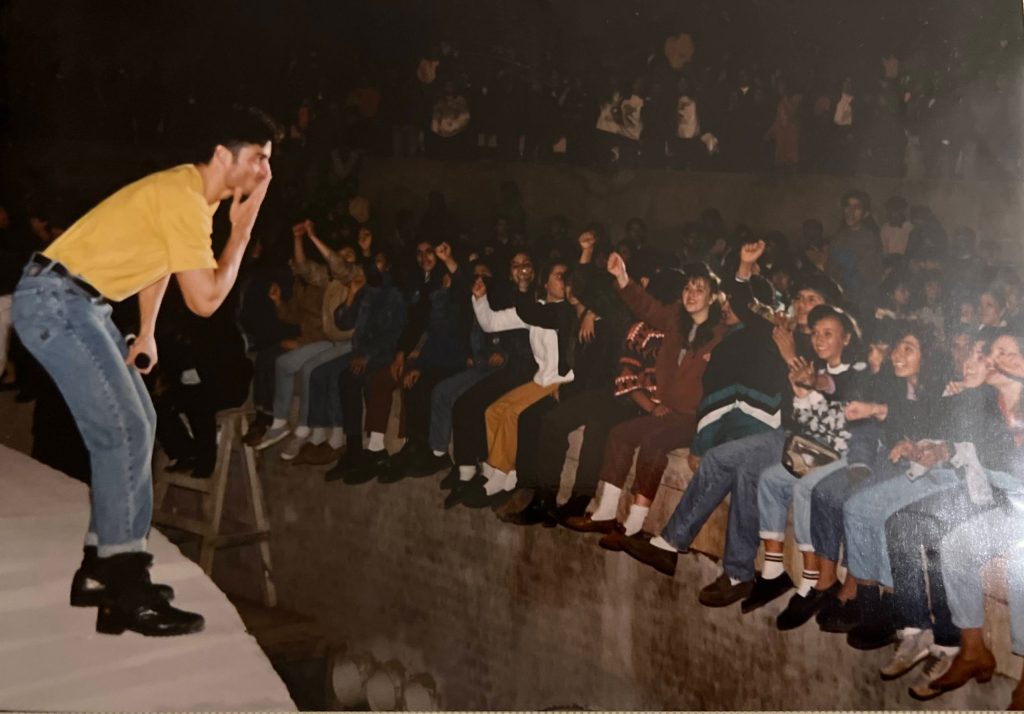
Where music meets scenery
The José Asunción Flores Amphitheatre became a place where global music and local culture fused naturally. The venue appeared in television productions from around the world. This place is admired not only for its scale but also for its exceptional acoustics. Engineers designed the structure so every note projected flawlessly throughout the open-air arena.
And then there is the view. The amphitheatre sits right above Lake Ypacaraí. The lake, which is famous for its deep blue colour and immortalised in music by countless artists, including Julio Iglesias. From the seats, the lake stretches out beneath you like a vision, golden at sunset and completely magical at night.
Even without a concert, the place has an energy that makes you feel connected to something bigger. Beyond its stage, the surrounding area offers small hiking paths and lookout points that many visitors love exploring. The trails are not difficult, but they offer a sense of adventure. Lastly, they reward you with breathtaking angles of the lake and the town.
Beauty and nostalgia
This sense of beauty and nostalgia is part of what makes the venue so beloved today. But its journey has not been without challenges. After its golden era of massive concerts and international events, the amphitheatre faced a difficult chapter. During Paraguay’s banking crisis in the late 1990s, the venue was taken over by the government. Without proper maintenance, it began to deteriorate.
The structure weakened, the seats were allegedly stolen, and the amphitheatre became only a shadow of the cultural monument it had once been. For many locals, this period felt like watching a national treasure slowly fade.
A beloved spot that still stands strong
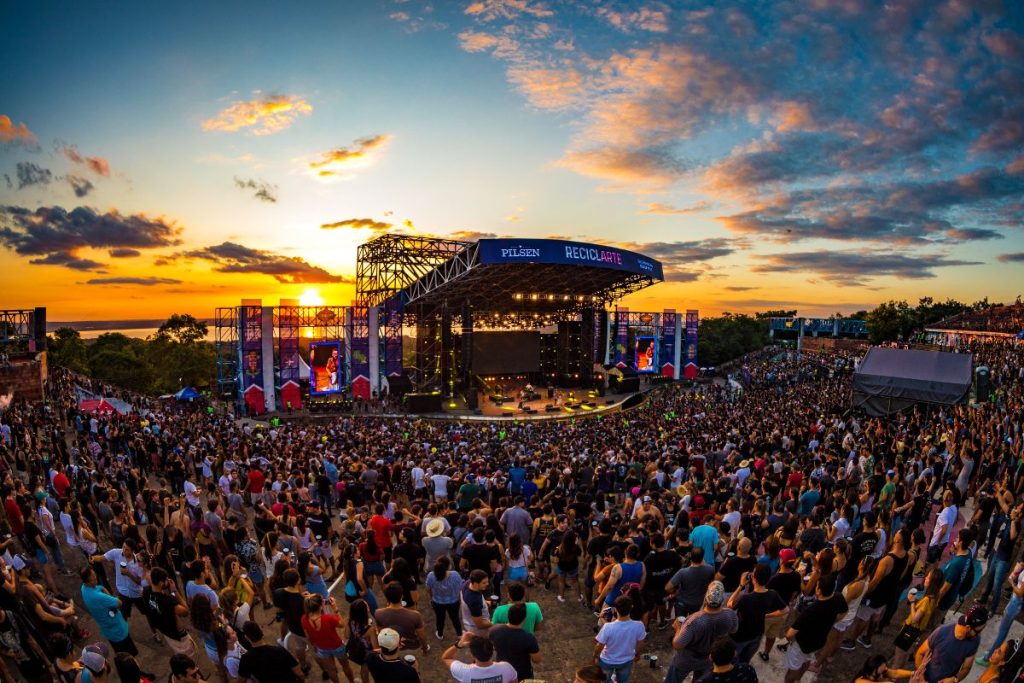
Despite everything, the amphitheatre has never lost its charm. Festivals and events continue to take place there, and the space has found a second life through tourism, photography, and the love of those who visit simply to enjoy the view.
The municipality of San Bernardino now oversees it, and while it may not shine the way it did in the 1990s, it remains one of the most beautiful overlooks in the country. Standing there, feeling the breeze from Lake Ypacaraí, taking in the rolling hills, and watching the sunset shimmer across the water, you immediately understand why this place is so beloved.
The José Asunción Flores Amphitheatre remains a diamond in the rough of Paraguay: a place that symbolises what once was, but also what could be again. Whether you visit for the history, the breathtaking view, the hike, or simply a quiet moment as the sun sets over the lake, it is impossible not to fall in love with this corner of San Bernardino.
This article was written by Rebecca Perez for The Asunción Times’ Writing Competition.