
The central headquarters of the Instituto Paraguayo de Artesanía (IPA) will host a new series of craft workshops in Asunción. This initiative welcomes the general public and highlights traditional Paraguayan techniques that remain central to Paraguay’s cultural identity. The programme goes throughout March and brings together ceramics, wood carving, and textile arts in classes with varying durations and fees. Each course reflects a distinct artisan tradition, while also offering clear practical frameworks in terms of class length and cost.
Ceramics and wood workshops in Asunción
Ceramics occupies a prominent place in the programme. Traditional hand-modelled ceramics rely on shaping clay without the aid of machinery, using techniques passed down through generations. The process includes clay preparation, manual forming, and kiln firing to harden the final pieces. Carolina Noguera leads a four-class course covering these stages for ₲300,000 (approximately US$46), while Estela Mari Barrieto offers a similar four-session format at the same cost.
Meanwhile, Graciela Quintana presents a longer, seven-class ceramics workshop focused on hand modelling and firing techniques. The extended format, priced at ₲80,000 (approximately US$12), reflects a slower-paced exploration of form and finishing. In contrast, wheel-thrown ceramics centres on the use of a potter’s wheel to create symmetrical shapes through rotational movement. Teodoro Olazar leads this specialised four-class course, which includes wheel handling, piece formation, and firing for ₲300,000 (approximately US$46).
At the same time, wood carving highlights another longstanding Paraguayan tradition. Artisans typically work with cedar, valued for its texture and resistance, especially in religious craftsmanship. Marcos Esquivel’s four-class workshop focuses on carving Holy Week-inspired imagery, emphasising shaping and detailing techniques. This course costs ₲250,000 (approximately US$38) and reflects the devotional roots of the craft.
Textile arts: embroidery, lace, and leather
In addition to clay and wood, textile arts form a vital part of workshops in Asunción. Leather embossing, for example, is a decorative technique that creates raised patterns on treated leather surfaces. Closely linked to rural artisan traditions, it is often used in belts, bags, and equestrian items. Luis Caballero teaches this craft over seven classes for ₲80,000 (approximately US$12).
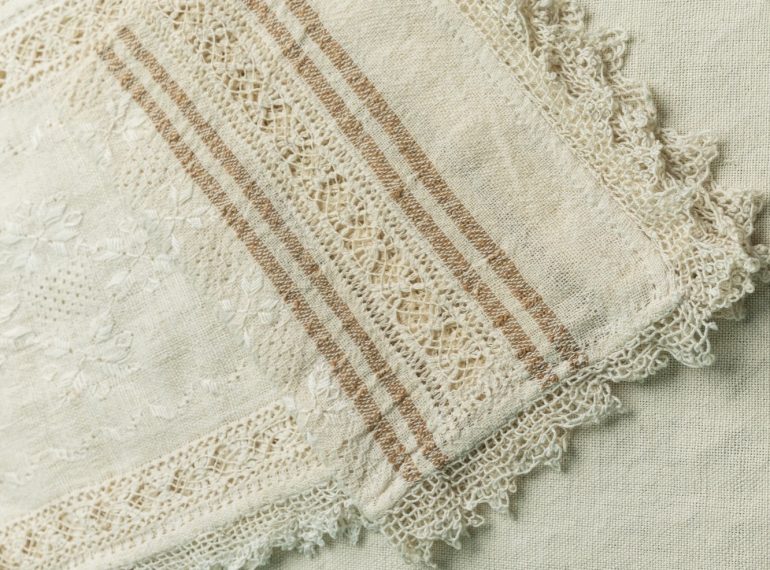
Similarly, ao po’i represents one of Paraguay’s most delicate textile traditions. Made from lightweight cotton fabric, it features intricate hand embroidery and fine stitched motifs. Carmen Acuña leads a seven-class workshop dedicated to traditional ao po’i embroidery for ₲80,000 (approximately US$12), reflecting its cultural significance and detailed craftsmanship.
On another hand, Norma Martínez offers a seven-class ñandutí workshop for ₲80,000 (approximately US$12), highlighting one of Paraguay’s most internationally recognised crafts. Ñandutí, is a lace-making technique known for its circular, web-like patterns. The name means “spiderweb” in Guaraní, referencing its radial symmetry and colourful geometric designs.
Finally, crochet is a versatile fibre art technique using a hooked needle to interlock loops of yarn. Unlike woven textiles, crochet builds fabric from a single continuous thread, allowing flexibility in shape and texture. Isabel Giménez teaches a seven-class crochet workshop, which includes basic techniques and the creation of placemats and coasters, for ₲180,000 (approximately US$28).
Those interested can request further information exclusively via WhatsApp at 0991 740 833 between 07:00 and 15:00. Overall, through this diverse programme, the IPA reinforces its commitment to safeguarding traditional knowledge. At the same time, it encourages broader public participation in strengthening Paraguay’s artisanal heritage.