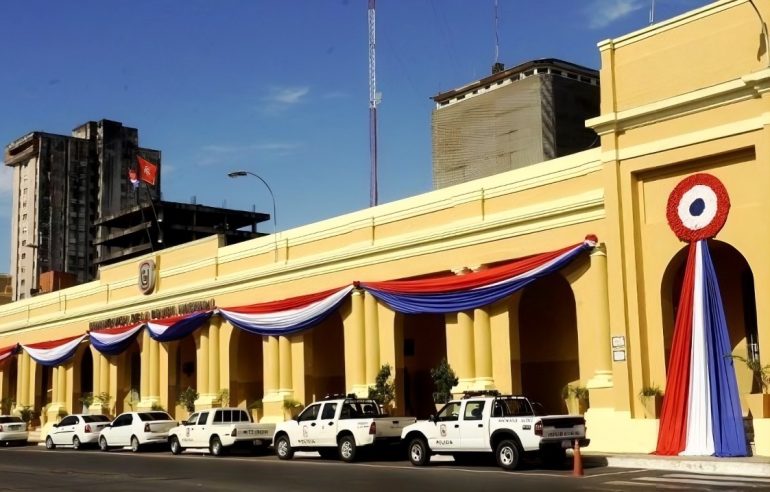

The historic headquarters of the National Police of Paraguay, a landmark building in the capital city of Asunción, is set to be converted into a civic centre and museum. This significant initiative will see the building, located on El Paraguayo Independiente street, repurposed to showcase the institution’s extensive history, which spans more than 183 years. The project aims to preserve the legacy of the police force while simultaneously making a historically important site accessible to the public for the first time.
This transformation follows the recent relocation of both the National Police Command and the Ministry of the Interior to a new, modern complex at the Port of Asunción. Consequently, the move has vacated the old headquarters, presenting a unique opportunity to reclaim the building for cultural and community use. The project is seen as a key step in both honouring the past and adapting to the future needs of the city and its residents.
A new public chapter for a landmark building
The government’s plan for the former command centre is twofold. Firstly, it will house a comprehensive museum dedicated to the National Police, offering visitors an in-depth look at its evolution and role in Paraguayan history. Secondly, it will function as a civic centre, providing a new public space for community engagement and cultural activities. This dual purpose seeks to transform a building once associated solely with state authority into an open and welcoming hub for all citizens.
The initiative reflects a wider strategy to revitalise the historic centre of Asunción by repurposing significant buildings for public benefit. By opening its doors, the former headquarters will not only educate visitors but also contribute to the cultural vibrancy of the capital. The project is expected to attract both local residents and tourists, providing a new point of interest in the city’s rich historical landscape.
Preserving over 183 years of police history
Responsibility for managing the new space will be given to the National Secretariat of Culture. This government body will oversee the curation of the museum’s exhibits and the development of the civic centre’s programmes. Their involvement ensures that the historical narrative presented is handled with professional care and academic rigour. The Secretariat will be tasked with designing displays that are both informative and engaging for a broad audience.
The museum’s collection is expected to chronicle the extensive history of the National Police. Exhibits will likely include historic uniforms, decommissioned equipment, and important documents that trace the institution’s development from its origins to the present day. Furthermore, the museum will highlight the police force’s role during pivotal moments in the nation’s history, providing context to its constitutional function of maintaining public order and security.
A vision for a modern institution
Enrique Riera, the Minister of the Interior, commented on the significance of the project. Riera noted that the adoption of new technologies and the continuous training of officers are central to this vision. The creation of the museum is part of this forward-looking approach, as it helps to build public understanding and trust.
“The government aims for a modern institution and one that is ever closer to the citizenry with its new technologies and personnel.”
According to Riera, the museum will play a crucial educational role, particularly for younger generations. He explained that it will offer a clearer and more complete understanding of the unique constitutional and legal mandate held by the National Police.
Transformation of the historic police headquarters
The minister elaborated on the importance of communicating the responsibilities of the police force to the public.
“The people, especially the new generations, will have a more complete idea of the importance of the only constitutional and legal body that has the authority to maintain public order and guarantee citizen security.”
Ultimately, the transformation of the historic police headquarters is a multifaceted project. It serves to preserve an important piece of national heritage, foster a stronger relationship between the police and the public, and create a valuable new cultural asset for the city of Asunción.