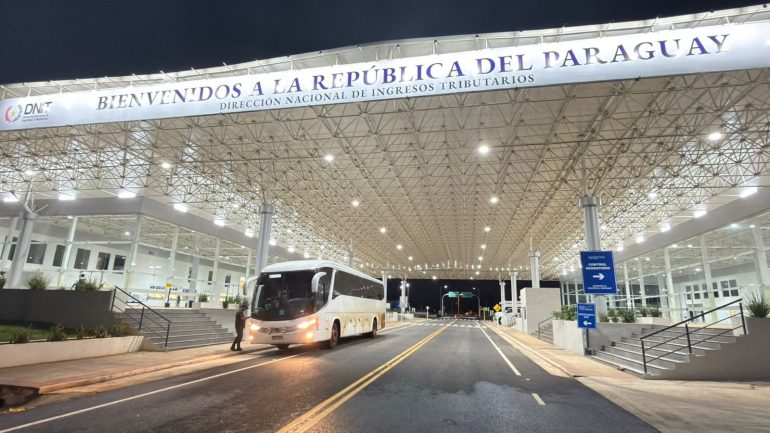

As of Thursday, 29 January 2026, closed-circuit tourist buses are using the newly built Integration Bridge to cross the border between the two countries. This information is according to the schedule established by the Paraguay-Brazil Joint Commission and the Government of Paraguay. The new bridge is connecting Presidente Franco, Paraguay, to the south of Foz do Iguaçu, Brazil.
The closed-circuit tourist buses travel on the Integration Bridge exclusively from 19:00 to 7:00. Outside of those hours, the border crossing continues to be made via the Friendship Bridge. This one is located in the heart of Ciudad del Este. As established by the Joint Commission, buses whose final destination is not Foz do Iguaçu, Ciudad del Este, or Presidente Franco will have to cross the Integration Bridge.
Integration Bridge pilot operation
The crossing of these vehicles is part of the second phase of the Integration Bridge’s pilot operation. In its first phase, it included the crossing of unladen trucks between 22:00 and 5:00. The gradual implementation of the pilot plan for the operation of the Integration Bridge seeks to facilitate the adjustment of procedures and the identification of opportunities.
The aim is for the improvement in the daily operations of this point of interconnection between Paraguay and Brazil.
Integration Bridge: the new for a new connection
The Integration Bridge is a monumental engineering feat connecting Foz do Iguaçu in Brazil to Presidente Franco in Paraguay. While it connects Paraguay and Brazil, on the latter side, it follows the border with Argentina and connects with the Tancredo Neves bridge.
Spanning the Paraná River, this cable-stayed structure was designed to alleviate the heavy congestion on the ageing Friendship Bridge. The latter has long been the primary artery for regional trade. By diverting heavy-duty lorries and cargo transport away from urban centres, the Integration Bridge significantly streamlines logistics within the Mercosur bloc. This plan is fostering more efficient economic cooperation between the two nations.
A symbol of modern binational partnership
Beyond its logistical utility, the bridge serves as a symbol of modern binational partnership and architectural prowess. The structure features a central span of approximately 470 metres. This is one of the largest of its kind in Latin America. Integration Bridge is supported by two massive Y-shaped towers that dominate the skyline.
The project also encompasses extensive perimeter works. This includes new access roads and customs facilities, which are essential for integrating the crossing into the local infrastructure. This secondary link not only bolsters the “Triple Frontier” economy but also enhances the safety and speed of cross-border travel for thousands of residents and businesses alike.