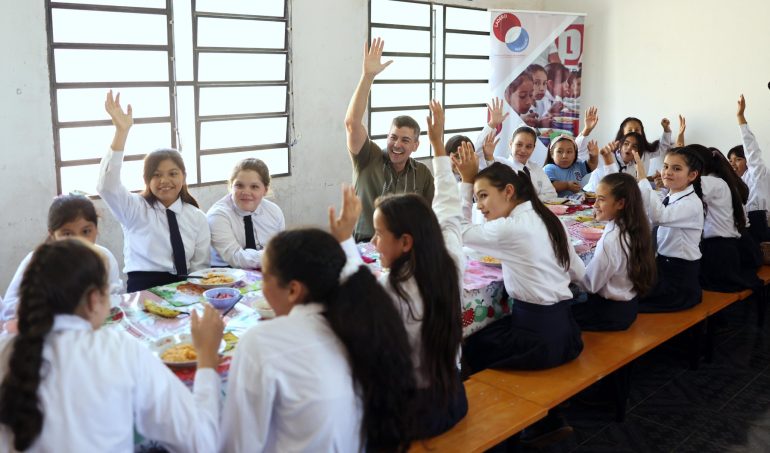

Every 24 January, International Education Day is observed, highlighting the essential role education plays in promoting peace and development worldwide. Education is not only a human right, but also a public good. On this day, learning reminds us how it drives innovation, encourages social change and supports development.
Quality and equitable education is key to breaking cycles of poverty and opening pathways to social mobility and economic opportunity. When individuals are given access to meaningful education, entire communities benefit. However, despite its importance, access to quality education remains unequal across the globe.
Although Paraguay is no exception to these challenges, there are signs of progress. The Ministry of Education and Science’s 2025 Management Report presents encouraging figures, highlighting significant investment in innovation and educational infrastructure. Similarly, the 2026 agenda offer a renewed sense of hope for continuous improvement.
MEC’s 2025 management report
In 2025, the Ministry of Education and Science (MEC) reported a total investment of US$44,006,714. This figure includes small and medium-scale interventions across hundreds of educational institutions and major infrastructure works in 316 school facilities and six Teacher Training Institutes. It additionally includes improvements in emblematic institutions such as the National Technical School and the National University of Asunción.
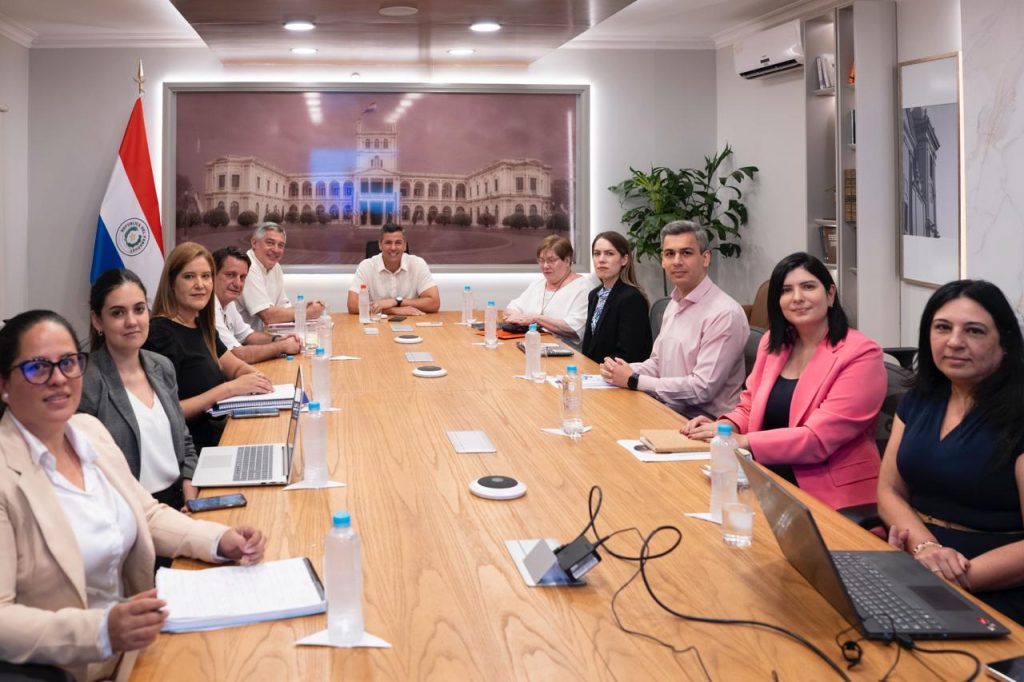
The Ministry also highlighted key interventions and projects carried out during the year, along with several major initiatives. These include the construction of 347 toilets under the ‘0 Latrines Project’, with a total investment of Gs. 48.000.000.000 (approximately US$6.800.000), scheduled for completion in 2026. In addition, the repair and maintenance of school infrastructure amounting to Gs. 20.300.000.000 (approximately US$2.900.000).
Moreover, tuition and fee coverage was provided free of charge to students attending 1,059 educational institutions. The Ministry also carried out infrastructure repairs and maintenance through open contracts, based on institutional needs. The MEC also reported that, in 2025, infrastructure projects were approved for an additional 1,524 educational institutions and implemented by provincial and municipal governments, expanding improvements nationwide.
Positive numbers in school supplies for 2026
MEC Minister Raúl Ramírez reported that authorities have already received 90% of the 2026 school kits. The project represents an investment of more than US$30.000.000 in equipment and supplies, with the budget remaining unchanged. The kits are designed to complement classroom materials and are expected to help families save up to Gs. 2.000.000 per student.
The programme will benefit students in public and state-subsidised private institutions through the distribution of 25 items across 23 types of individual kits, totalling 20,164,721 school supplies. Authorities will deliver classroom kits to 78,078 sections, totalling 2,799,032 units for early childhood, primary, secondary and inclusive education.
The MEC will also distribute a further 5,003,004 learning workbooks, covering 49 items to support the educational process in early childhood, primary, and secondary education.
Progress in national planning with census and digital map
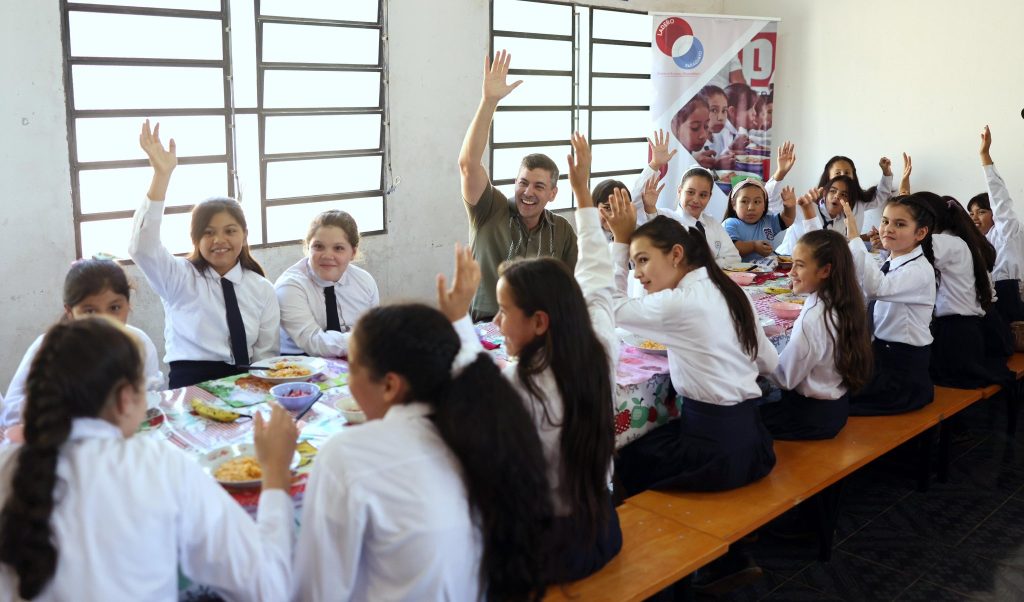
For the 2026 academic year, the MEC will continue to integrate an Infrastructure Intervention Manual, recognising classroom space and lighting as key components of a pedagogical model for effective learning environments.
The Ministry is completing the final phase of the national school infrastructure census, which will provide a comprehensive digital map of construction and repair needs.
This process will offer a complete and up-to-date overview of the system, supporting evidence-based planning and more efficient decision-making. This initiative will receive an investment of Gs. 9.000.000.000.
Students migrating to public education
One of the potential challenges facing the education system is the large-scale migration of students from private to public schools. It is estimated that approximately 20,000 students will make this transition, a significant increase in enrolment. Government authorities have described this as a “positive challenge”, arguing that it reflects the impact of social programmes such as Zero Hunger.
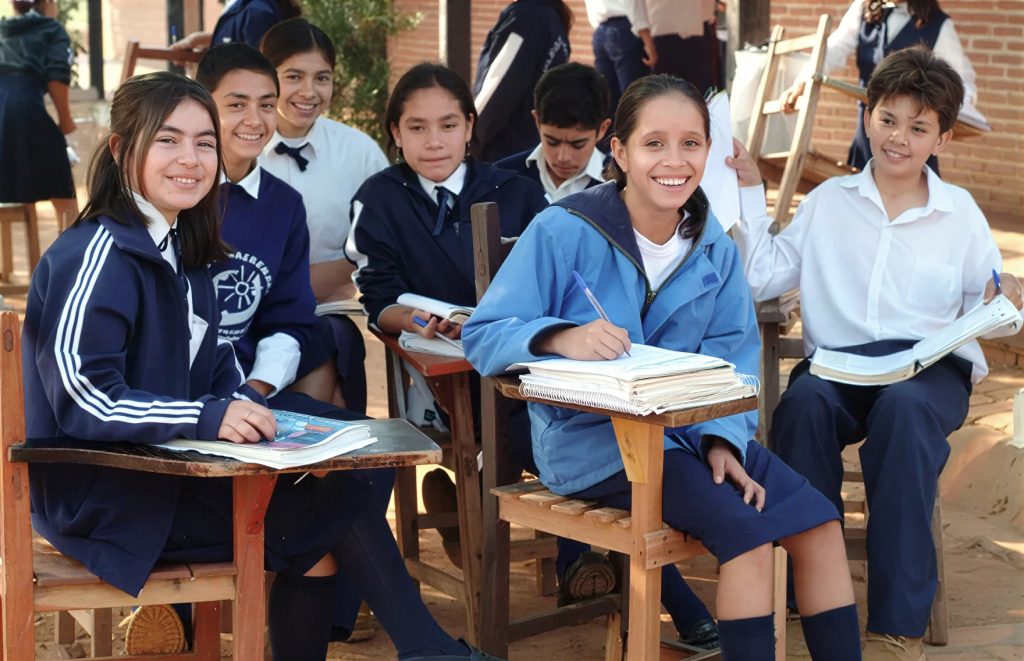
However, broader economic pressures may also explain the shift, rather than programme success alone. Regardless of the cause, the rise in student numbers presents new demands for state planning and resource allocation. In response, public education must continue to adapt and transform in order to provide an equitable and adequate learning experience for all students.
On International Education Day, Paraguay can improve by modernising classrooms and learning environments. Many public schools continue to search for adequate infrastructure, digital resources, and updated teaching tools, limiting the effective integration of technology into daily instruction. As these gaps are addressed, the quality of teaching and student engagement are likely to improve, promoting more equitable learning opportunities across the country.