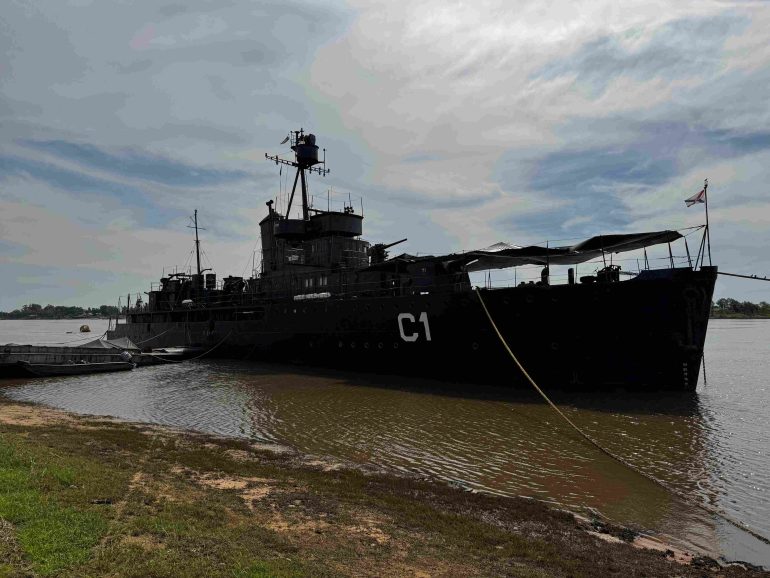

Despite being a landlocked nation, Paraguay has a long and rich history linked to its rivers. Far from being mere geographical features, the Paraguay and Paraná rivers have been vital for defence, communication and trade, shaping the country’s political and military destiny. Among all the vessels that have navigated these waters, few carry a legacy as significant as the gunboat Paraguay.
Today, the ship stands not only as a reminder of the strength and ingenuity of the Paraguayan Navy, but also as an active school ship and a floating museum. For a country without access to the sea, the survival and continued use of the Paraguay is not only unusual; it is deeply symbolic.
Ships designed to protect and transport
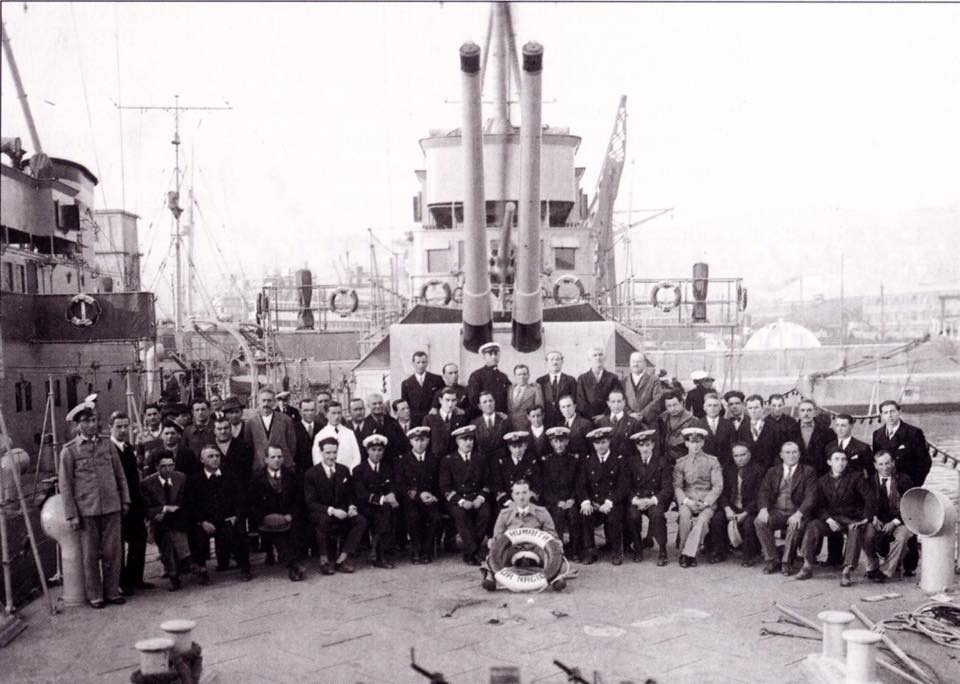
By the 1920s, sections of Paraguay’s political and military leadership considered war with Bolivia inevitable. Authorities began preparations to strengthen river defence and decided to acquire modern vessels to protect the Paraguay River shores and transport troops and supplies.
With government approval, authorities ordered and built two ships: the Paraguay and its twin, the Humaitá, which later gave its name to the class. The man responsible for their design and for supervising their construction in Genoa, Italy, was Lieutenant José Bozzano (1895–1969).
Bozzano had graduated from the Massachusetts Institute of Technology as a naval engineer in 1925 and was serving as head of the War and Naval Arsenals. He had already developed the ship’s design during his studies at MIT, reflecting a clear understanding of river warfare, logistics and naval supremacy in inland waters.
Between 1927 and 1930, Bozzano lived in Italy with his family to oversee construction and testing. Upon completion, the ships were praised by Italian naval officers. During their voyage to Paraguay in 1931, they also drew admiration from British officers when passing through the Strait of Gibraltar. It was evident that Paraguay, through Bozzano’s vision, had acquired two of the most modern river gunboats of their time.
Arrival and the Chaco War (1932–1935)
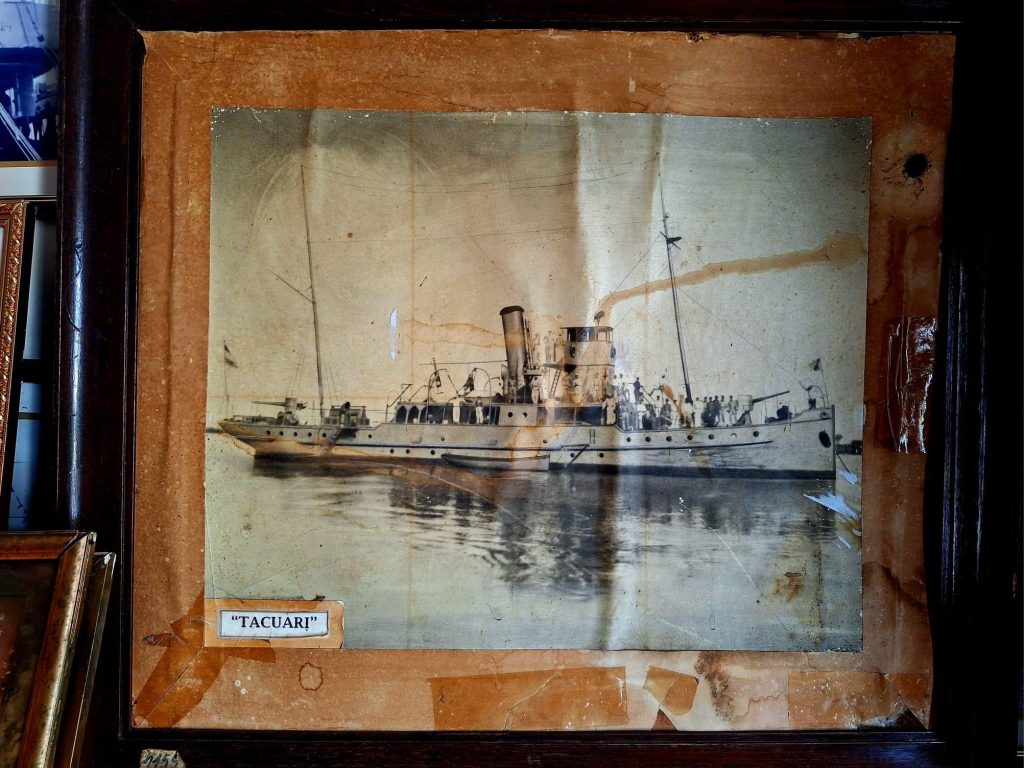
After crossing the Atlantic, the twin ships arrived in Asunción on 5 May 1931. The nation celebrated their arrival as a historic event: schools suspended classes, railway fares dropped, and crowds welcomed a symbol of national pride.
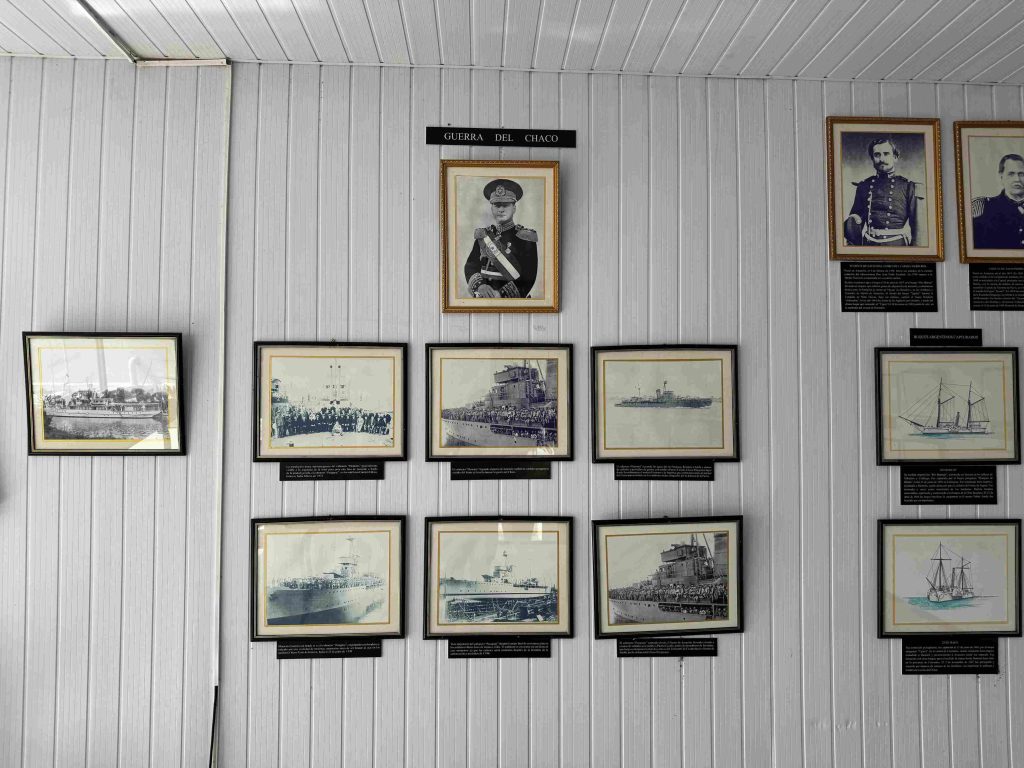
Although neither ship engaged directly in combat during the Chaco War, their role proved decisive. The Paraguay alone carried out eighty-one strategic voyages, transporting more than 51,000 troops, along with weapons, ammunition and supplies, upriver towards the front. Military historians frequently describe the ship as a silent but essential engine of Paraguay’s logistical success.
The Paraguay and Humaitá escorted each other during these missions, sailing as far as Puerto Casado. From there, troops and supplies were transported by rail to the front lines. On their return journeys, the ships transported wounded soldiers and damaged equipment back to Asunción, where Bozzano’s Arsenal carried out repairs.
Post-war life and political refuge
Following the war, both ships remained central to the Paraguayan Navy. The Paraguayan Navy used them for patrol duties, training, and humanitarian missions, reinforcing their status as floating symbols of sovereignty.
In 1955, the Paraguay unexpectedly entered regional political history. While anchored in Buenos Aires during a coup d’état, the ship provided refuge to Argentine president Juan Domingo Perón for thirteen days. During this period, low-flying aircraft and intimidation manoeuvres tried to pressure the crew and Perón, but the vessel remained steadfast.
Tragedy struck in 1968, when a fire in the engine room claimed the lives of seven sailors. After this incident, the Navy moored the ship near the Naval Arsenal in the Sajonia neighbourhood of Asunción. Authorities sometimes moved it in Asunción’s bay for celebrations, but it did not sail under its own power for decades.
Refloating and a new life
A turning point came in 2019, when the Paraguay made an experimental voyage in the Bay of Asunción, testing newly installed propulsion systems. This marked the first step in a broader restoration effort led jointly by the Naval Arsenal and the Navy. Shipyard workers completely rebuilt the hull after the damage it had suffered decades earlier.
By 2023, the ship was fully operational once again. Its first official post-restoration voyage took it to Villa del Rosario, commemorating the signing of the Chaco War peace treaty on 12 June 1935. Later that year, the ship sailed to Pilar, and in 2024 it returned once more to Villa del Rosario. That final journey combined training objectives with a humanitarian mission, delivering medical assistance to local residents.
Today, the Paraguay serves as a school ship, with a permanent crew of 42 sailors who live and train on board. The voyages it undertakes are designed primarily for instruction and practical naval training.
The ship also has six unconventional crew members: cats. Barlo and Vita are the parents, and together with their offspring they have become part of daily life on board. All are now neutered, ensuring that the ship’s feline population remains stable. Their presence adds an unexpected but endearing human dimension to the vessel.
A floating museum and living symbol
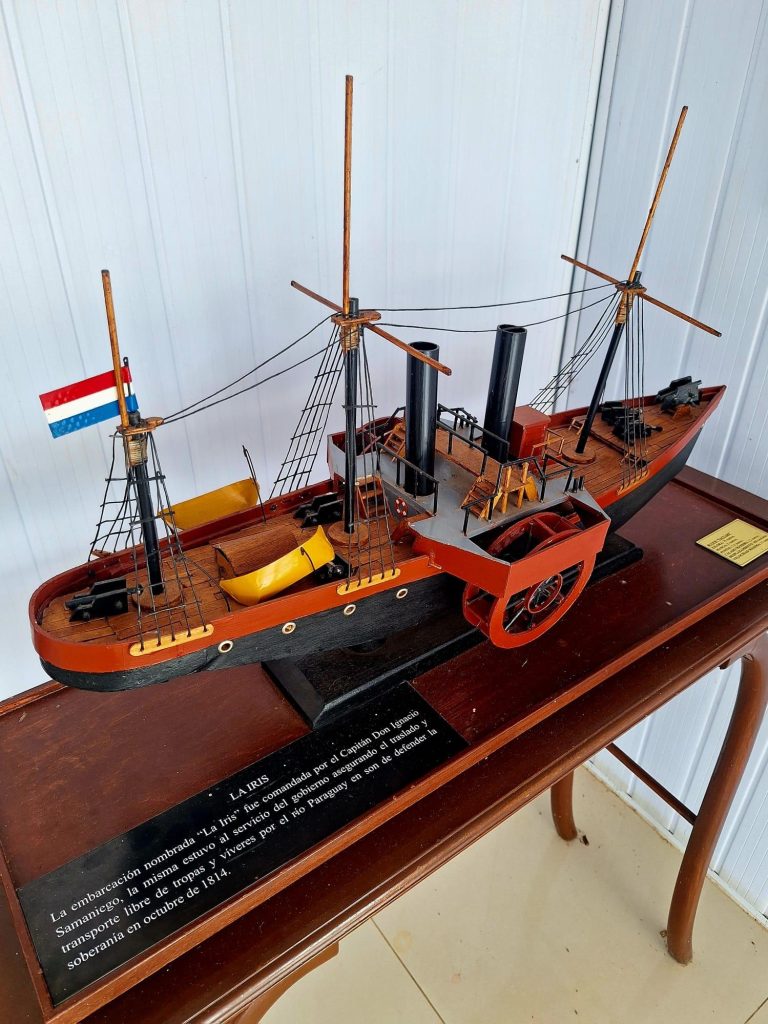
The Paraguay, anchored at Sajonia’s southern naval base, welcomes visitors by prior arrangement with the Paraguayan Navy. Inside, a museum preserves the ship’s history through photographs, artefacts and explanatory displays. Nearby, a small complementary museum features scale models, paintings and documents that tell the broader story of the Paraguayan Navy.
More than a relic, the Paraguay remains a living institution. It embodies continuity between past and present, tradition and training. For the Paraguayan Navy, it is both classroom and monument; for the country, a proud symbol of naval heritage. The Paraguay is not merely anchored in the river. It is anchored in the national memory.