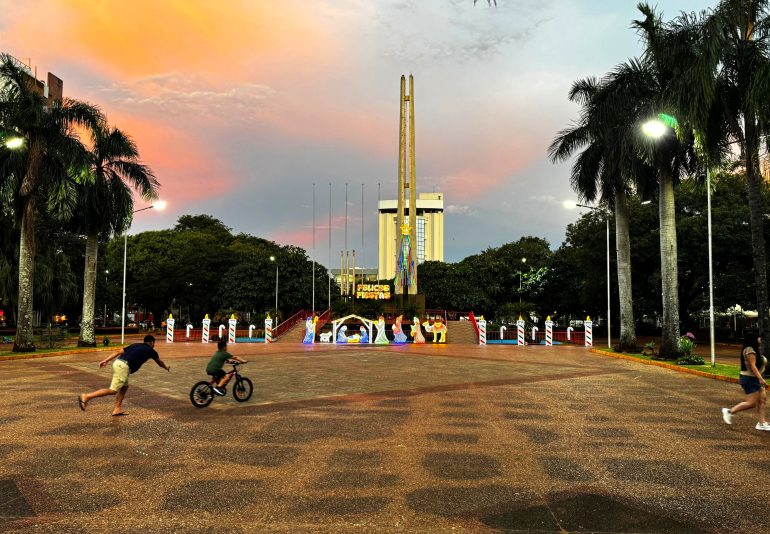

Encarnación is the third-largest city of Paraguay city, with more than 400 years of history. Founded in 1615, the city preserves a silent witness that has been present almost since its origins, yet often goes unnoticed: the Plaza de Armas, the heart of the city both literally and symbolically.
Located in the urban centre, the Plaza condenses the history of Encarnación and the wider region. With monuments, plaques, and little-known stories, this green space has been part of a broader narrative, observing the most decisive events without ever occupying the leading role.
The Asunción Times spoke with architect, historian, and city councillor Andrés Morel to reconstruct the history of this fundamental space.
Early years
“Originally, this was the place where the Jesuits settled,” explains Morel. Although Encarnación was initially founded on the opposite bank of the Paraná River, the definitive settlement was consolidated at this location. “The Plaza de Armas was the heart of the Jesuit urban structure, organised according to the Laws of the Indies.”
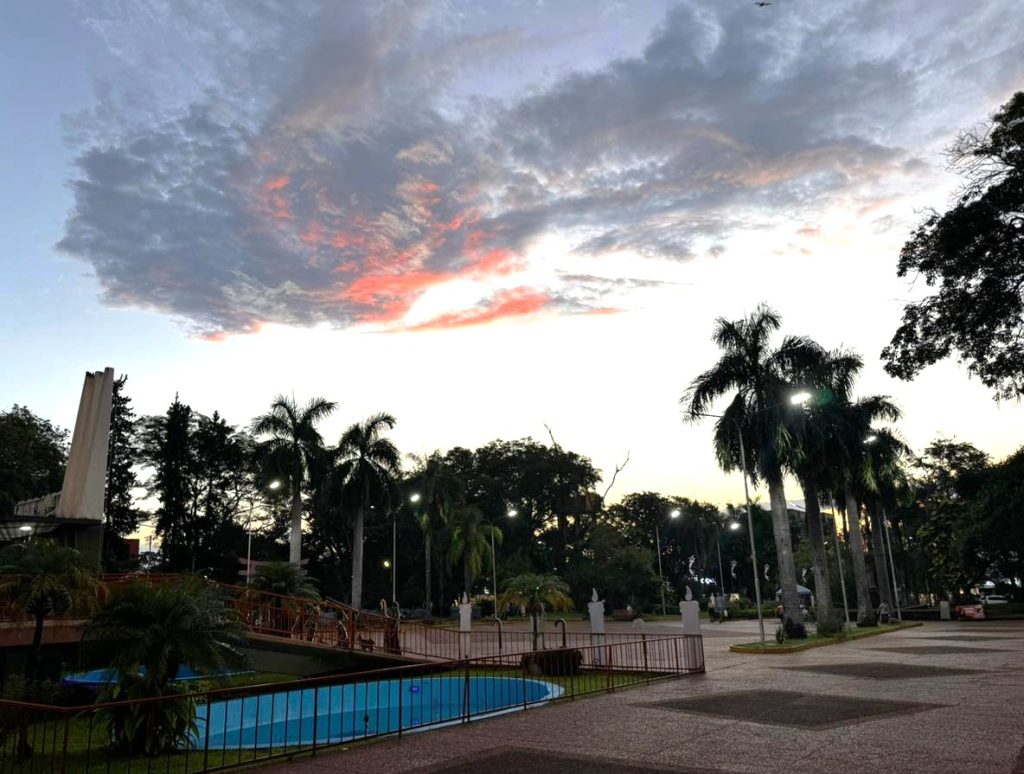
Around the Plaza stood the essential buildings of daily life, including the Church and the Council. “After the expulsion of the Jesuits, the original inhabitants abandoned the mission and returned to their ancestral way of life. Only a few remained.” With a minimal population, the area remained largely intact, though pushed to the margins of development.
In 1810, Manuel Belgrano’s expedition crossed the Paraná River to conquer the region. Belgrano remained in the area for several days. Before withdrawing, the royalist forces applied an old European military tactic: scorched earth, destroying the settlement to prevent it from being used by the enemy.
The Plaza de Armas, a silent witness
“The following year, in 1811, Fulgencio Yegros, one of the leaders of the independence movement, rested here with his troops before marching towards Asunción.” The plan was to advance from the south and the east, but events in the capital accelerated the process. “When Yegros arrived in Asunción, he was welcomed with 21 cannon shots and a country that was already independent.”
In 1845, President Carlos Antonio López ordered the dismantling of the remaining structures of the Jesuit mission, particularly the church, which was already at risk of collapse, and their relocation to what is now Cambyretá. There, the “Independence Barracks” were built to prevent future invasions. That same year, the former Pueblo de Itapúa was officially designated as “Villa Encarnación” by decree. Some Jesuit-era structures remained standing around the Plaza.
During the War of the Triple Alliance (1864–1870), the city was once again abandoned. Residents went into hiding as Allied troops positioned themselves on the opposite bank of the Paraná River. After the war, immigration and economic reactivation shifted the centre of gravity towards the port area, to the detriment of the upper part of the city. For decades, two distinct centres of development coexisted.
Modernisation of the Plaza de Armas
Despite these transformations, the Plaza continued to function as the core of civic life. At the beginning of the twentieth century, a military barracks was established nearby, contributing to the institutional consolidation of the area. Official ceremonies and parades were regularly held in the Plaza. In the 1960s, a small stadium was built, hosting sporting activities and community gatherings, reinforcing the social character of the space.
The most profound transformation took place in the 1970s, when the mayor at the time, who was also an architect, promoted a comprehensive modernisation. With schools, banks, and administrative buildings already surrounding the area. “Influenced by the modernist movement of Brasília, he turned the Plaza into the civic heart of the city, incorporating brutalist monoliths and monuments dedicated to immigrant communities.”
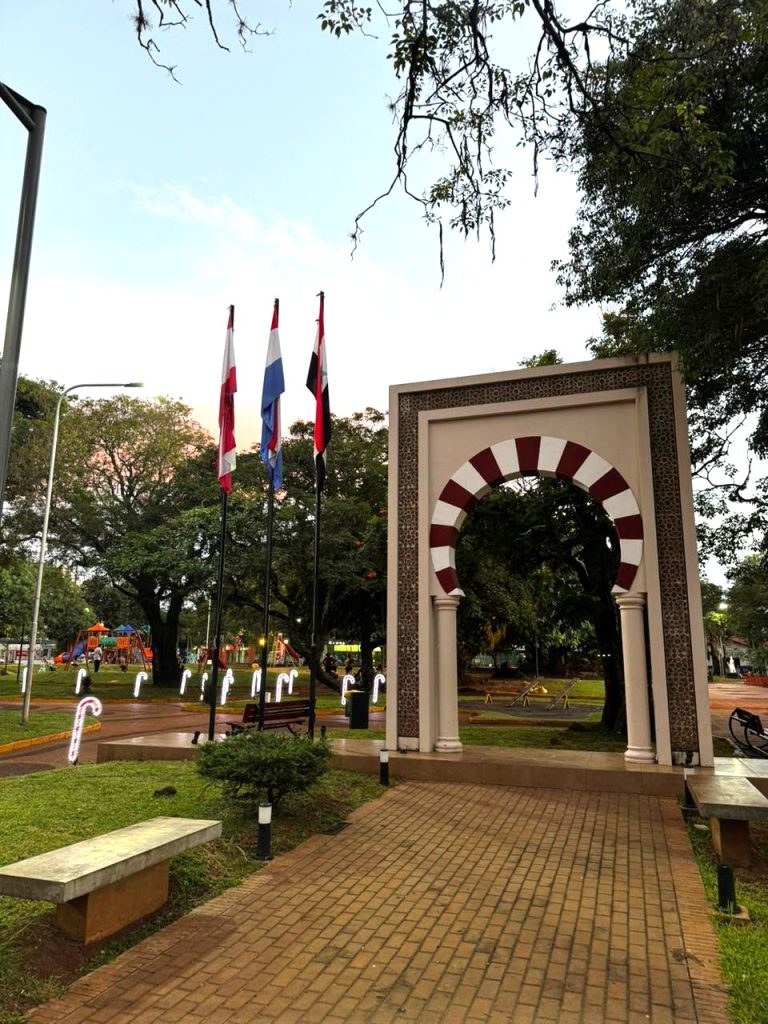
The first landmark was a Japanese garden, followed by monuments honouring German, Ukrainian, and Italian immigration. More recently, a monument dedicated to Syrian and Lebanese immigrants was added.

Curiosities of the Plaza
As a silent witness, the Plaza de Armas holds many little-known stories. One of the most symbolic is that of the curupay tree, which still stands today and is estimated to be at least 300 years old. Oral tradition holds that Yegros and his troops rested beneath its branches before continuing their march.
“For more than four centuries, the Plaza has kept the same name. This is rooted in the Laws of the Indies, which conceived plazas as spaces for assemblies and religious events. Even during the modernisation process, the decision was made to preserve its original name.”
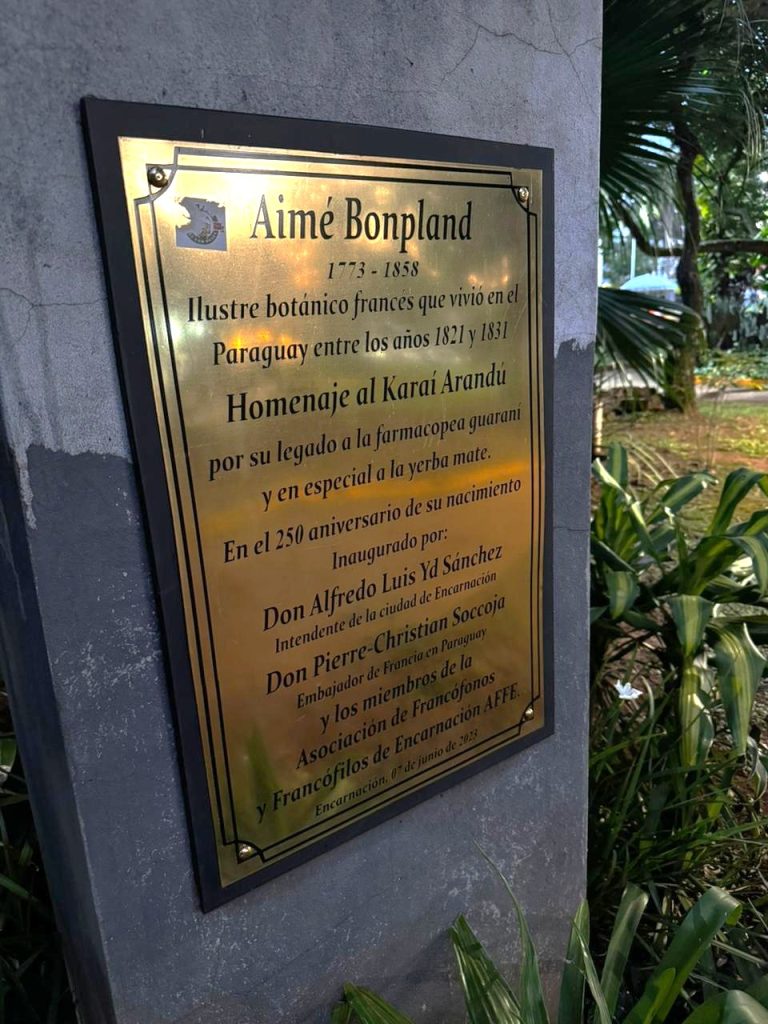
There is also a plaque remembering commemorating Aimé Bonpland, a French botanist. He accompanied Alexander Von Humboldt in his famous expedition in the Amazon. Later, he was hired by Argentinian officials for the study of flora and fauna.
After entering Paraguay without authorisation, he was imprisoned. Legend says he passed through the city due to his imprisonment. During his stay, he rediscovered the method for cultivating yerba mate, which had been lost after the Jesuit expulsion. “Thanks to him, many species have their Guaraní names.” In Paraguay, he became known as Karai Arandu, the Wise Sir.
The Plaza as a space of active memory
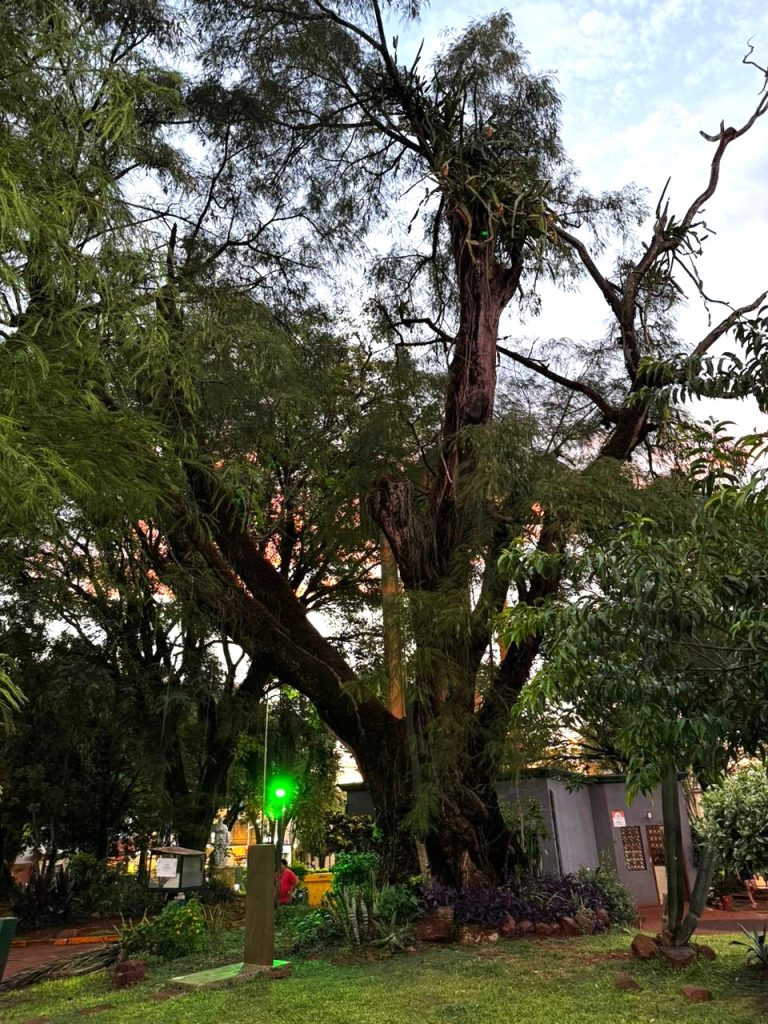
“Anyone who wants to understand our history, from anywhere in the world, should start here. The curupay tree produces seedlings that could become institutional gifts from the Municipality. There are dozens of stories waiting to be told.”
The Plaza de Armas represents the heart of Encarnación not only because of its location, but because of its historical depth. With layers of memory, tributes to those who shaped the city, and centuries of continuity, it stands as one of the most representative public spaces in Paraguay.