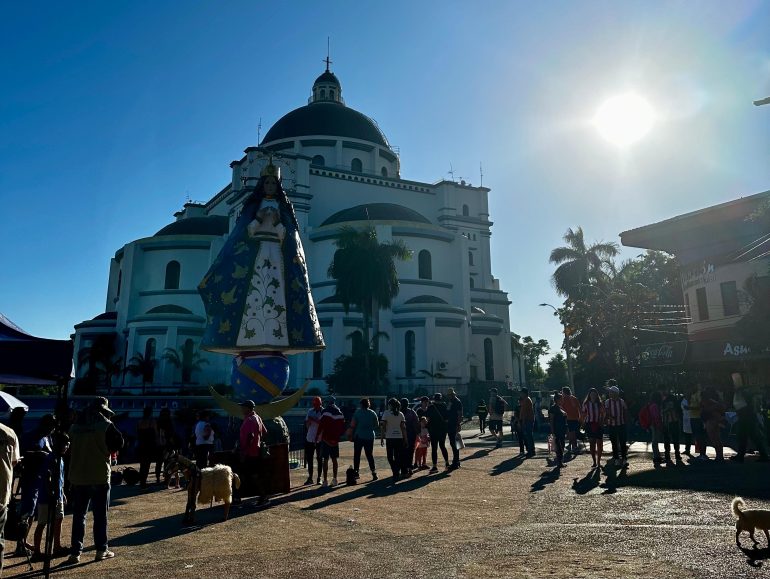

Every 8 December, citizens across Paraguay pause to honour the Virgin of Caacupé, their most cherished religious figure. The day is observed as a national public holiday celebrating the Immaculate Conception and deep-rooted spiritual tradition. However, the Virgin’s significance extends far beyond religion, touching cultural, historical, and emotional dimensions of Paraguayan life. For thousands of people, she represents protection, hope, guidance, and strength during times of uncertainty or personal struggle. In this way, she becomes a powerful symbol uniting generations, social classes, and regions through shared faith and national identity.
Faith and gratitude
According to oral tradition, a Guaraní Indigenous man, pursued by a rival group, carved an image of the Virgin in wood to give thanks for having been saved. This simple act of devotion transformed the city of Caacupé into a spiritual centre of great importance. Over the centuries, the town grew around this sacred legacy, and the current basilica was built to honour the Virgin.
The Virgin of Caacupé is recognised as the patron saint of Paraguay and a central figure of national devotion. The Basilica of Caacupé, known as the Sanctuary of the Virgin of Miracles, is one of Paraguay’s most emblematic temples. Located in the city of Caacupé, within the department of Cordillera, the venue is home to the image of the Virgin. Construction of the basilica began in 1945 and, although unfinished as planned, its imposing dome dominates the skyline. The basilica’s vast interior space is designed to receive and shelter the thousands of pilgrims who arrive each year. Every 8 December, the basilica becomes the centre of one of the largest pilgrimages in Latin America, reflecting Paraguayan devotion.
The Pilgrimage: sacrifice and devotion
In the days surrounding 8 December, roads leading to Caacupé fill with pilgrims from all corners of the country. Many walk for hours or even through the entire night, driven by faith and the fulfilment of personal promises. Some walk barefoot or travel on their knees as an act of sacrifice or as a gesture of gratitude. These gestures, although voluntary, reflect the deep personal devotion that characterises the pilgrimage.
Among the most moving practices is the donation of hair. Pilgrims, especially women and young people, offer their hair as a symbol of renewal, gratefulness, or the fulfilment of promises made in difficult times. Another practice can be seen in many girls and women dressing as the Virgin of Caacupé. Wearing white tunics and light blue mantles as a visual symbol of devotion, these garments often represent promises made by themselves or their families.
Solidarity that strengthens the nation
Neighbours, churches, volunteers, and organisations set up stands along the roads to offer water, food, medical aid, and words of encouragement. These small acts of kindness not only assist the travellers but reinforce the sense of unity and mutual care that defines the tradition. Faith, in this context, is expressed through action as well as belief.
The public holiday on 8 December, therefore, is more than a day of religious observance. The holiday is a date when citizens living in Paraguay come together to celebrate a tradition that blends spirituality, culture, and collective identity.