
Religious tourism in Paraguay invites you to discover a country deeply marked by faith, tradition, and spirituality. Throughout the national territory, historic temples, majestic cathedrals, rural chapels, and emblematic sanctuaries form a route that reveals the cultural and religious richness that characterises Paraguayan communities.
This tourism segment allows visitors and pilgrims to closely witness manifestations of popular devotion, patron saint celebrations, centuries-old festivals, and artistic expressions reflected in the architecture, imagery, and heritage preserved for generations. Circuits and routes are available for this rich experience, either independently, through private agencies, or directly with the National Secretariat of Tourism (SENATUR).
Key circuits of national heritage
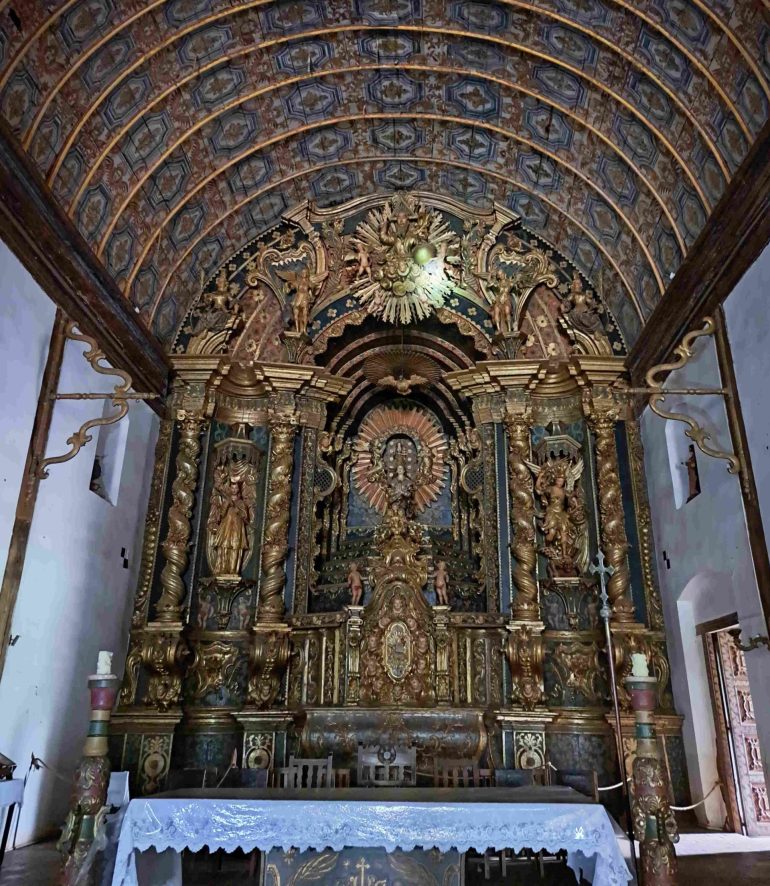
The presence of the Franciscans in the country left an invaluable mark, the best example of which is the Temple of Yaguarón, built between 1586 and 1587 by Friar Luis de Bolaños, who gathered Guaraní indigenous people from Acahay to form a Franciscan reduction. Historians consider it the finest example of Guaraní Baroque art and colonial Franciscan architecture, bathed in gold. Over the centuries, it survived wars and restorations, preserving its religious function and its community connection.
On the other hand, the Jesuit influence in Paraguay, from 1607 until their expulsion in 1766, is monumental and was fundamental to the country’s civilisation. The Diocesan Museum of Santa Rosa de Lima “Chapel Our Lady of Loreto” is one of the most fascinating treasures on the well-known “Jesuit Route,” as despite being small, its importance lies in the valuable pieces it houses.
This museum represents the unique blend of Hispanic-Guaraní Baroque. Highlights include the impressive frescoes painted by indigenous people (such as the representation of the Annunciation) and the wooden ceiling with stars, which has survived intact since the colonial era.
Religious tourism in Paraguay: Unmissable Jesuit Ruins
Another invaluable cultural space is the Santiago Jesuit Treasure Museum, which houses more than 50 Jesuit-Guaraní images carved in wood, many from the 16th and 17th centuries. Notable Baroque carvings can be admired in its four rooms. Furthermore, the current Parish Church houses the only complete Jesuit altarpiece in the country and an impressive equestrian carving of Santiago (Saint James) as a military leader.
The unmissable Jesuit Ruins, located a few kilometres from Encarnación, include the imposing ruins of Trinidad and Jesús de Tavarangue, and towards Carmen del Paraná, those of San Cosme y Damián. These are perhaps the most important testimonies of the Jesuit presence in Paraguay.
Marian devotion: Sanctuaries and pilgrimage
Marian fervour is the spiritual heart of Paraguay, consolidating several pilgrimage sites, mostly undertaken to fulfil promises. Some key locations are:
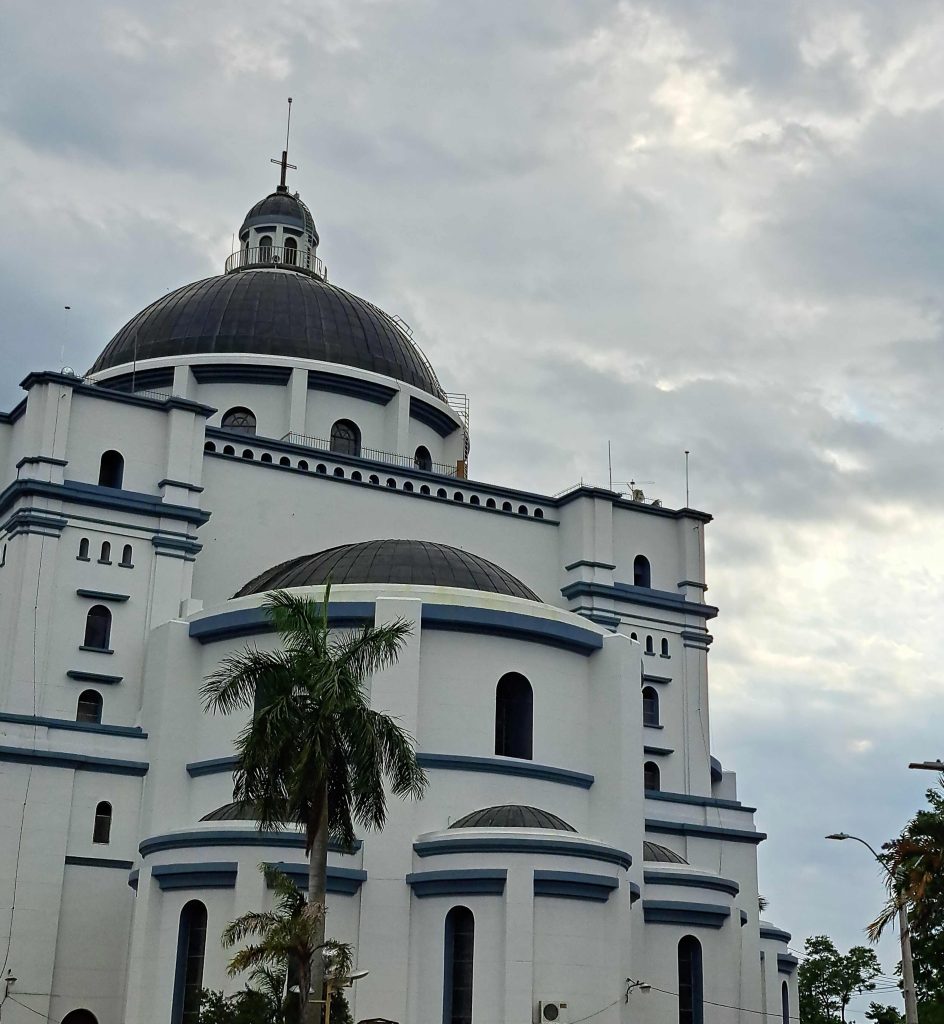
- Minor Basilica of Our Lady of the Miracles of Caacupé: The city of Caacupé is considered the “Spiritual Capital of Paraguay.” Founded in 1765, it is the largest Marian sanctuary and the seat of the diocese. It was visited by Popes John Paul II (1988) and Francis (2015). The route includes a stop at the Virgin’s Well (Tupãsy Ykua), from where it is a tradition to take water.
- Sanctuary of the Virgin of Itacuá (Encarnación): Known as the “Virgin of the Poor,” its sanctuary is located in Punta Itacuá. The main temple, with architecture that evokes the shape of a ship, honours the former navigators of the Paraná River. Its festival is celebrated on 8th December, the day when thousands of faithful walk the so-called “Pilgrim’s Way.”
Communities in Capiatá, Atyrá, Tobatí, and Ypacaraí host these activities and offer emblematic churches to visit, including the Mother Church of the Good Counsel of the Heralds of the Gospel and the Three Times Admirable Schoenstatt sanctuary.
From Asunción to Villarrica: Sacred spaces
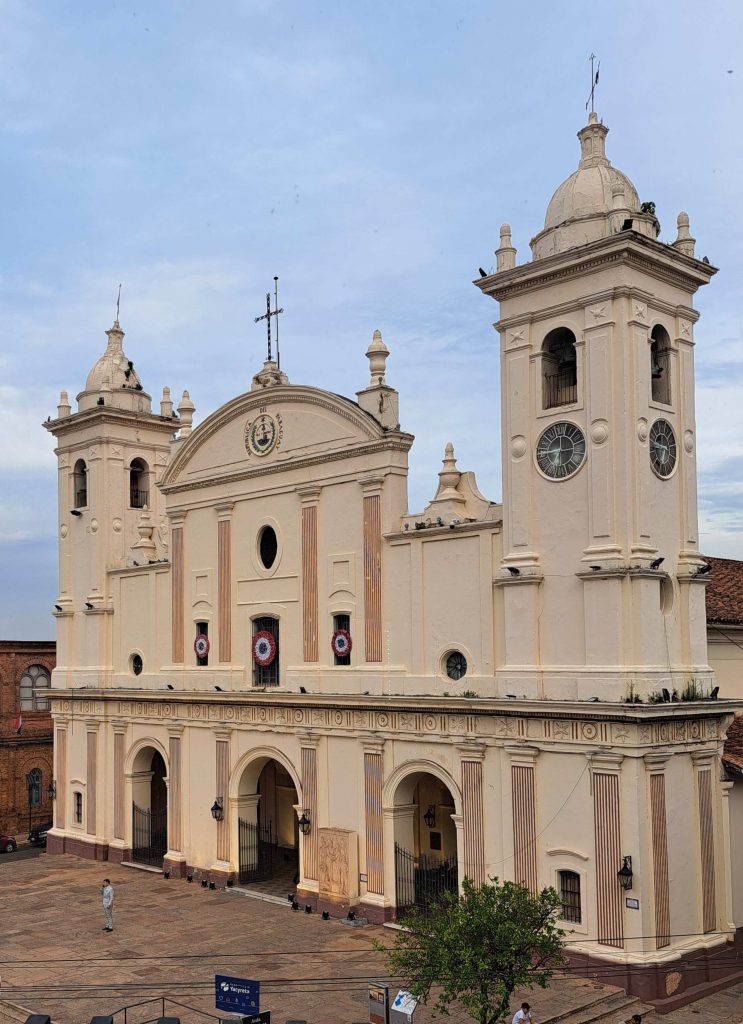
Meanwhile, the Paraguayan capital has as its initial focal point the Metropolitan Cathedral “Our Lady of Asunción,” the main Catholic centre featuring a Neoclassical architectural style, where its altar is mostly plated in silver; and the Church of the Incarnation, where a visit is compulsory due to its Roman-Corinthian architecture, similar to contemporary European cathedrals.
In turn, in Villarrica, one can enjoy a tour of the Cathedral – Holy Spirit Parish, receiving its name as it has been the seat of the Bishop, the titular of the Cathedral, the Parish, and the Diocese since 1987. Its current structure was completed in 1891 and includes a clock tower. It preserves an original wooden altarpiece from the Franciscan era, as well as relics of Pope John Paul II and the blessed Chiquitunga.
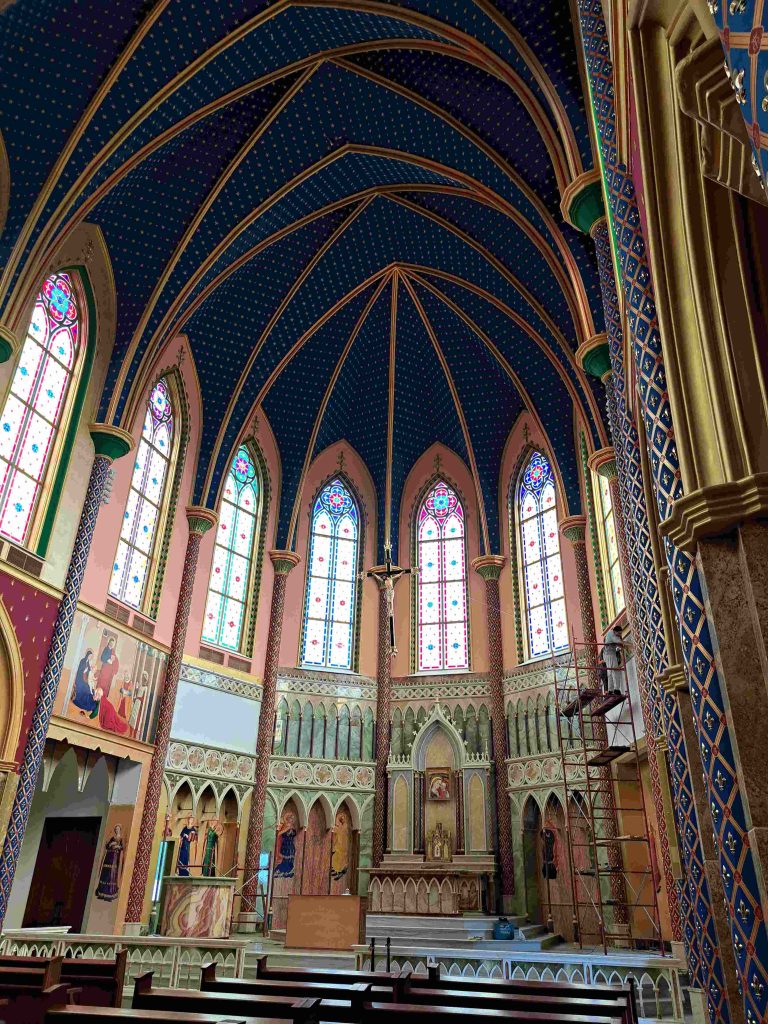
Finally, the Parish Our Lady of Asunción from Ybaroty is similarly an architectural heritage from 1944-1957, with a design influenced by European medieval architecture, combining Romanesque and Gothic elements. Its name changed following a popular devotion to the Virgin of the Assumption, and it is also located in Villarrica.
Faith, memory, and legacy
Paraguay guarantees freedom of worship, although Catholicism is the predominant religion, with 88.2% of faithful, the highest percentage in Latin America. The Catholic Church, whose first resident bishop was Pedro Fernández de la Torre in 1547, has played a central role since the colonial period, consolidating a national Church after Independence.
To walk these paths is to come into contact with the soul of a people who see in every sculpture, every fresco, and every altarpiece a testimony to their unbreakable spiritual legacy. From the dioceses and archdioceses to the most humble chapels, each site offers a unique opportunity to value collective memory.
Religious tourism in Paraguay thus becomes an invitation to explore an authentic, welcoming, and profoundly spiritual country, where the encounter with history, art, and devotion offers an unparalleled window. The pilgrim, upon leaving behind the golden magnificence of Yaguarón or the fervour at the Caacupé Basilica, carries with them the deep certainty of having walked the paths that forged the unbreakable heart of the nation.