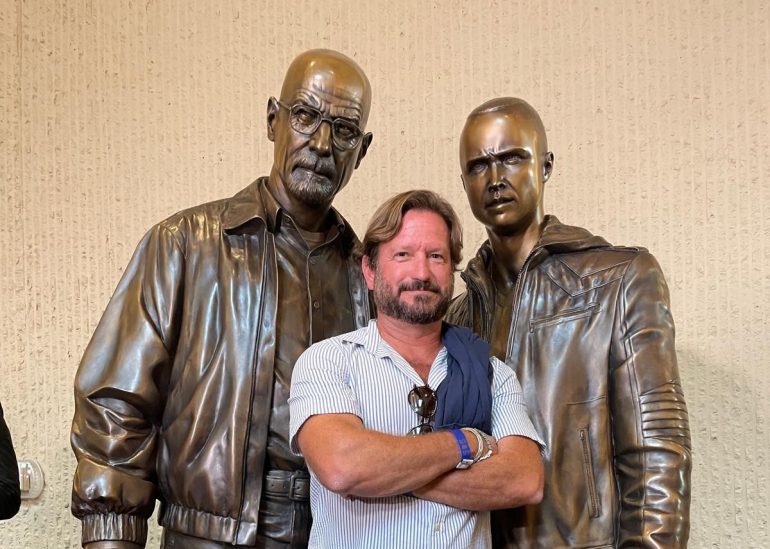

When Vince Gilligan created the Apple TV Plus series Pluribus, he made a deliberate choice: he wanted his Breaking Bad and Better Call Saul crew. At the centre was Christian Diaz de Bedoya, a location manager from Asunción whose three decades in television made him irreplaceable. Gilligan pulled him aside: “I am making a character… He is going to live in Paraguay. And I am doing this in homage to you.”
Now, with Pluribus as Apple TV Plus’s most-watched series ever, surpassing even Severance, Diaz de Bedoya proves in this exclusive interview with The Asunción Times that great filmmaking requires someone with the vision to transform locations into narrative characters that shape entire stories.
Finding the right locations
Diaz de Bedoya studied economics at the University of New Mexico, graduating in 1999, before taking an unconventional path into filmmaking. A rugby coach who helped bring production incentives to New Mexico encouraged his transition into the industry, and after a rugby tour in Europe, he began working in film logistics.
His real education came on set. “I studied economics, so my education was working on the sets,” he explains. “I met many people. Hollywood really is a fairly small circle… Everyone knows each other when you think about it.” This hands-on experience and network shaped his career.
His first credit was Suspect Zero (2001), starring Ben Kingsley, Aaron Eckhart, and Carrie-Anne Moss. Over the next decade, he built experience across projects, until a turning point in 2011 when Vince Gilligan hired him for Breaking Bad. From then on, he became part of Gilligan’s trusted creative circle.
How Christian Diaz de Bedoya built authenticity
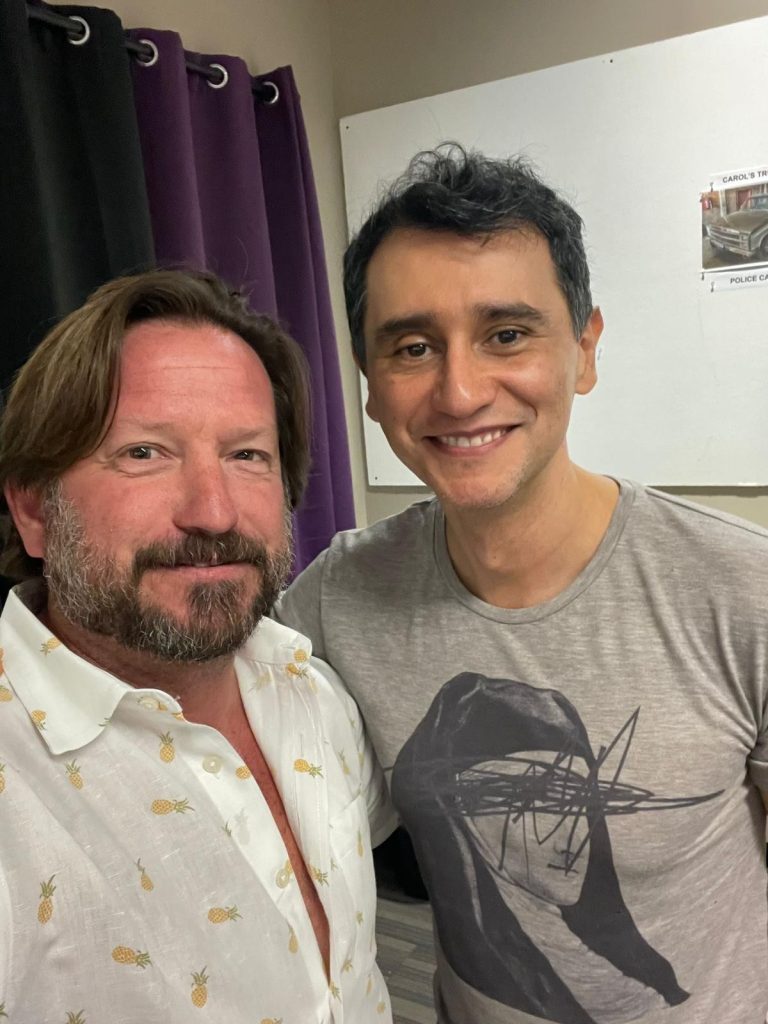
As Better Call Saul came to an end, Gilligan shared plans for a new series with his core team, including Diaz de Bedoya. The idea was personal: a Colombian character living in Paraguay as a tribute to him. “He said, I am doing a character. He is not going to be infected and he is going to live in Paraguay,” Diaz de Bedoya recalls.
Actor Carlos-Manuel Vesga brought Manousos Oviedo to life, one of the few people immune to the hive-mind phenomenon. As the character grew in importance, Diaz de Bedoya helped shape cultural details. “I asked my sister to bring me artefacts from Paraguay. I gave my guaraní, my mate tea tin, to the props department,” he explains. In one scene, the character says “qué quilombo”, reflecting a life shaped across borders.
For Diaz de Bedoya, these details matter. Locations and objects are not just background, they help tell the story.
A location manager’s philosophy
Diaz de Bedoya approaches each project by translating script into space. Sometimes Gilligan gives clear direction; other times, only a rough idea. “I have to visualise that and find a location based on what is written in the script,” he says.
In Pluribus, a key scene begins in a bar. “He wrote it as a bar on the outskirts of the city, but that was all the description,” Diaz de Bedoya recalls.
Often, locations evolve. “Many times we find a place that is not exactly how they wrote it, but it can give you that same dynamic,” he explains. Gilligan’s flexibility allows these changes. “I think Vince knows that I am super passionate about what I do… He is humble, values his team, and has a very open mind.”
The record-breaking series
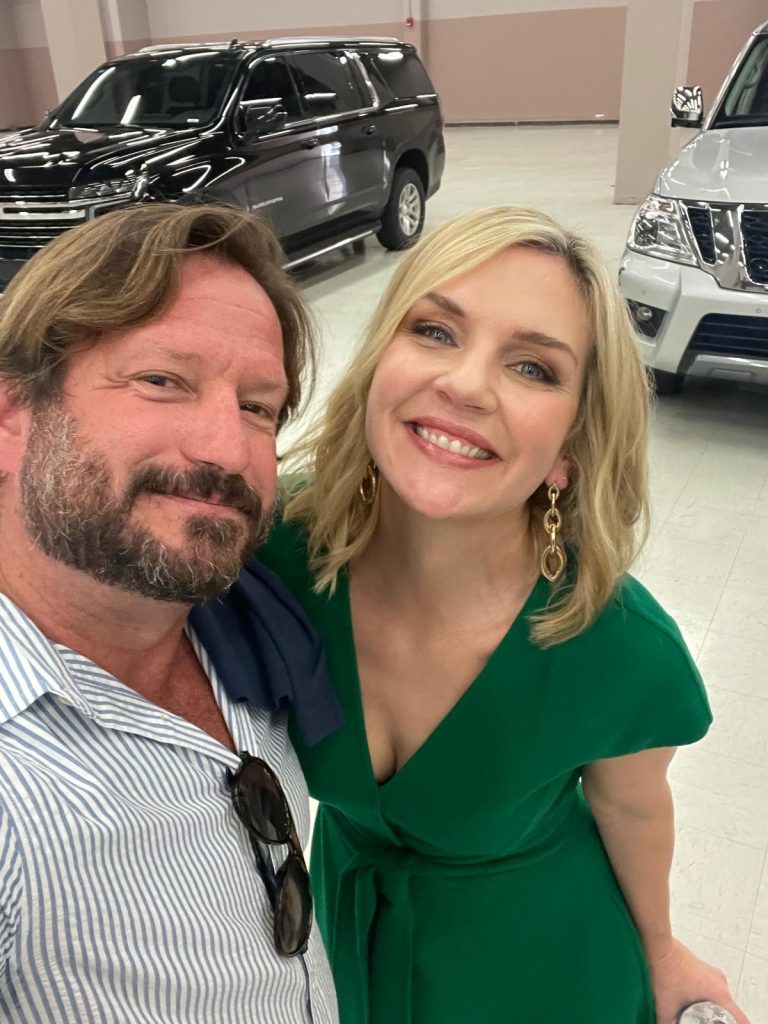
Pluribus exceeded expectations. In December 2025, Apple TV Plus confirmed it became the platform’s most-watched series, surpassing Severance. Since its premiere in November, it has topped charts in over one hundred territories.
The scale of production reflected Diaz de Bedoya’s work. An entire neighbourhood was built outside Albuquerque, with seven functioning houses, avoiding issues faced during Breaking Bad when fans disrupted real locations.
Scenes set in Paraguay were filmed in Spain’s Canary Islands, alongside locations in New Mexico. The logistics were complex, but essential to achieving the show’s visual authenticity.
What comes next
As of early 2026, Christian Diaz de Bedoya remains active across multiple projects. He recently completed Joseph of Egypt, an Amazon miniseries, while a second season of Pluribus is in development, likely for 2027. “We need to be a bit patient,” he says, noting the first season took around a year to film.
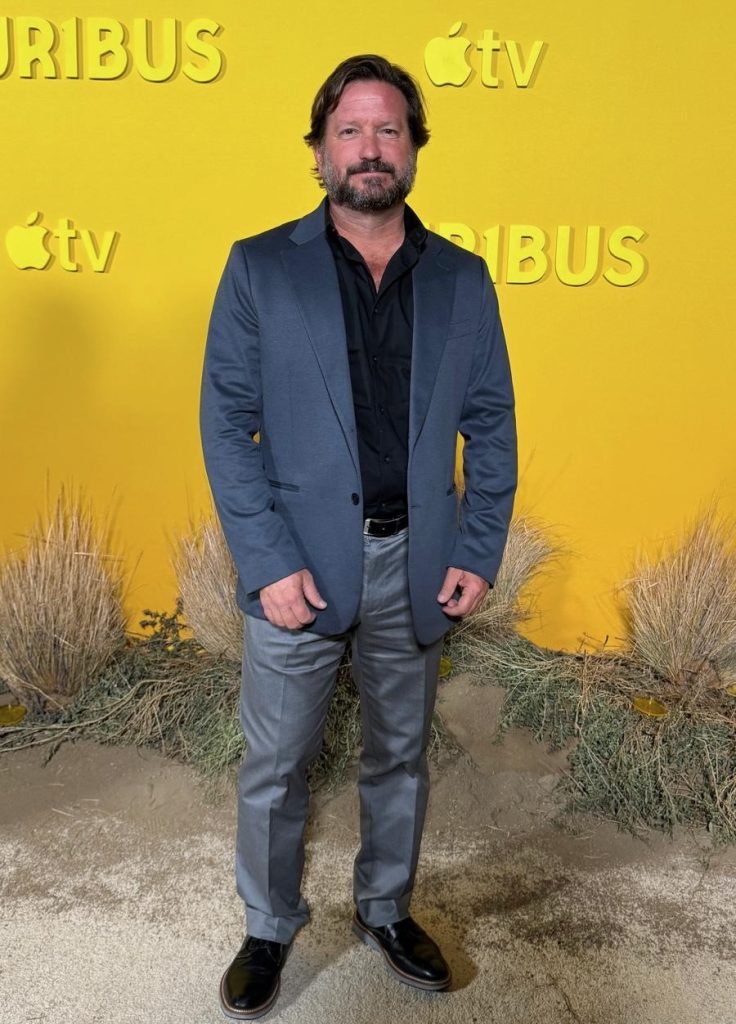
His advice is grounded in experience. “The greatest education is working on a set. You can fall into the set… your education will accelerate much more being there working than studying.”
While he values formal education, he believes practice is essential. “They have much more knowledge before they turn on the camera,” he says of younger crew members.
For aspiring Paraguayan creatives, his journey offers reassurance. “I believe you will find the work you love to do, and you will never work a day in your life again,” he reflects. His career shows that Paraguay, too, has a place in global storytelling.