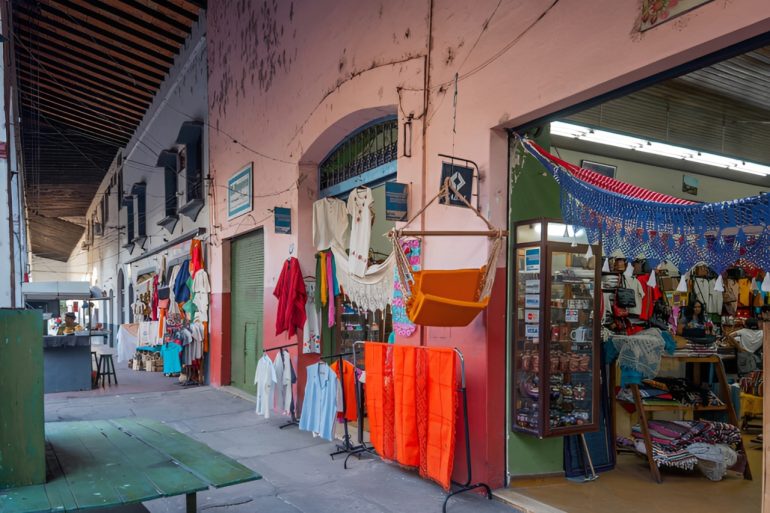

Asunción has officially taken another step towards its 500th anniversary with the launch of restoration works at La Recova, one of the capital’s most emblematic historic spaces. The project forms part of a broader effort to revitalise the Historic Centre ahead of the city’s 2037 milestone. This initiative positions La Recova as both a symbolic gateway and a living link between the city’s past and future.
The works were formally inaugurated on 29 January 2026 during a ceremony held at the building, located on Colón Street and Benjamín Constant. Authorities described the intervention as a key moment in the city’s long-term urban transformation plan. The initiative seeks to reconnect Asunción with its heritage while preparing the capital for the decades ahead.
La Recova: A historic space
La Recova, originally known as the Nueva Aduana de la Ribera, began construction in 1861 during the presidency of Carlos Antonio López. The building occupied a strategic location along the former port area. This position turned La Recova into a central hub for trade, movement, and urban development throughout the nineteenth century. Over time, the site became a traditional commercial corridor, particularly associated with the sale of handicrafts and typical products.
The current project includes the restoration of façades and galleries, respecting the building’s historical character while improving its functionality. The total investment allocated to the works amounts to Gs. 2,836,302,627. The Government of Paraguay is carrying out the restoration through the Tekorenda (meaning “that place of life”, in Guaraní language) Programme. At the same time, the programme is coordinated by the National Secretariat of Culture. The initiative aims to preserve heritage sites of high historical and symbolic value while integrating them into contemporary social, cultural, and economic life.
Preparing for Asunción 500 years
The intervention at La Recova falls under the framework of the Asunción 500 Years Commission. The commission is a strategic platform led by President Santiago Peña and coordinated by First Lady Leticia Ocampos. The initiative brings together the central government, the Municipality of Asunción, and the private sector. The goal of the platform is to drive a comprehensive plan for urban revitalisation ahead of the city’s 500th anniversary in 2037.
This long-term vision places special emphasis on the recovery of the Historic Centre and its emblematic spaces. The plan seeks to balance conservation with sustainable development. Authorities have stressed that heritage recovery goes beyond restoring buildings. The process also involves reactivating community life, local economies, and cultural exchange.
Community, memory, and the future
One of the most symbolic moments of the event was the placement of a time capsule containing messages and wishes from citizens. The capsule was conceived as a dialogue between the present and the future. The time capsule will remain sealed until 2037, when it will be opened during the celebrations marking Asunción’s 500 years.
Recognition was also given to the owners and tenants of La Recova, acknowledging their sustained contribution to urban memory and to the daily life of the Historic Centre. For many, the restoration represents more than the recovery of a building. The project also preserves the stories, trades, and traditions passed down through generations. As restoration progresses, La Recova reminds that Asunción’s 500th anniversary depends equally on its living communities and historic heritage.
Read more: Restoring A Paraguayan Treasure: San Buenaventura Church Begins Historic Renewal