
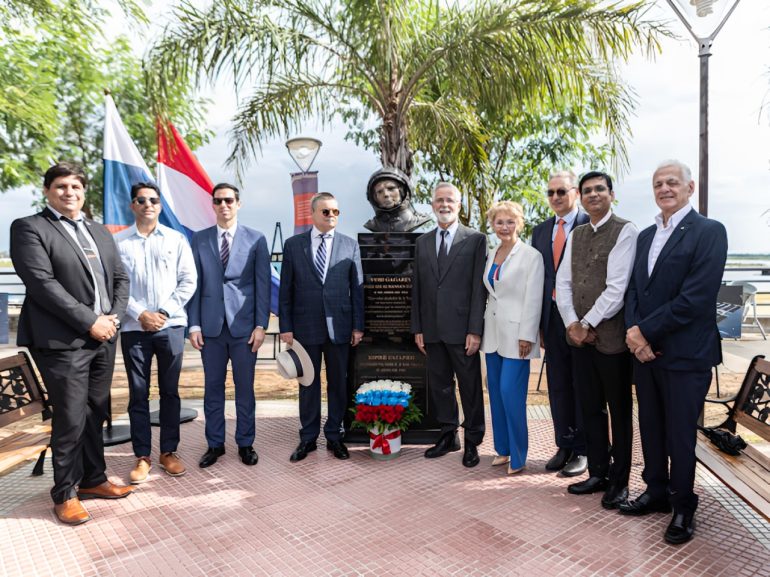

On 28 January 2026, a bust honouring Yuri Gagarin, the first human to travel into space, was inaugurated on Asunción’s North Costanera. The installation was made possible through a joint initiative. This initiative involved the charitable foundation Dialogue of Cultures – United World, the Embassy of the Russian Federation, and the Municipality of Asunción. The unveiling took place as part of the commemorations marking the 65th anniversary of Gagarin’s historic space flight in 1961.
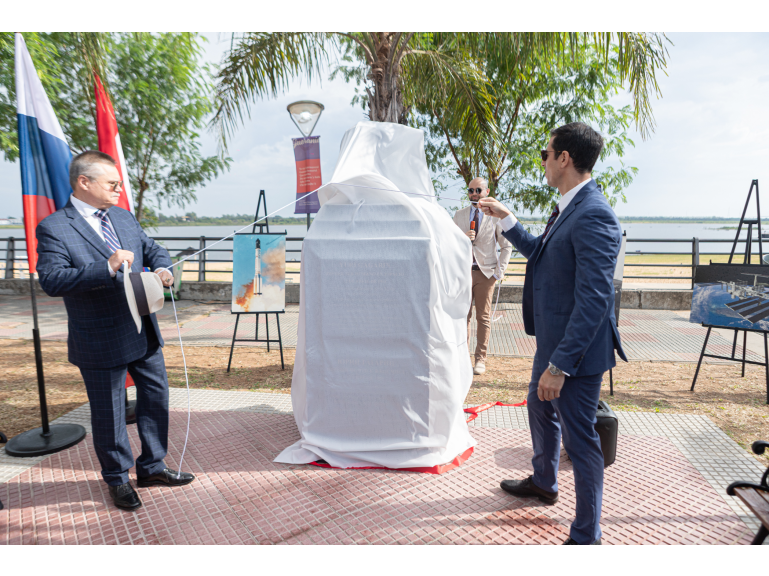
Gagarin´s bust unveiled
The ceremony was attended by representatives of the municipal authorities and executive branch institutions. Also, the Russian diplomatic corps, Russian residents in Paraguay, and the director of the Russian House in Buenos Aires. Beyond paying tribute to Gagarin, the event also served as a reminder of the longstanding cultural ties between Paraguay and Russia. These ties were forged in part through waves of Russian immigration during the twentieth century.
Yuri Gagarin, the first cosmonaut
Every 12 April, the world commemorates Yuri Gagarin as the first human being to leave Earth and orbit the planet. The date has been recognised by the United Nations as the International Day of Human Space Flight. In 1961, Gagarin changed the course of history, becoming a global symbol of scientific achievement and human aspiration. With the installation of this bust, Paraguay now has a permanent public space dedicated to remembering his legacy.
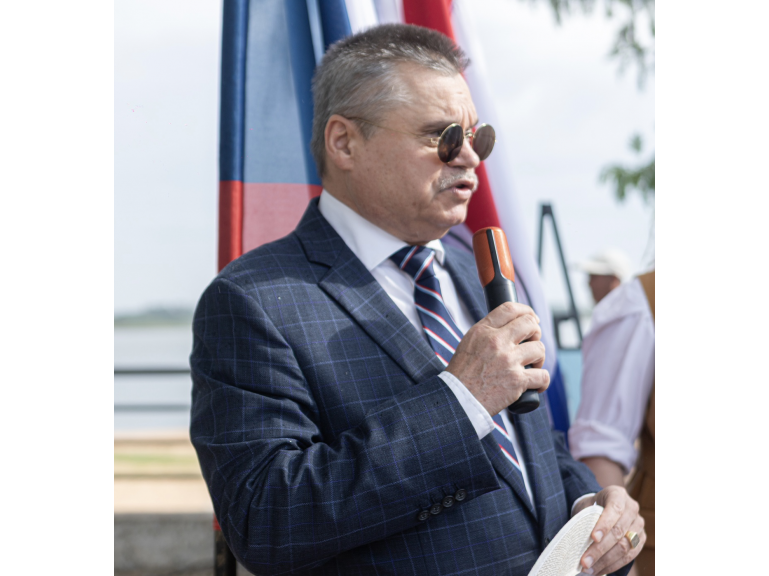
During the ceremony, Alexánder Písarev, Russia’s ambassador to Paraguay, delivered a speech highlighting both Gagarin’s historical significance and the broader cultural links between the two countries.
“Thousands of satellites currently orbit the Earth; people live and work in space. Space technology and mobile communications have become an integral part of our daily lives. However, the path to this era of new technologies began with two key events. On 4 October 1957, the first artificial satellite, Sputnik, was launched. And on 12 April 1961, Yuri Gagarin’s first space flight took place,” Písarev stated.
A reciprocal gesture
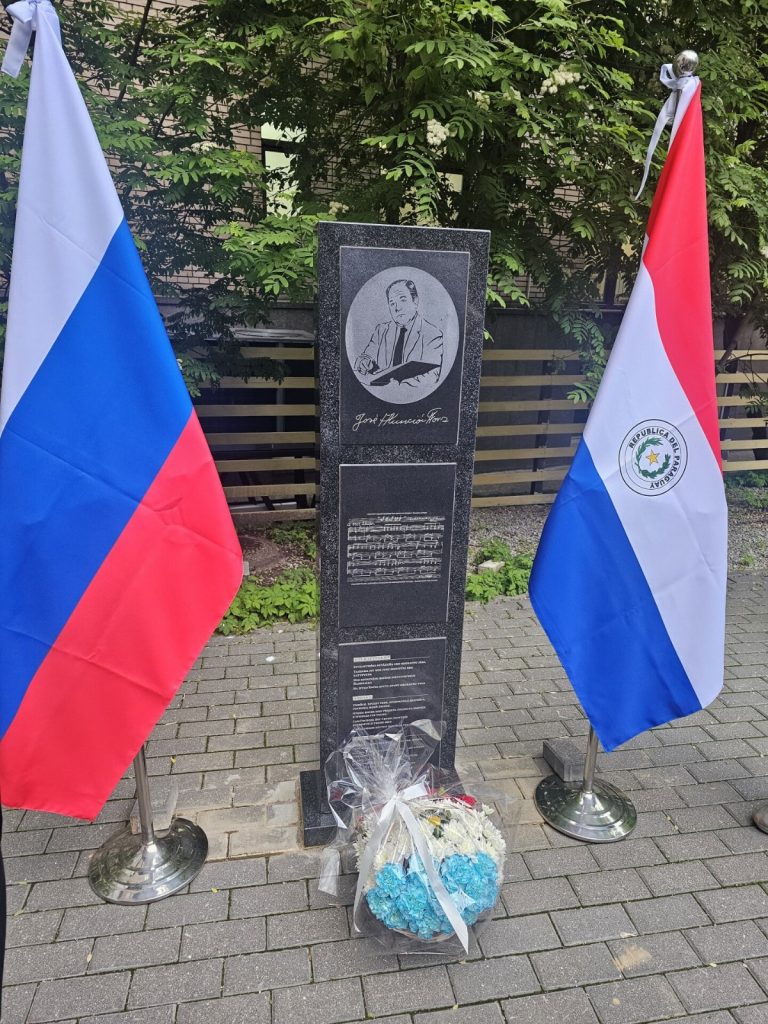
Furthermore, the ambassador also recalled the figure of José Asunción Flores, the creator of the Guarania. This recognition is part of the ongoing cultural exchange between Paraguay and Russia. In May 2025, the Paraguayan embassy in Moscow inaugurated a bust in honour of Flores. This in order to recognise his contribution to world music. So, Gagarin was not the only one honoured in his speech.
“The musical genre he created, the Guarania, has been recognised by UNESCO as an intangible cultural heritage of humanity. Therefore, this monument has become a symbol of recognition of Paraguay’s contribution to world culture. Today, we reciprocate this gesture, expressing our respect for the Paraguayan people,” Písarev explained.
The bond between Paraguay and Russia extends beyond immigration history. José Asunción Flores himself played a key role in strengthening these cultural ties. A composer of international renown, he was admired by Russian musicians. And he was also invited to perform in Moscow during the 1950s and 1960s. Following these visits, Flores spoke highly of Russian musicians and cultural institutions. This reinforced a mutual appreciation that endures to this day.
Gagarin on the Costanera
Consequently, the presence of Yuri Gagarin’s bust on Asunción’s North Costanera adds a new layer of meaning to one of the city’s most symbolic public spaces. Overlooking the Paraguay River, the monument connects local urban life with a figure whose achievement transcended borders, ideologies, and continents.
More than a tribute to the past, the bust stands as a reminder of humanity’s capacity to look beyond its horizons, linking Asunción not only to its river and history, but also to the shared legacy of exploration that belongs to the entire world.

