
Editor’s note: This Story won the People’s Choice Award in The Asunción Times Writing Competition 2025. Ren O’Flaherty presents a travel narrative that goes beyond observation, revealing how a single mission in Paraguay became a journey of cultural immersion and personal discovery. Searching for the bellbird in Paraguay’s Mbaracayú Forest Nature Reserve.
The beginning
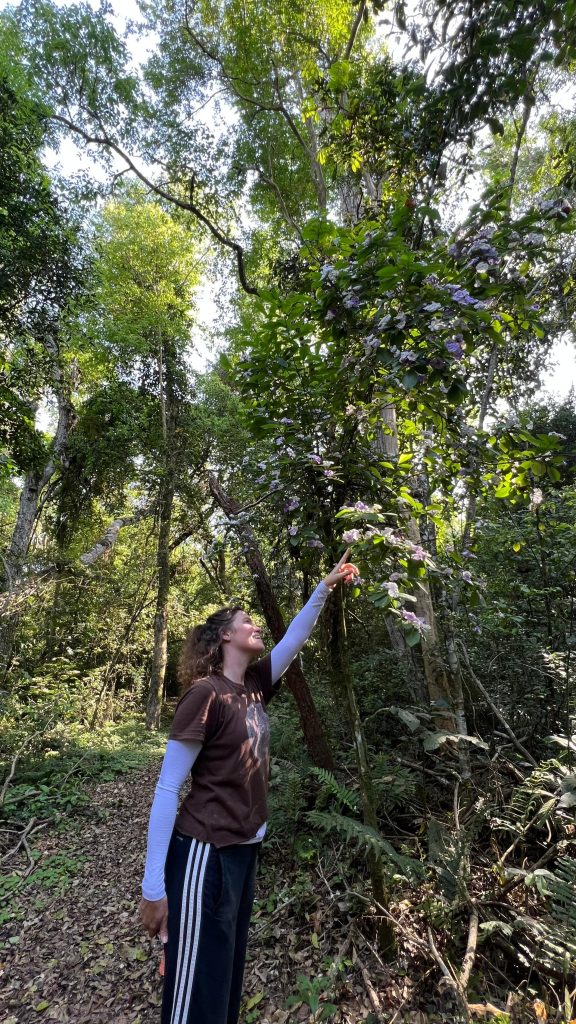
I clambered to my feet after having tripped on a root that twisted across the path, too distracted by the tree canopy to notice where I had been putting them. Yvyra pytã and wild orange trees stretched branches and dangled fruits overhead as enormous blue morpho butterflies danced in front of us. A soft breeze shifted leaves and thin vines as it flowed through the forest and cooled the sweat on the back of my neck.
My mind was set on one thing: an elusive bird making an explosive clanging sound from the canopy above.
When I began planning my travels through Paraguay, I made it my mission to find Paraguay’s national bird, the Pájaro Campana (or Bare-throated Bellbird). The mission took me to the Atlantic Forest in Paraguay’s north-east, where I was given the opportunity to volunteer at the remote Mbaracayú Forest Nature Reserve. Here, I connected to Paraguay in a way I never would have imagined.
Yet before I tell you why the Mbaracayú Forest Nature Reserve became my favourite place in Paraguay, let me share how I came to be there. And that story begins with a bird.
The mission
As a backpacker, it is easy to fall into the same routes everyone else follows: reading the same few blogs on Paraguay backpacking, swapping the same tips, and only visiting the cities with listings on HostelWorld. However, while Paraguay is rich in domestic tourism, most travellers’ knowledge ceases at the limits of its three largest cities.
So I began searching for my own way in. I read local newspapers, zoomed deep into Google Maps, and followed any elements that felt uniquely Paraguayan.
That is how I came across Paraguay’s national bird.
Chosen as Paraguay’s national bird in 2004, the Pájaro Campana is a small snow-white bird with a bright teal face. Although it looks unassuming, it belongs to the bellbird family, which has the loudest calls in the world, reaching up to 125 decibels.
The bird is a source of national pride for many Paraguayans. “We have a very special dance about the Pájaro Campana,” my Asunción tour guide told our group as we gathered around his phone to watch a video. Women in large white skirts twirled with their hands making wing-like movements as a harp played a folk song dedicated to the bird.
Yet despite this widespread pride, its population is in decline, threatened by habitat loss, deforestation, and illegal wildlife trafficking.
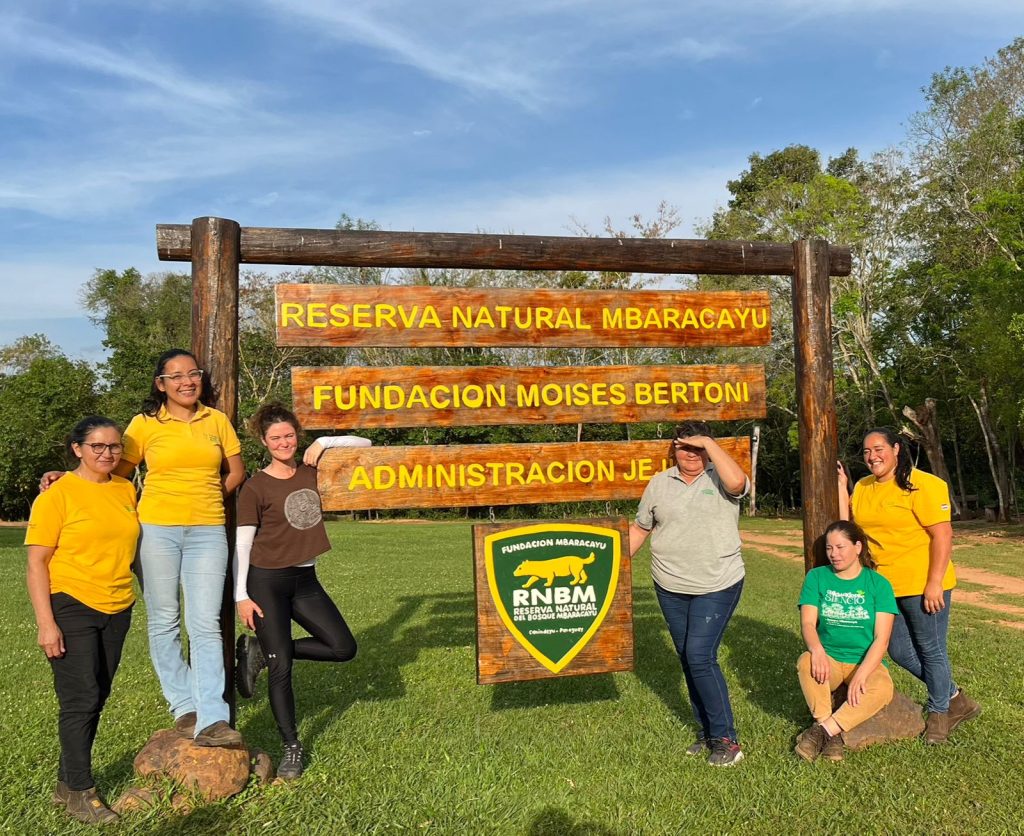
This is where the National Reserve Of Mbaracayú comes into the picture. Established in 1991 by the Moisés Bertoni Foundation, its purpose is to protect the rich biodiversity of one of Paraguay’s remaining stretches of Atlantic Forest. Beyond conservation, the foundation runs a small lodge for tourists and the Mbaracayú Educational Centre, where young women from rural towns and local Indigenous Aché communities receive their secondary education and undertake work experience.
“It is a great opportunity to know and to protect the reserve with us,” a staff member told me when I asked about volunteering.
Life at the Mbaracayú Forest Nature Reserve
Situated at the westernmost part of the reserve, my role was to help at the Mbaracayú Lodge. Yet among the daily tasks, I learnt far more about Paraguayan culture than I had ever expected.
The staff and students of Mbaracayú introduced me to the richness of Paraguayan gastronomy. We ate mbeju for breakfast, shared asados with the rangers, feasted on warm chipa guazú, and once spent an hour rolling tiny cornmeal balls for the vori vori student lunch. As we cooked, they told me the stories behind each dish, including how the beloved sopa paraguaya was born from accidentally adding too much cornmeal to a president’s soup.
At 16:00 every day, we volunteers sat with the students for merienda and tereré. This refreshing mix of yerba mate, lime, and herbs from the school’s garden came with rules and customs: do not touch the straw, always finish the guampa before returning it, and whatever you do, do not forget to say gracias or aguyje at the end, unless you want to curse the server with bad luck.
At meals, my colleagues mostly spoke in Jopará, a blend of Spanish and Guaraní. I was in awe that the country continues to speak and honour the language of its Indigenous peoples, and I became determined to learn. We began exchanging informal language lessons, which always ended in laughter as we struggled to pronounce unfamiliar sounds. The lessons ranged from the practical, learning useful words like hakueterei (it is very hot), heterei (delicious), and jaha (let us go), to the absurd, such as a Guaraní tongue twister they spent an hour trying to have me master.
And no, I still cannot complete Ha’e he’i aha aha’ã ha ha’a (meaning: he said I go, I play, and I fall) without breaking into laughter.
One night, an astronomer came to teach tourists about the night sky. We lay on the lawn as he spoke about stars, galaxies, and constellations. When he finished, however, one of my colleagues took over to teach us about the Guaraní cosmovision, which she had learnt from the revered Paraguayan astronomer Blas Servín Bernal.
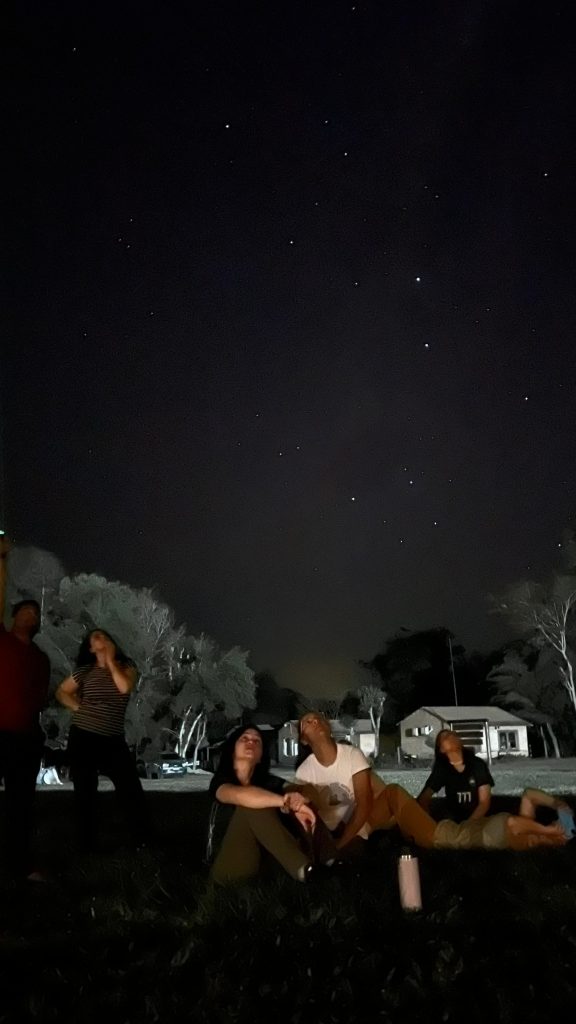

Bernal documented how different Guaraní communities across Paraguay interpreted the night sky and brought their knowledge into the mainstream. Some communities observed that the Milky Way resembled the shimmering trail of leaves marking the path the tapir would take to the river each night, calling it Mborevi Rape (the Path of the Tapir). Others described how the dark shapes between the stars represent a ñandú, and how what we identify as the Southern Cross illustrates the bird’s footprint.
Lying on the grass, listening and reflecting, I fell deeply in love with the Paraguayan culture that had been shared with me.
My search for the bellbird
Amid all of this, I never lost sight of my mission. The metallic call of the Pájaro Campana echoed constantly through daily life at the Mbaracayú Forest Nature Reserve.
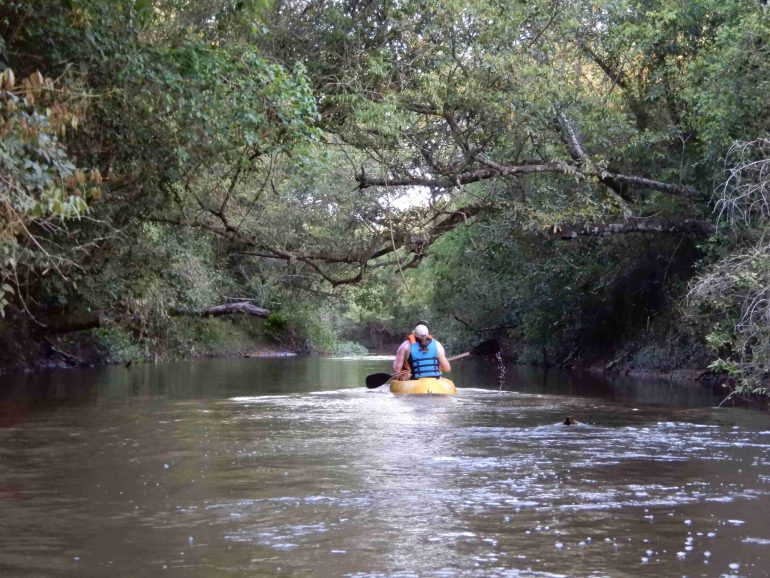
In every spare moment, I worked towards finding it. Sometimes we jogged ahead of tour groups to scan the treetops along the trail. Other afternoons, we kayaked up the Río Jejuimí, which runs along the southern edge of the lodge’s property.
Despite our efforts, the bird remained just out of sight, taunting us with its powerful call while we were certain it was right above us.
As the days passed and the Pájaro Campana continued to evade me, I began documenting my search on TikTok. I initially created the videos for my friends, poking fun at my exaggerated expressions of excitement and despair as I rode an emotional rollercoaster day after day.
After a week and a half of volunteering, searching, sulking, and searching again, the moment finally arrived. I was on another afternoon kayaking trip, trailing my hands through the cold water as we paddled upstream. Riverbank Warblers foraged along the forest’s edge, but their presence was dwarfed by the call of the Pájaro Campana, growing louder with every second.
When the sound came from directly above us, we pushed the kayak towards the opposite bank. With branches brushing my face and my movement limited by the kayak, I wriggled, twisted, and craned my body until I could see it.
A small white bird sat atop a branch, announcing its presence to the entire forest.
A rush of childlike excitement
A rush of childlike excitement took over. I squealed and performed a small wriggle-dance, unable to contain my joy. I had finally found the elusive Pájaro Campana.
The emotional payoff was immense. That afternoon, I uploaded the final video of my successful mission, and responses from across Paraguay poured in. Comment after comment glowed with pride and affection for the national bird.
“It is like seeing a Legendary Pokémon.”
“How beautiful. They still exist. It is enough to make you cry with emotion.”

“To see and hear our national bird. One day I will have the privilege.”
The comments continued for days, and reading how deeply moved people were made me emotional as well. Watching an entire country rally around a creature so symbolic, and witnessing the depth of that collective pride, was profoundly moving.
My experience at the Mbaracayú Forest Nature Reserve may have begun with a search for the Pájaro Campana, but I found far more than I had expected. I spent two weeks immersed in a beautiful corner of the country, practised Guaraní, fell in love with local gastronomy, shared tereré beneath the trees, and learnt the stories the Guaraní people tell of the stars.
In that forest, I discovered that Paraguay is not a country handed to you on a platter. It is a place that slowly welcomes you when you seek out the elements that make it truly special.