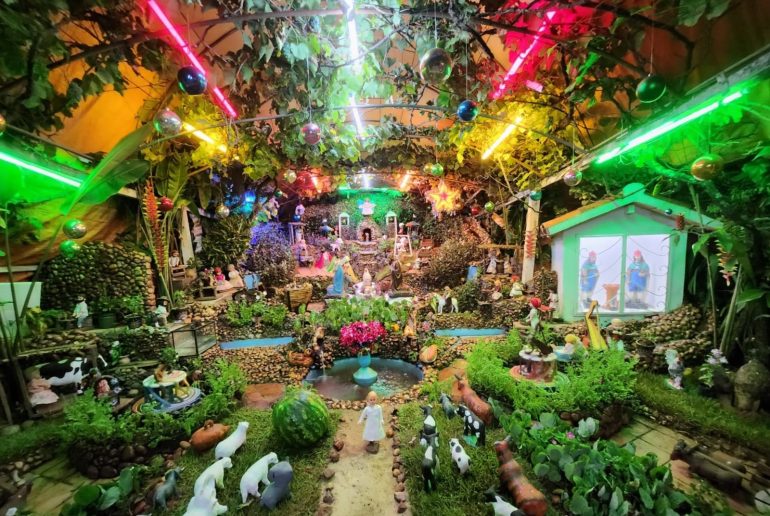

In Paraguay, the nativity scene is a cherished tradition that has endured for generations. In the early days of December, particularly on the 8th, families and communities set up warm and welcoming representations of the birth of Jesus. These displays reflect the joy, anticipation, and faith that this moment holds within Paraguayan culture.
Nativity scenes carry deep historical, religious, and cultural significance. Although the tradition did not originate in Paraguay, Paraguayans have adapted it over time to reflect local customs and beliefs. Today, these scenes are adorned with handcrafted figures made of wood, wax, or clay, along with natural ornaments, fruits, and the iconic coconut flower. Together, these elements make the nativity scene an expression of cultural identity.
Beyond representing Paraguayan heritage, nativity scenes offer a meaningful respite from the commercialisation of Christmas. Therefore, redirecting attention towards faith, hope, and spiritual renewal. The displays also serve to preserve traditions passed down from generation to generation, symbolizing wishes for abundance, family unity, and continuity within the community.
Origin of the nativity scene
According to tradition, the first nativity scene was created on Christmas Eve in 1223. The creator was Saint Francis of Assisi in a cave in the village of Greccio, located in central Italy. After travelling to the Holy Land, where he was shown the place believed to be the birthplace of Jesus, Saint Francis felt inspired to recreate the humble stable in order to commemorate Christ’s birth.
Driven by deep devotion, he created what was described not merely as a commemoration, but as a living dramatisation of the nativity. Following this legacy, monks of the Franciscan order transformed the nativity scene into an annual Christmas tradition. In Paraguay, the tradition dates back to colonial times, around 1537, when Franciscan and Jesuit missionaries introduced the nativity scene as a means of evangelising the local population.
Sharing a similar respect for nature and spirituality, the missionaries found it easier to connect with the Guaraní people. Over time, the nativity scene in Paraguay underwent significant transformations. First, adapting and incorporating elements characteristic of the region, ultimately becoming a unique and creative expression of Paraguayan culture.
The Paraguayan nativity scene
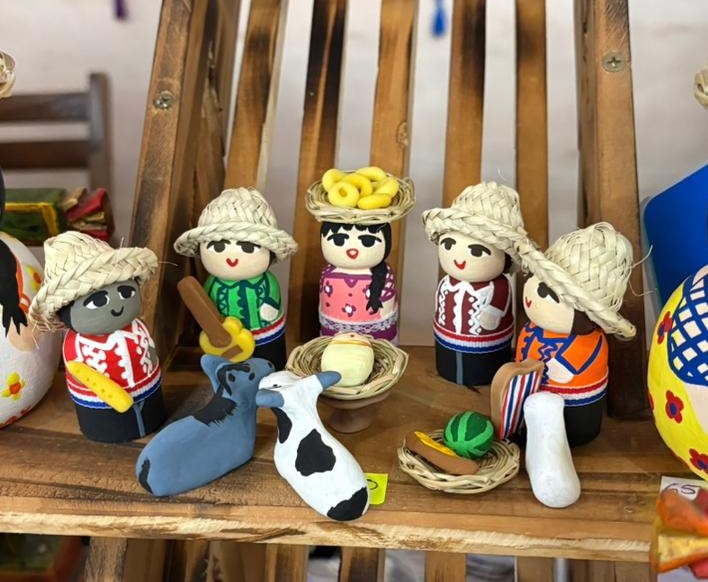
There are no fixed rules for setting up a nativity scene in Paraguay. Each family follows its own traditions and preferences. These may vary in size, ornaments, offerings, and the time at which the scene is assembled. Despite these differences, Paraguayan nativity scenes share a common essence and significance, often highlighting native fauna and flora and reflecting the country’s rich biodiversity.
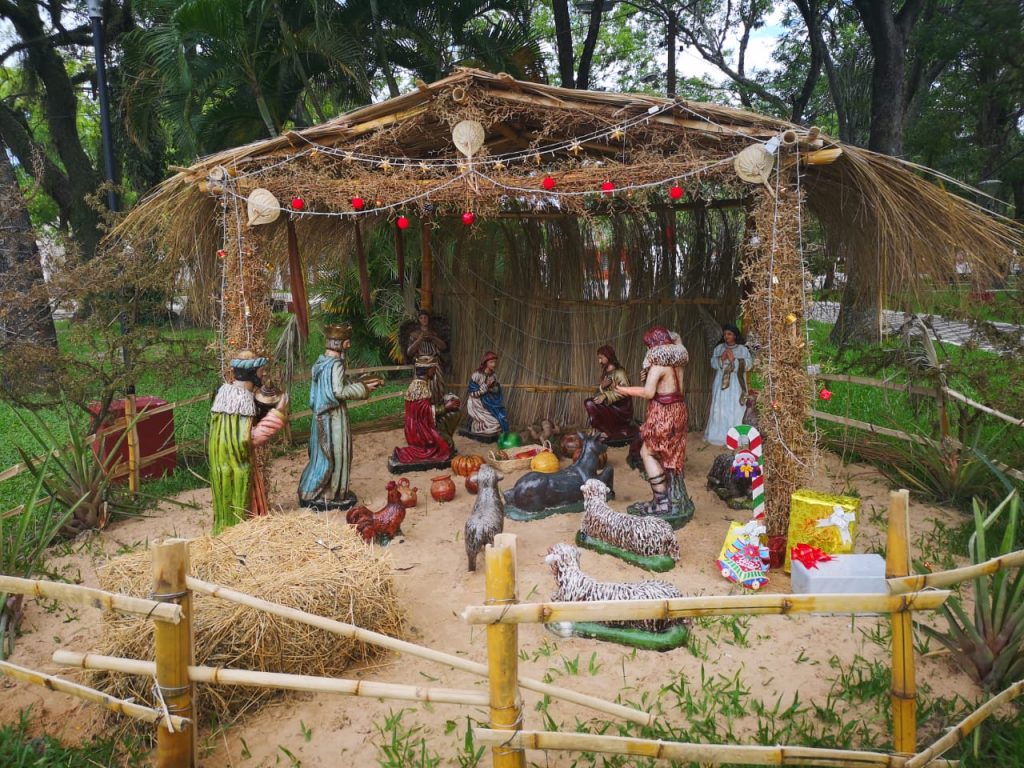
Traditionally, the figures included are the Virgin Mary, Saint Joseph, the baby Jesus, the shepherds, the angel Gabriel, sheep, an ox, a rooster, and the Three Wise Men. However, many families choose to incorporate a wider variety of animals into their displays.
In addition, seasonal fruits such as watermelon, melon, pineapple, and banana are commonly included. When it comes to ornaments, these allow for personal creativity. While some families prefer to keep their nativity scenes strictly traditional, others incorporate modern Christmas decorations. Traditionally, nativity scenes are assembled under a small cave or within a wooden and straw structure representing the stable.
Adopting the tradition
Assembling a nativity scene is an excellent way to connect with Paraguayan culture and traditions. Due to its widespread popularity, acquiring the figures and elements needed to create your own scene is relatively easy. Street vendors can often be found along the roads. For a more immersive experience, visiting the city of Areguá or Mercado 4 is highly recommended. Both offer an impressive variety of nativity figures and handcrafted displays.
Whether you choose to place it at the entrance of your home, in the living room, or in another space, the location is entirely up to you. Select a place where you will see it often, take your time assembling it, and enjoy the process as a meaningful and creative way to embrace the tradition.