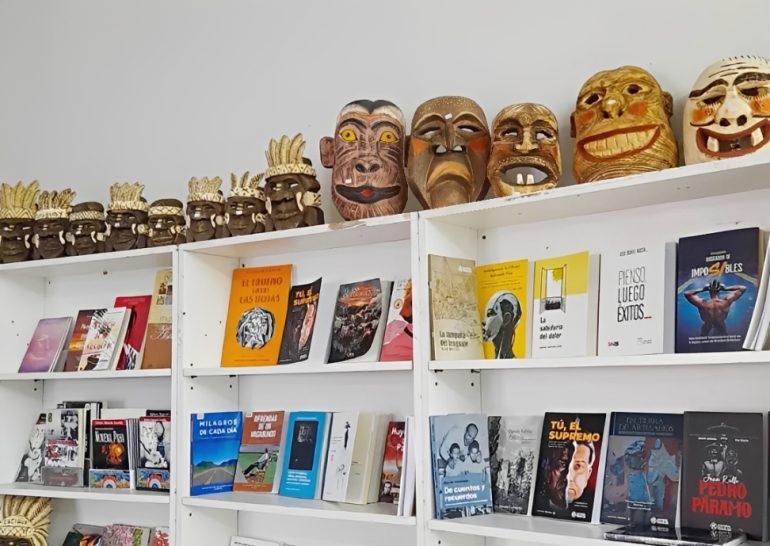

On 5 March 2026, the 26th edition of the Chacú-Guaraní Book Fair officially opened at the Library and Central Archive of the National Congress. The event runs until 15 March, offering free access to visitors and featuring more than 150 activities, including the launch of over 80 books. The fair has become one of the region’s key international platforms for promoting reading, writers, and publishers from across the Americas.
The 2026 Chacú-Guaraní Book Fair will bring together visitors from across the Americas to Paraguay, establishing itself as a major platform for literature and reading. Marcos Ybáñez, president of the Society of Writers of Paraguay (SEP), highlighted the fair’s growth and its evolution into a more participatory, author-focused event.
A bridge between Paraguay and Argentina
The fair maintains its binational character, linking events in Paraguay with nearly simultaneous activities in Resistencia, Chaco, Argentina. Initially, it began in the Argentine Chaco. Now, the fair brings together the Paraguayan Chaco and other regions of the Greater American Chaco.
The fair’s name honours Indigenous roots. “Chacú” comes from the Quechua word Chaku, an ancestral practice of sustainably capturing vicuñas, a wild South American camelid related to llamas and alpacas. For Indigenous communities, the concept symbolises harmonious integration and collective production. The Greater American Chaco, shared by Argentina, Paraguay, Bolivia, and Brazil, is rich in biodiversity and culture. At the same time, is vulnerable to climate change and agricultural expansion.
Identity, women’s voices, and emerging writers
Key themes this year include cultural identity, the defence of territories, and literature “from ourselves.” Ybáñez also highlighted the rise of female authors, noting the impact of Renée Ferrer’s Cervantes Chico Prize.
The programme goes beyond book launches, featuring workshops, poetry readings, music, comics, and art exhibitions. More than 80 titles will be presented, many of which will be by emerging writers publishing their first works.
In a world shaped by technology, Ybáñez emphasised the need to adapt while preserving the essence of the book. He noted that printed books remain strong, but younger generations increasingly read on digital devices. Combining print and digital formats can broaden reach while protecting copyright.
For the full programme, follow Feria Chacú-Guarani on Instagram.
Read more: Hands-On With Paraguay’s Living Traditions: IPA’s Craft Workshops in Asunción.