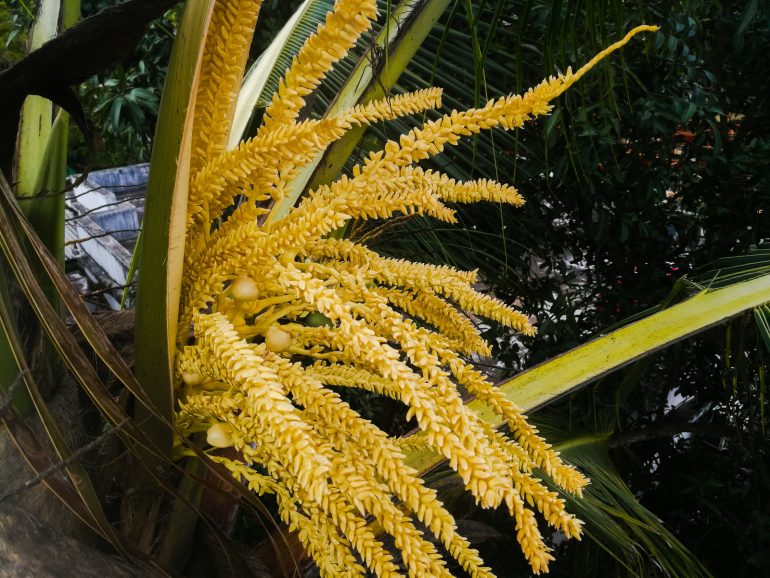

December in Paraguay has a traditional scent, one that welcomes the festive season and permeates the streets. That aroma is the fragrance of the coconut flower, taken from Paraguay’s national plant, the coconut tree, known locally as Mbokajá Paraguayo. Beyond offering its delicious perfume, this flower embodies the blend of tradition, culture, and nature that defines the Paraguayan Christmas season and other end-of-year celebrations.
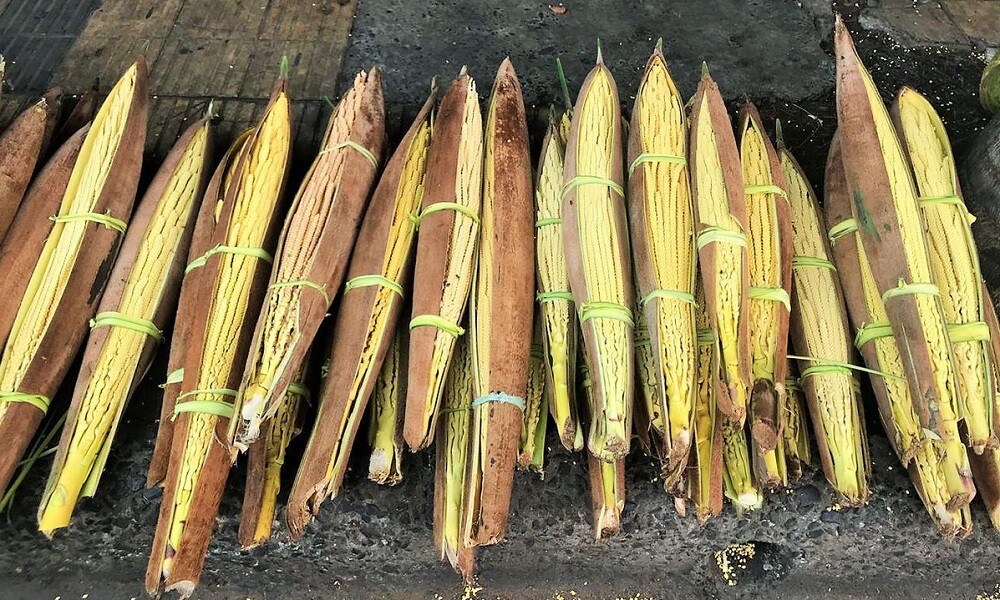
Although coconut palms grow widely across South America, Paraguayans have a particular appreciation for their flowers. It is common to see these flowers displayed throughout the streets, in grocery shops, and woven into Christmas decorations in homes, businesses, shopping centres, and public spaces.
The most special place where the coconut flower appears, however, is in the traditional Paraguayan nativity scene (pesebre). The flowers’ bright yellow color stands out beautifully, releasing their precious fragrance like a blessing. More than a simple ornament, the coconut flower is a symbol of an authentic Paraguayan Christmas.
What is the coconut flower like?
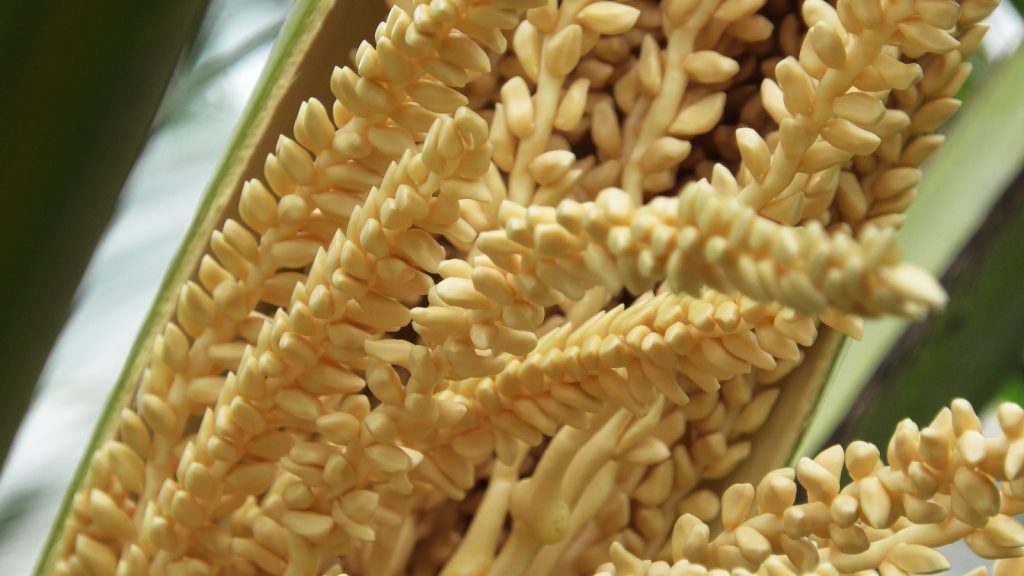
The coconut flower comes from the coconut palm, a plant that is native, authentic, and characteristic of Paraguay. Each year, this palm blooms at this time, coinciding with the arrival of summer in the southern hemisphere. The Mbokajá is a thorny palm with a single trunk reaching between 8 and 10 metres in height, crowned by 20 to 25 leaves at its top.
The Paraguayan coconut flower grows in compact clusters composed of dozens of small, bright yellow blossoms. The bloom emerges from a thick, elongated spathe which, once opened, reveals the cluster of golden flowers inside. The flower’s colour is vibrant yet gentle, and its texture is smooth and almost wax-like. The aroma, sweet, warm, and slightly tropical, evokes the atmosphere of Paraguayan Christmas and is easily recognisable to locals.
A symbol of rural, cultural, and religious traditions
Although it is not known exactly when the coconut flower became so prominent in Paraguayan Christmas culture, the coconut palm has long been considered a sacred plant by the Guaraní people.
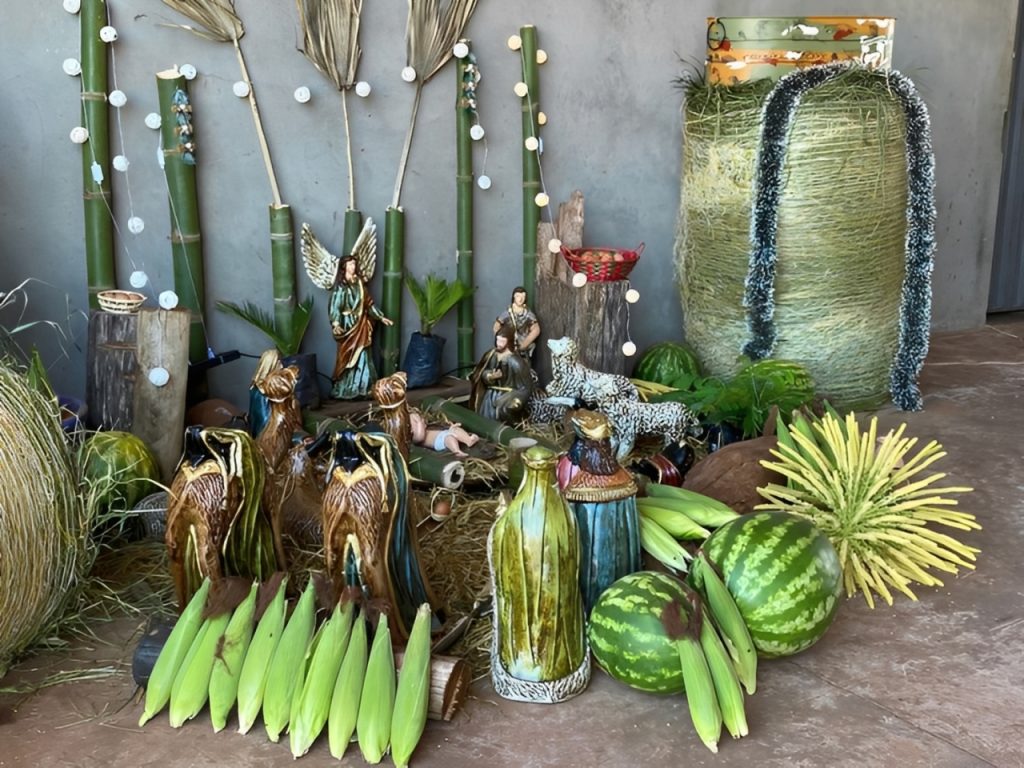
When the Jesuit missionaries arrived in Paraguay, they introduced the custom of assembling nativity scenes. The coconut flower, valued for its simple beauty and its association with abundance, soon became an essential element. The flower symbolised the purity and humility of Jesus’ birth and served as a natural offering, connecting Christian tradition with local beliefs.
According to legend, many Indigenous people survived a great flood by climbing the slender trunks of coconut trees, which is why the plant came to be regarded as sacred. In acknowledgement of this reverence, missionaries incorporated the flowers into nativity scenes, respecting the high spiritual significance the coconut palm had for the native communities.
“Christmas of coconut flower, Christmas of Paraguay”
The prominence of the coconut flower in Paraguayan Christmas is so great that there is even a song, “Navidad del Paraguay,” which speaks of its fragrance as the very essence of Christmas in the heart of South America.
On Christmas in 1951, Mercedes Jané, an Argentinian woman who had lived in Paraguay for years and had grown deeply attached to the country, found herself overwhelmed by sadness and nostalgia. Living temporarily in Chile and working far from home, she longed for the calm, enchanting Paraguayan Christmas she knew so well.
One day, with a heavy heart, she imagined she could smell the coconut flower; that familiar scent immediately transported her back to Paraguay. Moved to tears, she felt a sudden, unique inspiration. On the napkin of a café, she wrote a poem titled “Navidad del Paraguay,” meaning Christmas of Paraguay.
The poem was later set to music and, through the group Los Tres Sudamericanos, became a well-known Christmas carol. Today, the song evokes pride, identity, and a sense of community across the country, accompanying Paraguayans as they come together to celebrate the season.
Adopting the coconut flower tradition
Embracing the coconut flower tradition is a simple yet meaningful way to connect with Paraguayan Christmas culture. There are many ways to do so: placing a cluster of coconut flowers beside the nativity scene, setting them at the entrance of the home, or incorporating them into a natural centrepiece. What matters most is allowing the fragrance of the flower to welcome the festive season.
If you plan to adopt this tradition, you will have no difficulty finding a coconut flower in December; they appear everywhere during this time of year. Check traffic lights, the corner of your house, the farmers’ market, or small shops. Coconut flowers are all around the country!