


Colombian actor Carlos-Manuel Vesga inhabits one of Pluribus most enigmatic characters: Manousos Oviedo, an immigrant living in Asunción who becomes the moral centre of the series final episodes. Whilst our previous article examined how Paraguay became essential to Pluribus production, this article turns its lens inward, to Manousos Oviedo, the character Vesga embodied, a man defined by refusal, shaped by displacement, and governed by an unshakeable code.
When Vesga first encountered the scripts, panic set in. His character lived in Paraguay, and mastering a Paraguayan accent within weeks seemed impossible. An executive producer offered clarity: Manousos is Colombian, not Paraguayan. This single detail became the skeleton key to unlocking everything about the character.
The immigrant’s instinct
For Vesga, the Colombian detail revealed Manousos psychological architecture. This is a man who has already experienced what it means to abandon everything. He knows the weight of starting over. He understands the cost of belonging to a new place after losing an old one.
In an interview, Vesga articulated something crucial: the immigrant knows which battles matter because he has fought the most fundamental battle of all, the struggle to remain himself in a foreign land. Manousos brings that hard-won knowledge to his confrontation with the Others.
The hive mind offers connection, purpose, peace. For most humans, this proves irresistible. But Manousos has learned that integration always demands sacrifice. He has already paid that price once. The Others ask him to pay it again. He recognises this trap because he has lived it before.
The objects that anchor him
Manousos surrounds himself with fragments of Paraguay: banknotes bearing the country’s seal, a national football team shirt, a yerba mate can marked with Club Olimpia’s insignia. These are not props. Those are anchors. They represent a life built after loss.
When the Others offer to help him, to transport his yellow car, to ease his suffering, Manousos responds with rage. Vesga recognised why. Everything the Others offer reminds him of what they took. Accepting their assistance would mean accepting that his new world, like his old one, belongs to forces beyond his control.
Vesga has never set foot in Paraguay. Yet preparing the role cultivated genuine affection for the country. In an conversation with other Paraguayan media, he described Paraguay as a place where foreigners could “arrive, can work, and can build a dignified life.” He expressed authentic desire to visit and work there someday.
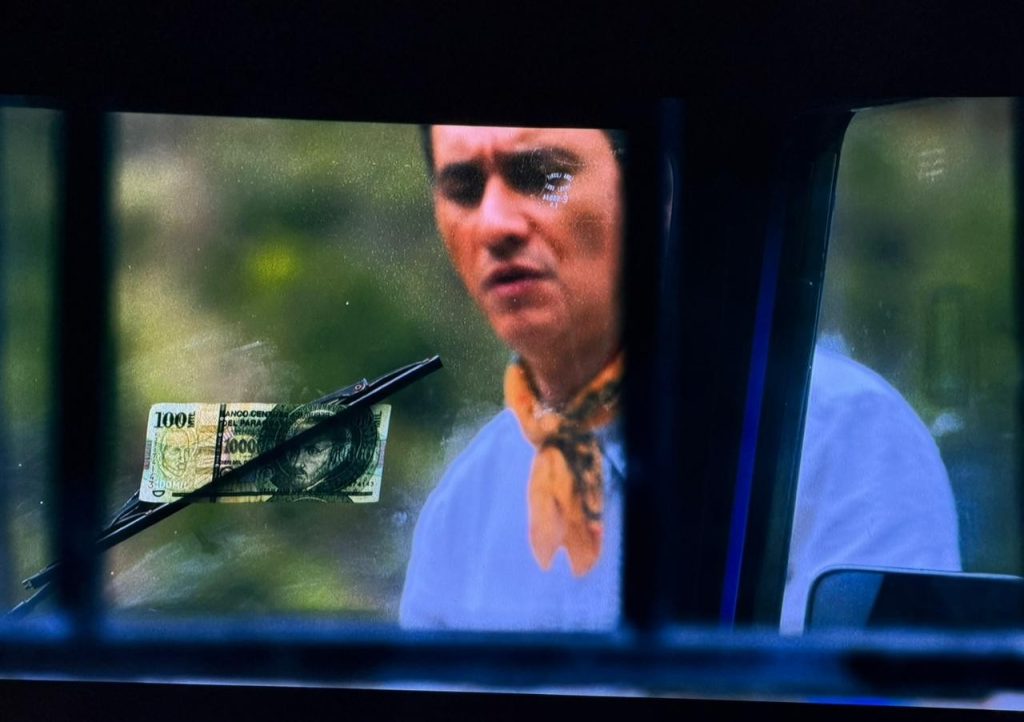

The actor’s discipline
What distinguishes Vesga’s performance is its restraint. Manousos does not monologue about his past. He does not explain his motivations. He communicates through silence, through stillness, through refusal. Every gesture carries weight because the actor understands that trauma does not announce itself, it simply closes doors.
This approach reflects a broader shift in how complex characters are portrayed. Rather than relying on exposition, Vesga allows the character’s history to inform every scene. Audiences understand Manousos not because he tells them who he is, but because his actions reveal someone forged through hardship.
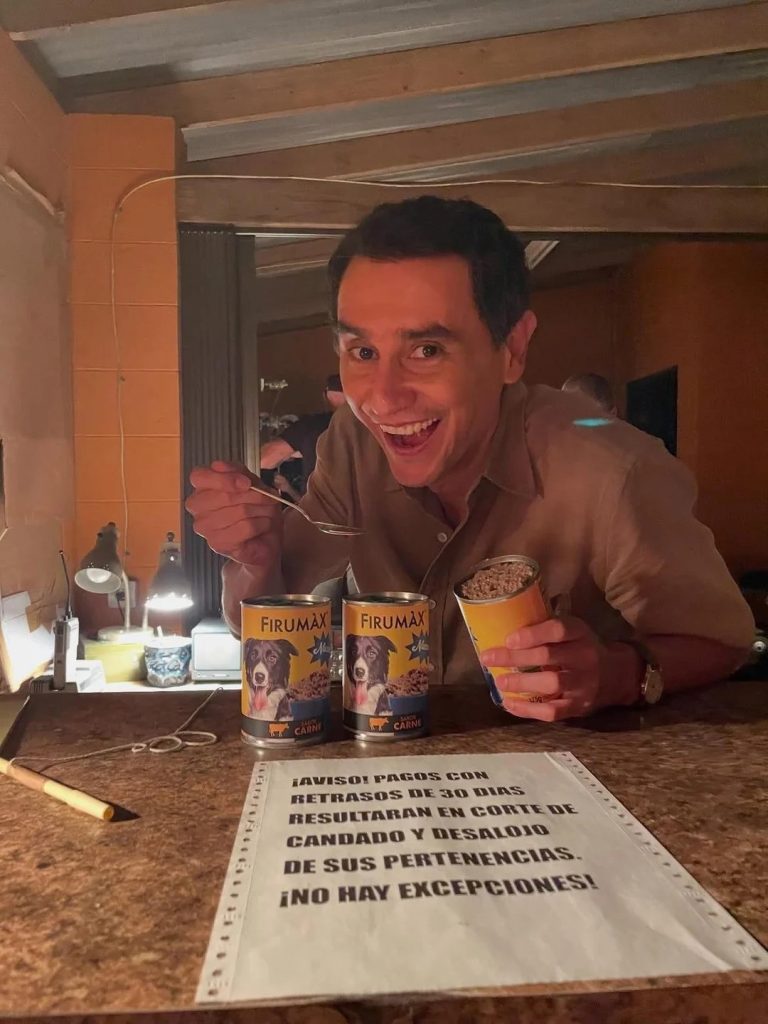
Collaboration with Seehorn
Manousos meets Carol Sturka, played by Rhea Seehorn, in the season finale. Their scenes crackle with tension precisely because both actors understand the stakes. Vesga described the collaboration in an interview as essential. “You have to trust them completely,” he said of Seehorn. “With Rhea, you feel she has your back no matter what.”
Vesga offered a revealing metaphor: “It is like playing tennis: played not to win, but for the pleasure of playing it. You play the best you can and the other plays the best they can, but it is about making the match the best it can be.” This describes not just performance technique but philosophy. Two actors committed to truth rather than victory.
Why Manousos Oviedo matters
In an industry still learning to depict Latino characters with nuance, Manousos Oviedo in Pluribus stands apart. He is not a stereotype seeking redemption. He is a man whose immigrant experience has taught him that some things cannot be negotiated. Some boundaries cannot be crossed. Some losses are absolute.
During his scenes, Vesga grounded the character through repetition of a singular declaration: “My name is Manousos Oviedo. I am not one of them. I wish to save the world.” The simplicity of this statement anchors everything. It is the mantra of someone clinging to identity when forces larger than himself attempt erasure.
As Apple TV develops the second season, Manousos Oviedo remains the character most defined by what he will not do. He will not assimilate. He will not compromise. He will not betray the principle that has kept him standing through every displacement. In Vesga’s hands, silence becomes defiance.
To follow the actor’s future works, follow Carlos-Manuel Vesga on Instagram.


The interaction between the actors described as like tennis “making the match the best it can be” reminds of “The Meisner Technique” for actors developed by Sanford Meisner. It will be interesting to see how the series develops, hopefully with a satisfactory ending and not just a long tease where they make it up as the go along or it gets axed before the final season… So far, so good. Paraguay sounds like a great place!