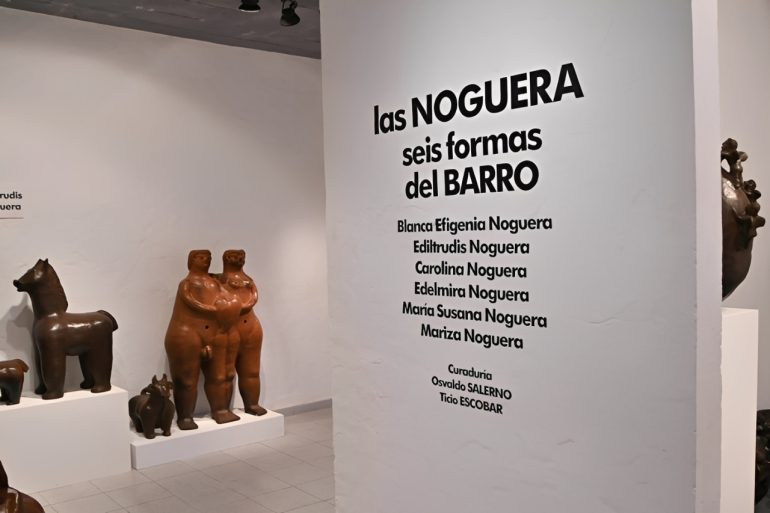

Six women, one family, and a shared artistic inheritance come together this December at CAV/Museo del Barro. Las Noguera: Six Forms of Clay brings together, for the first time, the ceramic work of the six Noguera sisters. Curated by Osvaldo Salerno and Ticio Escobar, the exhibition explores how a women-led tradition from Tobatí has been preserved, transformed, and passed down across generations within the same family. The exhibition was inaugurated on Saturday, 20 December, 2025, at the Olga Blinder Gallery.
A first-of-its-kind family exhibition
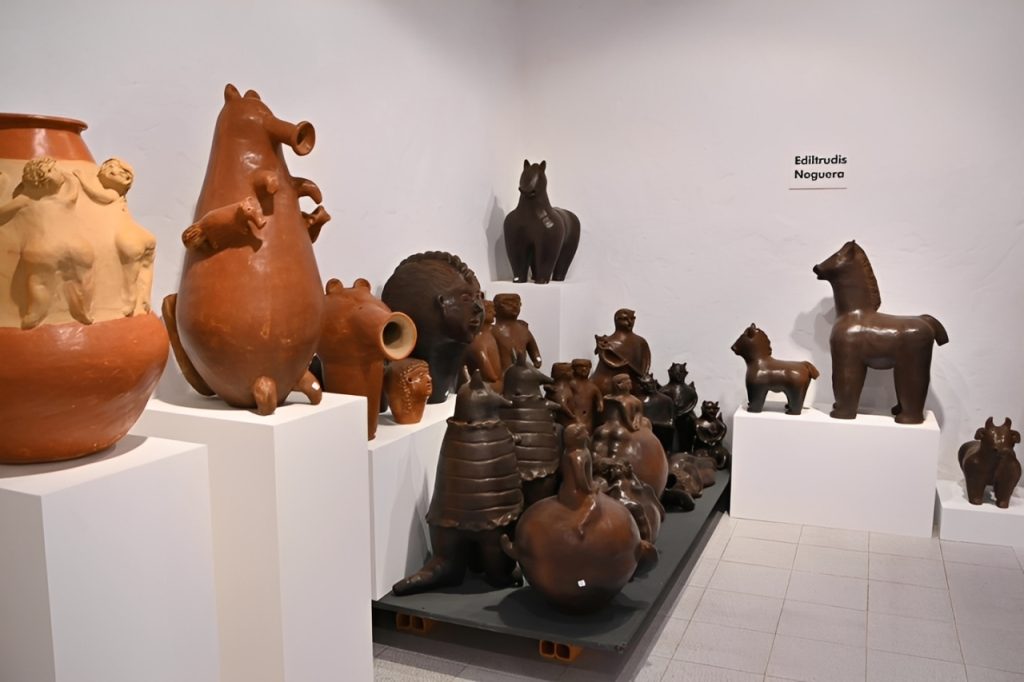
Curated by Osvaldo Salerno and Ticio Escobar, the exhibition is the result of ten months of collaborative work between the museum and the artists. The six ceramicists, Blanca, Ediltrudis, Carolina, Edelmira, Mariza, and Susana Noguera, are daughters of the late master ceramist Julia Mercedes Areco de Noguera (1938–2023). All live and work in the 21 de Julio community of Tobatí, around 70 kilometres from Asunción, continuing a practice shaped by generations of women.
In his introductory text, Escobar highlights the rarity of the exhibition. The situation is unusual, he notes, to see the work of six sisters presented together, especially within the context of popular and community-based art. This shared background gives the exhibition both artistic coherence and emotional depth.
Clay as memory and everyday life
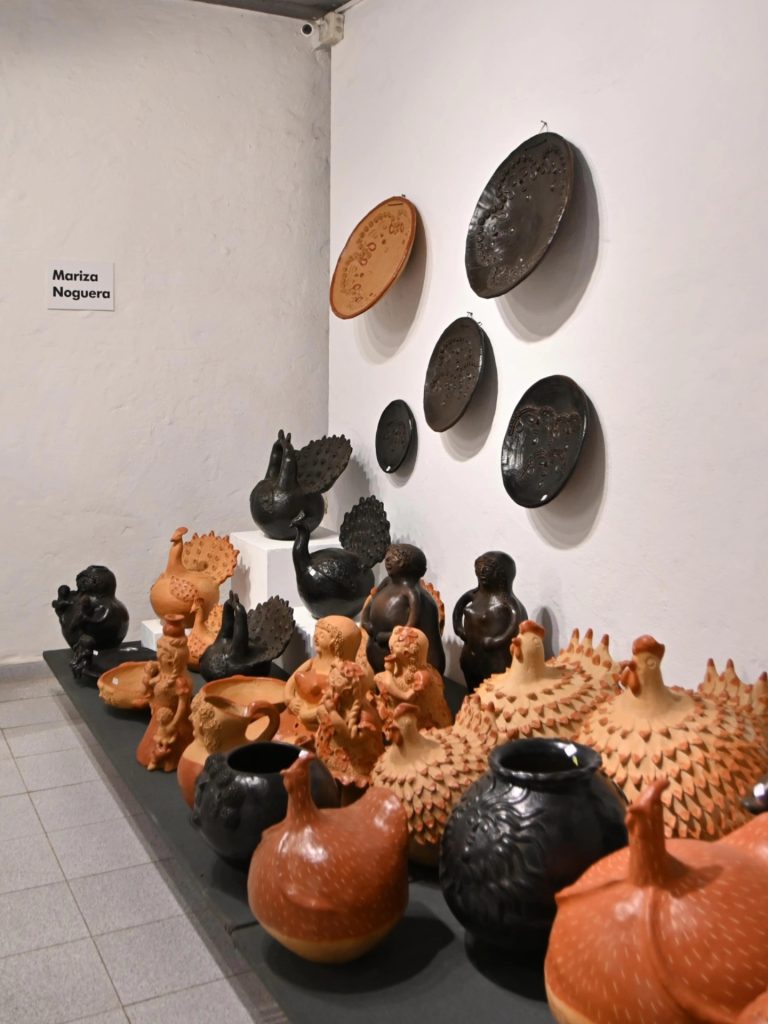
Ceramics in Paraguay has long been a female practice, traditionally transmitted from mothers to daughters. For Escobar, this makes it one of the most significant expressions of popular art in the country. The Noguera sisters embody that tradition while also transforming it.
Their pieces explore anthropomorphic and zoomorphic figures, showing strong command of sculptural space. Each work reinvents memory, drawing on daily life, humour, and the body. The result is a body of work marked by warmth, irony, and a delicate sense of eroticism, without losing its connection to community life and inherited knowledge.
Just earlier this December, Paraguay celebrated UNESCO recognition for Ñai’ũpo ceramics. Ediltrudis Noguera, one of the sisters, is a key figure in the art of ñai’upo (hand modelling of ceramics) in Paraguay, whose work, together with that of other artists, has highlighted the value of this ancestral technique, a symbol of identity and cultural heritage, seeking international recognition and protection by UNESCO, as an expression of the mastery of Paraguayan women artisans.
A museological commitment to living traditions
Beyond its artistic value, the exhibition reflects a clear museological goal. The Museo del Barro seeks to encourage systematic production of popular ceramics and to strengthen collective artistic bonds. Inviting the six sisters to exhibit together produced several positive outcomes, including renewed production, the emergence of new forms, and greater visibility for each artist within exhibition and circulation spaces.
When and where to see it
Las Noguera: Six Forms of Clay is on display at the Olga Blinder Gallery, CAV/Museo del Barro. The exhibition is open from Tuesday to Saturday, from 14:00 to 20:00. Entry is free on Fridays and Saturdays. Other days, entry is Gs. 50,000 (approximately US$7).
For more information on exhibitions, follow Museo del Barro on Instagram.