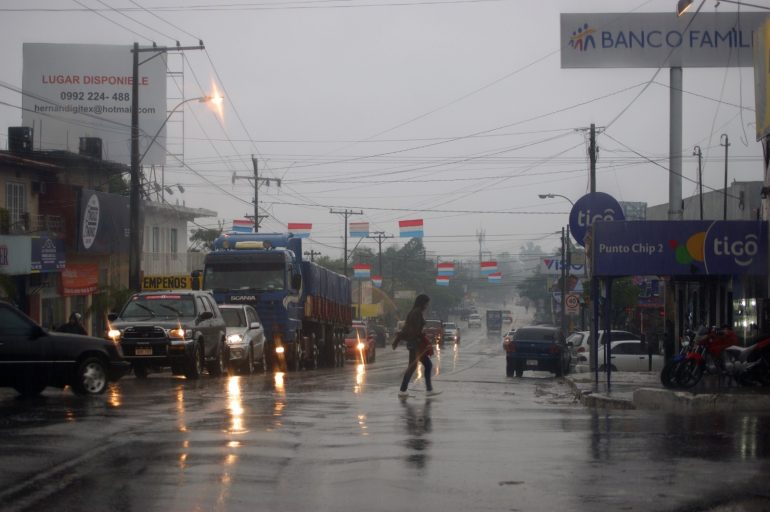

Paraguay receives some of the highest rainfall totals in South America, with an annual average ranging from 1,400 millimetres in the capital, Asunción, to nearly 1,900 millimetres in the south-eastern departments. Yet how that water falls varies enormously across the country’s 17 departments. This is the story of rainfall in Paraguay.
Two distinct rainy seasons drench a nation of 7.5 million people each year, sustaining agriculture and replenishing rivers, and, in the densely built neighbourhoods of Greater Asunción, testing urban infrastructure that was never designed for the volumes it now receives.
Two seasons, one rhythm
Paraguay has two periods of peak rainfall: October to November, when warming temperatures draw moisture from the Amazon basin southward, and March to May, which is generally the wetter of the two. The winter months of June to August bring a relative pause, with rainfall dropping to 40-60 millimetres per month and temperatures occasionally falling below 10°C.
From September to April, rain typically arrives as intense, short-lived thunderstorms, locally known as chaparrones, that can deposit 50 millimetres or more within a single hour. In the cooler months, lighter drizzle is more common. Both patterns reflect Paraguay’s position in the Southern Cone, where tropical air masses collide with cold fronts pushing up from Patagonia.
Mapping rainfall in Paraguay
The Paraguay River divides the country into two distinct regions. To the west, the Gran Chaco covers roughly 60% of Paraguay’s territory but is home to less than 3%of its population. Annual rainfall there ranges from 500 millimetres near the Bolivian border to around 1,000 millimetres closer to the river.
To the east, in the Región Oriental where most Paraguayans live, departments such as Itapúa, Alto Paraná and Canindeyú receive between 1,700 and 1,900 millimetres per year, spread relatively evenly across all twelve months. In Encarnación, the capital of Itapúa, even July typically brings over 100 millimetres. For farmers, this consistency is invaluable: Paraguay is among the world’s top exporters of soy and beef, and both industries depend on reliable seasonal rainfall.
When the sky tests the city
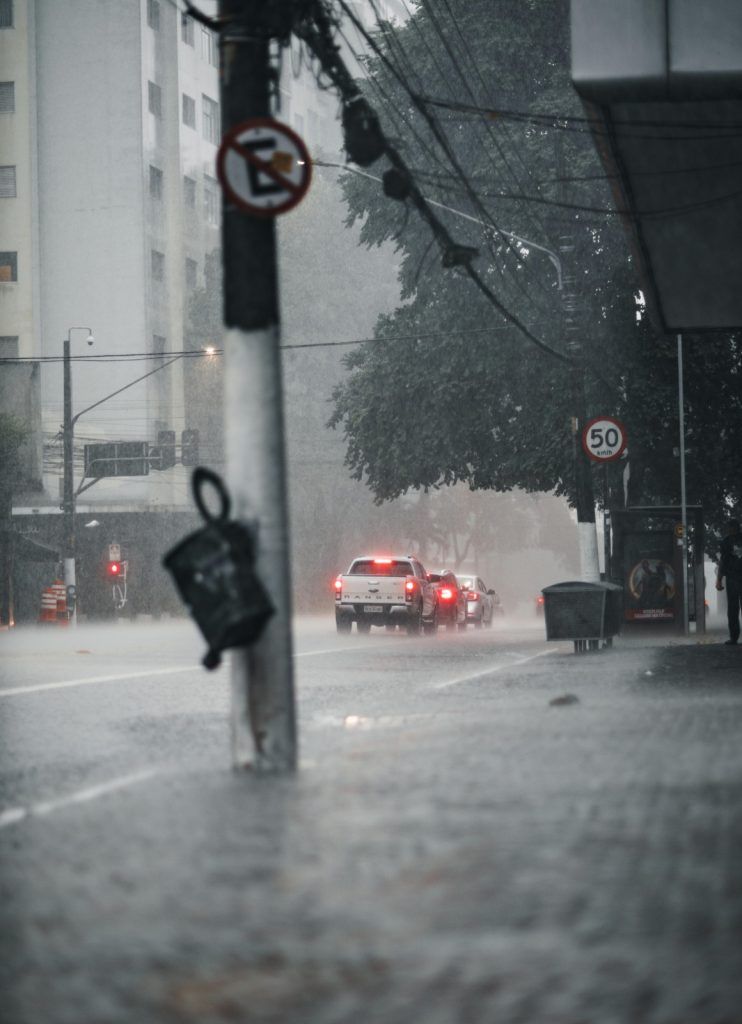
Greater Asunción, the capital and surrounding municipalities including Luque, San Lorenzo and Lambaré, is home to approximately two million people. The metropolitan area sits on rolling hills cut through by streams and creeks, many of which have been channelled or built over as the city expanded during the 20th century.
Only 23%of the capital has an operational stormwater drainage network. In lower-lying neighbourhoods, runoff from a chaparrón has nowhere to go and accumulates on streets, in underpasses and in homes. Communities along the Arroyo Itay and Arroyo Lambaré are particularly exposed, with some sectors flooding several times each rainy season.
Outside Greater Asunción, lower population density and less impermeable surface cover mean that heavy rainfall tends to drain naturally, the flooding problem is specific to the capital’s rapid and largely unplanned urban expansion.
Infrastructure in motion
Works along the Arroyo Itay and Arroyo Lambaré represent an investment of over ₲136 billion (approximately US$18 million) and are projected to benefit more than 22,000 residents, with completion expected in the first half of 2026. Yet the severe flooding that struck Greater Asunción in March 2026 served as a reminder that progress, however real, is still catching up with decades of infrastructure deficit.
Paraguay’s Ministry of the Environment and Sustainable Development (MADES), in partnership with the United Nations Development Programme, produced a national flood risk atlas in 2020 identifying Asunción, Encarnación and Ciudad del Este as priority areas for investment a list that remains as relevant today as when it was published.
A resource as much as a risk
Paraguay’s Department of Meteorology and Hydrology (DMH), which operates under the National Civil Aviation Authority (DINAC), tracks rainfall through a national network of automatic weather stations and publishes annual climatological yearbooks. Its records confirm that Paraguay is, on balance, water-rich. The greater concern, meteorologists note, is not how much rain falls but how quickly: the trend towards more intense, shorter-duration events places a growing premium on drainage infrastructure that can absorb sudden, heavy inputs.
For most Paraguayans, rain is not simply part of the landscape. The Itaipú Dam, built on the Paraná River and shared with Brazil, generates around 90% of Paraguay’s electricity from the water that flows through it, making rainfall not just a climatic fact but an economic one. The rains will return, as they always do, and Paraguay will continue to find ways to live with them.