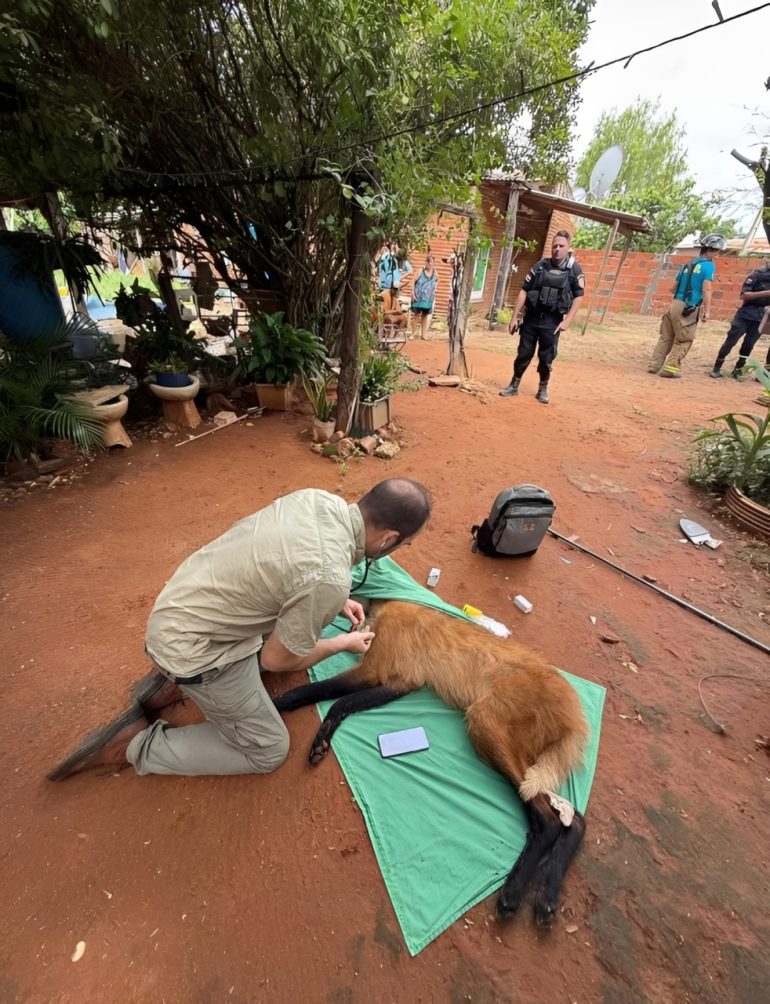

An aguará guasú was successfully rescued and later released after being spotted in an urban area of Asunción. The sighting occurred in the Cateura area. This raised concerns due to the risks that wildlife faces when entering densely populated zones.
The intervention highlights the importance of coordinated efforts between institutions to protect native species. Authorities emphasised that such actions are essential to ensure both public safety and the conservation of wildlife in Paraguay.
What is an “aguará guasú”?
The aguará guasú or aguará guazú is a type of fox that lives in South America. More specifically, in Argentina, Brazil and Paraguay. It is bigger than a common fox, however, harmless to humans and cattle. Moreover, aguará guasú comes from Guaraní and means “big fox”. To watch an aguará guasú is a difficult task for several reasons.
These reasons include: first, it is a very shy and nocturnal animal. Every sighting of the animal is not common. Second, it is an endangered animal. This is because of its habitat being moved and it being hunted. Third, aguará guasú were commonly mistaken for being werewolfs for centuries. Furthermore, some people associate it to the Luisón, the Guaraní equivalent of werewolf legends.
Coordinated rescue operation
The case was reported on Sunday, 22 March. It prompted the response of the Department of Faunal Resources and Natural Environment of the Faculty of Veterinary Sciences of the National University of Asunción. Afterwards, specialists arrived at the scene to carry out the safe capture of the animal.
The operation was supported by technicians from the Ministry of Environment and Sustainable Development (MADES). Specifically, from its Wildlife Directorate. As well as members of the Volunteer Fire Department of Paraguay, who assisted in containing the specimen.
Once secured, the animal underwent a clinical evaluation and biological sampling. These procedures followed established health surveillance protocols for the species. According to the professionals involved, the aguará guasú showed no evident signs of disease and displayed behaviour consistent with its natural condition. These procedures are key to ensuring that rescued wildlife can safely return to their habitats without posing risks to ecosystems or other species.
Return to natural habitat
After the assessment, the animal was released in a suitable location. Far away from urban areas and with favourable environmental conditions for its movement and survival. Authorities confirmed that all procedures were conducted in compliance with current regulations. These include the necessary permits for the capture, handling and monitoring of wild fauna.
The successful rescue underscores the relevance of rapid response systems and institutional collaboration in protecting Paraguay’s biodiversity. Particularly, in cases where wildlife comes into contact with urban environments.