

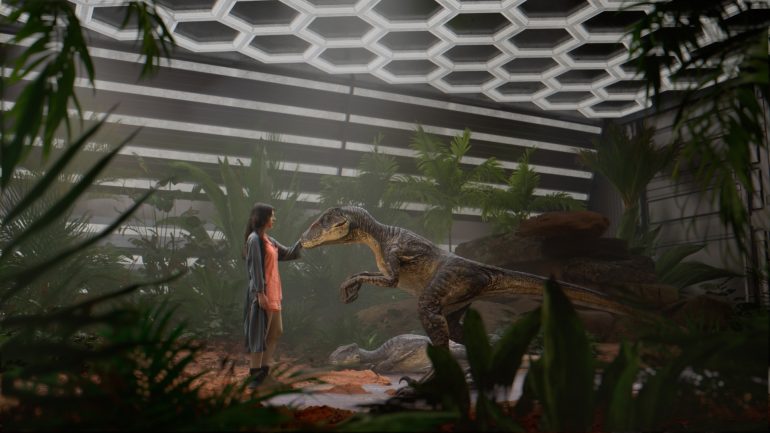

In an industry that often reduces identity to a single origin story, Sade Louise resists easy categorisation. Born in the United States, but emotionally forged in Paraguay, and professionally established in South Korea, her life reads less like a linear ascent and more like a series of deliberate crossings.
As she prepares for the global premiere of Disney+’s Armosaurs on 18 February 2026, Sade stands as a case study in how displacement, when embraced, becomes a source of creative power rather than fracture.
America: A childhood before the crossing

Sade Louise is born in the United States, where her early childhood follows a relatively conventional rhythm. Yet even then, movement lingers at the edges of her story. Her upbringing instils ambition and independence, but it is not until her teenage years that these qualities are fully tested.
At fifteen, an age defined by instability even without geographical upheaval, Sade leaves America behind. The move is not framed as a career decision or a strategic step, but as a family transition. Still, it proves decisive. What follows is not merely a change of address, but the dismantling of familiarity itself.
Paraguay: Adolescence, belonging, and reinvention
Paraguay becomes the landscape of Sade’s coming of age. Arriving as a teenager, she spends five formative years navigating the passage from childhood to adulthood in an unfamiliar cultural setting. Her first home is Areguá, a rural town she remembers as “lush, green, and beautiful,” far removed from her American upbringing.
On the day she arrives, two baby goats are born on her foster uncle’s property, and she is immediately put in charge of them—an unexpected initiation into responsibility. “I was immediately forced out of my shell,” she recalls. Adaptation in Paraguay is not optional; it is essential.
Enrolled mid-term in a local Catholic school without speaking Spanish, she learns through immersion rather than instruction. Over time, Spanish becomes fluent, and Guaraní follows instinctively, offering emotional expression when English falls short. In Paraguay, Sade finds communal belonging and grows into a third-culture identity shaped by the space between nations.
The unexpected bridge to South Korea
It is in Asunción, not Seoul, that South Korea enters Sade’s life. Through an expatriate network, her mother begins organising cultural events that connect them with Paraguay’s Korean community. These encounters lead Sade to enrol at the Colegio Coreano, where she begins studying Korean, a language geographically distant but emotionally compelling.
Her curiosity is reinforced by her peers, many of whom are immersed in the early global rise of K-pop. What might have remained a passing interest gradually solidifies into direction. Art, language, and discipline form an unlikely bridge between South America and East Asia.
Three years ago, Sade crosses it.
South Korea: Discipline, industry, and arrival
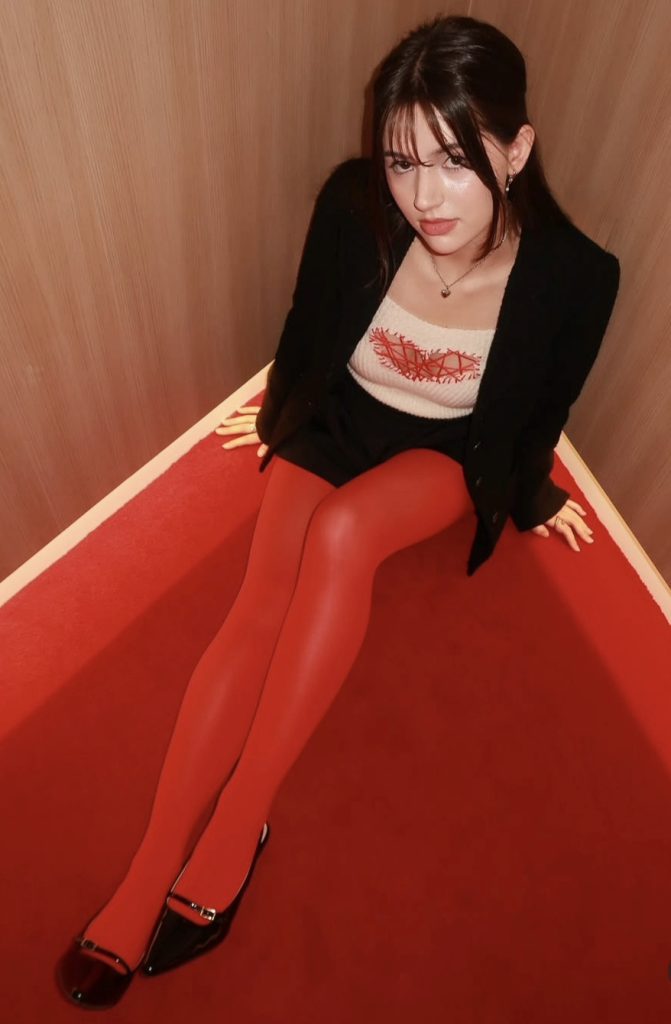
Seoul demands everything Paraguay has prepared her for. The transition is swift and unforgiving, but not unfamiliar. Linguistic adaptability and cultural resilience allow her to integrate into South Korea’s entertainment industry with remarkable speed.
Her early work includes appearances in music videos alongside major K-pop acts such as (G)I-DLE, Stray Kids, and more. These sets offer more than visibility; they provide education. Sade observes performers rehearsing through injury, executing precision under physical strain, and maintaining professionalism without exception.
“I have seen these girls, and their feet are just so red,” she says, “but they are still maintaining their professionalism and dancing despite probably being in a lot of pain.” The discipline is absolute, and it soon proves essential.
Armosaurs and a global stage
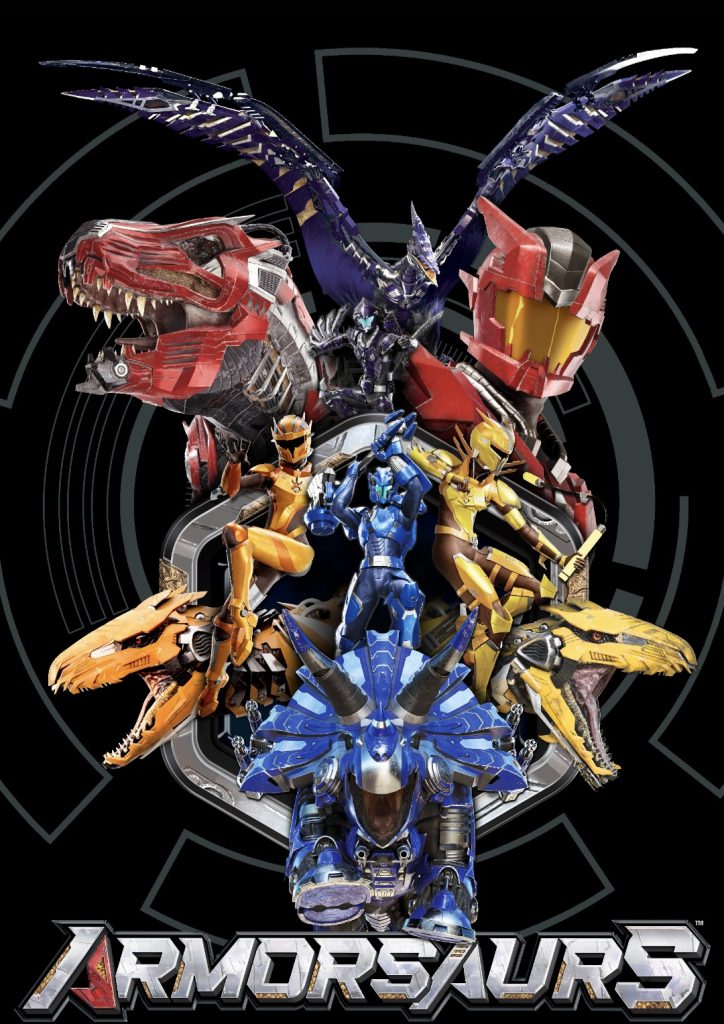
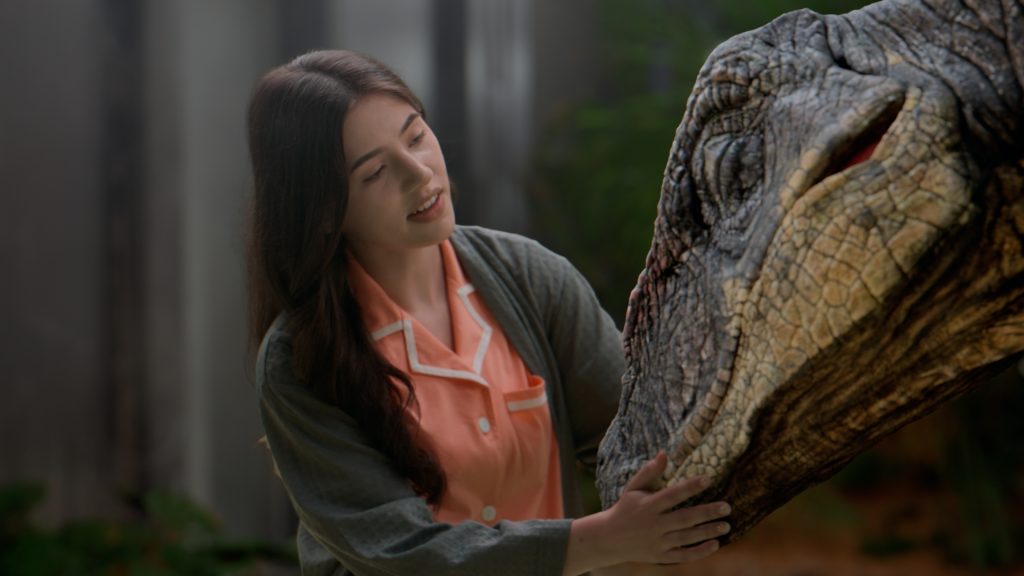
Sade Louise’s casting in Armosaurs marks a pivotal moment in her career. A Korean–American co-production for Disney+, the series reimagines a popular Korean IP, blending live action with advanced visual effects for a global audience.
While most of the cast is chosen in Los Angeles, Sade is scouted directly in Seoul. The process moves quickly: an audition on Thursday, confirmation that night, and filming begins the following Monday on a large green-screen set.
She plays Prisca Silva, a pilot who leads through intuition and empathy rather than force. Described by Sade as “compassionate, intuitive, and quietly strong”, the role reflects her belief in portraying power without hardness. Armosaurs has already secured a two-season global deal, with production returning to Korea later this year.
Writing between worlds
Away from the screen, Sade is also a writer. Her debut novel, The Blood of the Lost Tooth (2022), is written during the liminal space between Paraguay and Korea, a period defined by transition rather than certainty. She is currently completing its sequel, now nearly finished.
Her work occupies a space between fantasy and reality, drawing heavily on folklore and myth. Many of its spiritual and symbolic foundations trace back to the stories she encounters in Paraguay. “My chosen family there really would tell me stories of the myths and folklore from the Guaraní culture,” she explains.
For Sade, fantasy is not escapism. It is commentary, a way of interrogating identity, displacement, and survival from a safe distance.
A new definition of “global”
As Armosaurs prepares to meet a worldwide audience, Sade Louise stands not as a product of globalisation, but as its author. America gives her ambition. Paraguay gives her heart. Korea gives her discipline.
Together, they form an artist who does not merely move between cultures, but carries them forward and intact.

