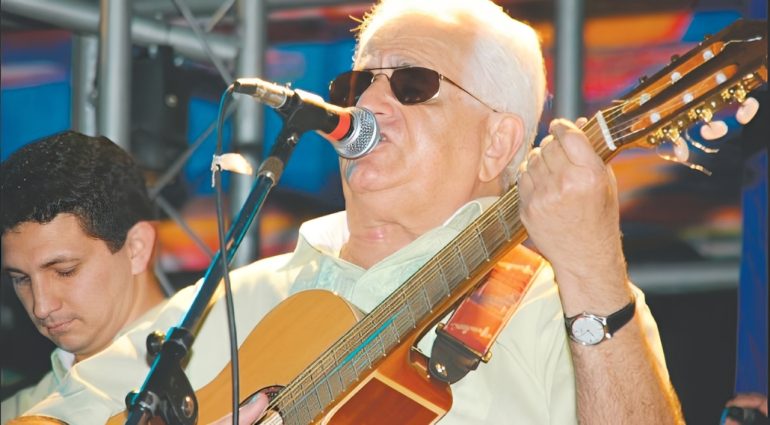

Legendary musician Quemil Yambay passed away on 14 January 2026, leaving behind more than half a century of music, humour, and cultural identity. Paraguay bid farewell to one of its greatest folklore artists, whose work shaped generations of listeners.
Born on 10 March 1938 in the Santa Helena district of the Cordillera Department, Yambay had faced health complications in recent years. With a career spanning more than five decades, the country lost not only a celebrated musician but also one of its most authentic cultural symbols.
Quemil Yambay often joked about being a “treasure”, a reference to the recognition he received in 2007, when UNESCO declared him both a Living Human Heritage and a Living Human Treasure. The distinction was fitting. He did not simply perform Paraguayan culture; he embodied it. Through polkas, guaranias, humour, and the imitation of animal sounds, Yambay created a musical language instantly recognisable across generations. Many place him alongside cultural giants such as Emiliano R. Fernández and Luis Alberto del Paraná.
Early years
Quemil Yambay was the son of a Lebanese immigrant father and a Paraguayan mother. The fourth of ten siblings, he grew up on the family ranch, surrounded by animals of all kinds: dogs, cats, birds, pigs, and cattle. From an early age, he developed the ability to imitate their sounds. He would master this skill and would later become one of his artistic trademarks.

He spent his childhood in the small rural community of Alfonso Tranquera, also in the Cordillera Department. Accounts from neighbours and relatives recall that he was always performing at family gatherings and local events. He never completed formal schooling, nor did he receive structured musical training. Everything Quemil Yambay learned came from listening, observing, and practising. His greatest inspiration was Paraguayan poet and musician Emiliano R. Fernández, whom he admired deeply.
Football, however, was his first dream. A lifelong supporter of Club Guaraní, he had trials with Cerro Porteño, but was eventually rejected due to vision problems. Years later, he would channel that passion into music, composing songs dedicated to the Albirroja, to Guaraní, and to legendary footballer Julio César Romero. After his brief football journey ended, music became his path.
Quemil Yambay and Los Alfonsinos
In 1959, Yambay left his hometown with his guitar and travelled to the then under-construction Friendship Bridge, in what is now Ciudad del Este. Alongside three other musicians, he began performing during workers’ breaks, entertaining labourers with songs and humour.
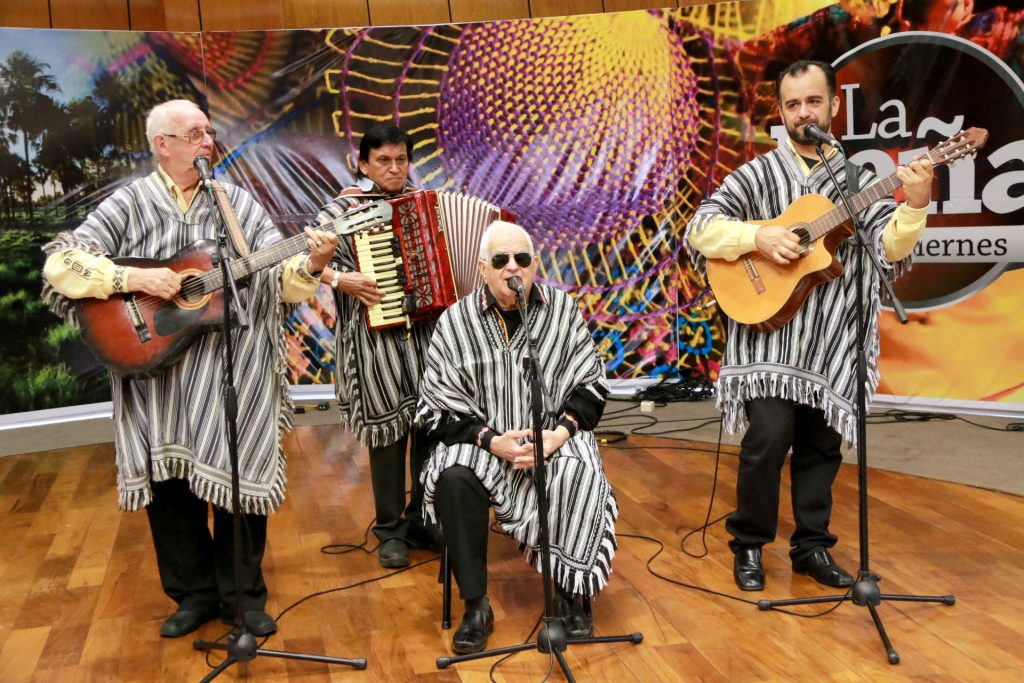
A year later, in 1960, he founded the group Los Alfonsinos. The name referred to their places of origin, as all members came from towns with “Alfonso” in their names. Quemil Yambay was the undisputed leader, known for his jokes, storytelling, and animal imitations woven seamlessly into the music. The band sang both in Guarani and Spanish, mixing them to tell stories.
Their distinctive style quickly made them popular nationwide. Los Alfonsinos became one of the emblematic groups of the purahéi jahe’o tradition, often translated as “weeping song”, a deeply rooted expressive form within Paraguayan music. Combining rural narratives, humour, and emotion, the group established itself as one of the most beloved acts in the country and a reference point for Paraguayan polka.
Quemil Yambay, a unique musician
During the 1960s and 1970s, Los Alfonsinos were huge in the national music scene. Their songs portrayed rural life, love stories, everyday struggles, and even epic or satirical themes. People did not just listen to their music; they recognised themselves in it. And if they did not identify with the lyrics, they laughed at the jokes, the sound effects, and the stories embedded in each performance.

In 1984, Quemil Yambay lost his sight, but it did not end his career. Assisted by his sons on stage, he continued performing and recording. Remarkably, he never wrote down his compositions; everything was memorised. He toured internationally, performing in Buenos Aires, Madrid, and even in the United States. His work earned him two gold records for album sales, an extraordinary achievement for a musician so deeply rooted in local tradition.
His devotion to Paraguayan culture brought him countless honours. He used to joke that he was “the civilian with the most decorations”. In addition to UNESCO’s recognition, he was later declared a Living Relic of National Culture by the Paraguayan Government.
A goodbye to a legend
Los Alfonsinos performed more than 200 shows per year across the country and recorded over 30 albums of polka and guarania. Yambay officially retired in 2017. His farewell concert, held in Ypacaraí, was titled El último sapukái or The Last Shout. Sapukái is the powerful cry characteristic of Paraguayan polka and northern Argentine folk music. The concert brought together numerous national artists to honour his legacy.
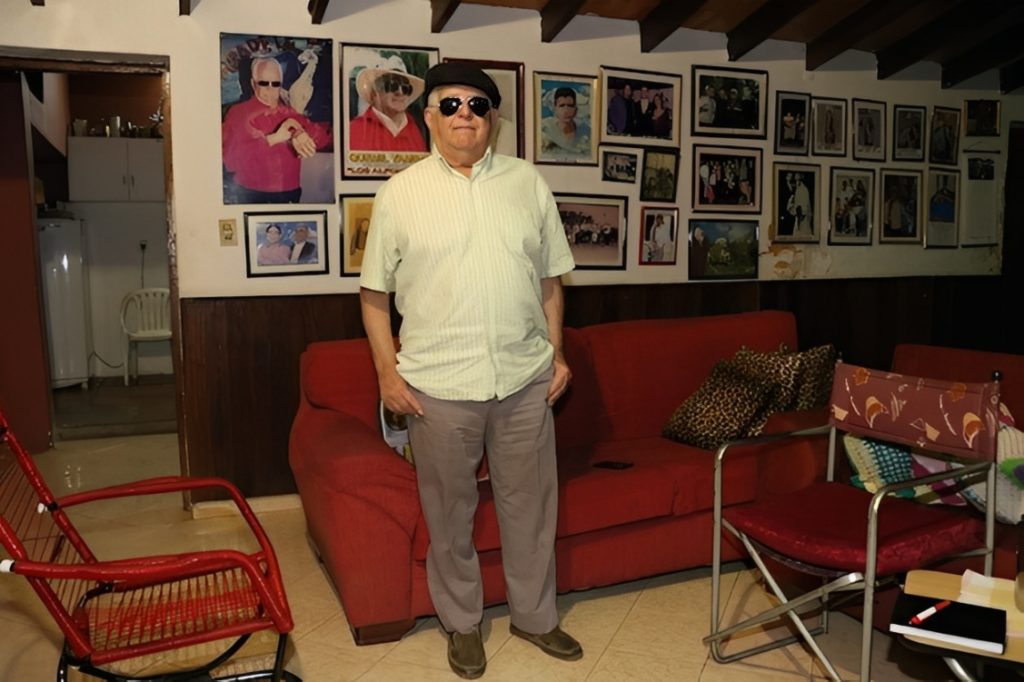
In his final years, Quemil Yambay lived surrounded by his family. Footballers, politicians, artists, and admirers visited him at his home in Fernando de la Mora, bringing gifts, sharing memories, and asking for his blessing. He requested that his wake be held at his home and open to the public, so that those who loved him could say goodbye. He also asked for military bands from all branches to perform at his funeral, a wish that was fulfilled. The musicians played Paraguayan songs, including Quemil’s.
The municipality of Fernando de la Mora declared three days of mourning. His home will become a museum, preserving his memory and work. But beyond monuments and tributes, Quemil Yambay’s legacy endures where it always lived: in the collective memory of Paraguay and in every sapukái that echoes across the country.
To listen to some of his songs, check this Quemil Yambay and Los Alfonsinos’ playlist on YouTube.