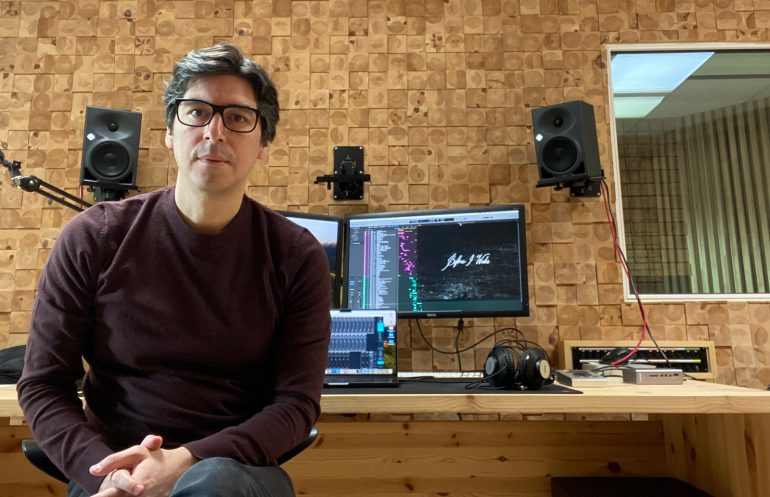

From a childhood filled with piano lessons in Asunción to composing music in studios across Europe, Paraguayan composer Fran Villalba (47) has built a career defined by curiosity, persistence, and a deep emotional connection to storytelling. Today, his work spans continents, genres, and formats. Yet, his creative roots remain firmly grounded in the place where it all began.
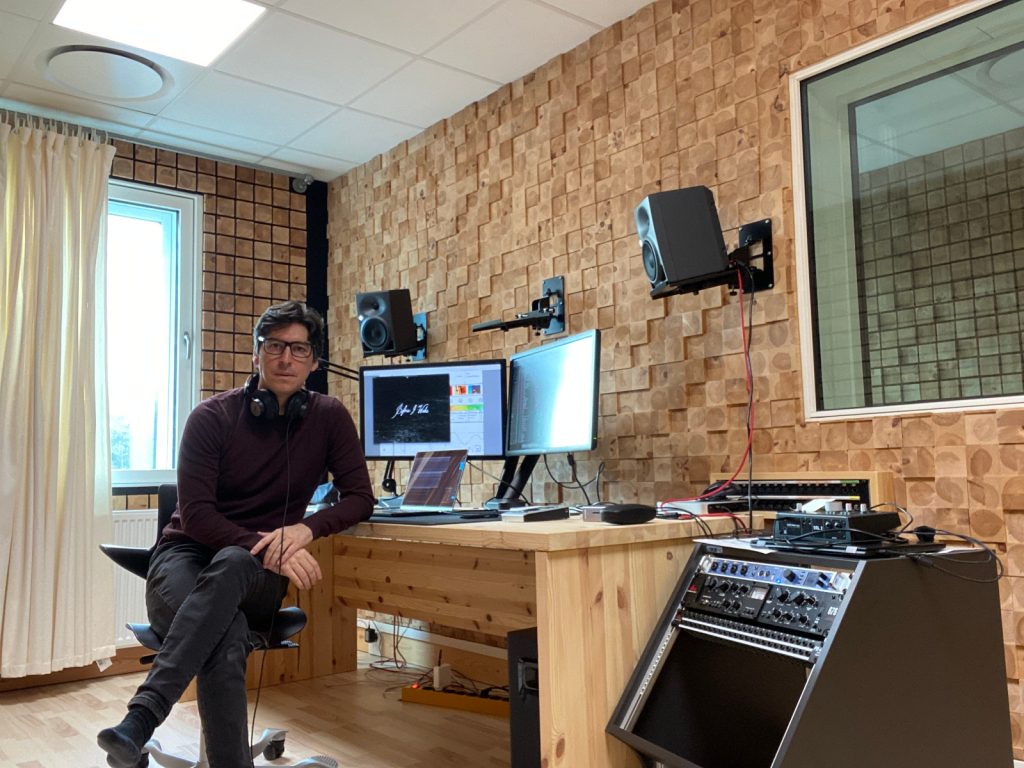
Born Carlos Francisco Villalba Greco, the composer recalls that music entered his life almost by obligation. “At home, we were all more or less forced to study guitar when we were very young. My older brother started playing the drums, and suddenly there was this musical environment. I connected with it very quickly.”
That early exposure led him to the piano, an instrument that would shape his artistic identity. “I started playing at six. I studied the organ (modern electronic keyboard) first with Maestro Santos Lima, then piano at the Mimby Conservatory in Paraguay. There, I trained in classical piano, music theory, and solfège, and later moved into jazz.”
His academic path eventually took him abroad, where he completed a master’s degree in film scoring in Barcelona. But long before that, Villalba had already discovered the direction his career would take.
Discovering film music in a country without an industry
Villalba’s entry into film music came at a time when Paraguay’s audiovisual industry was still in its infancy. “Back then, making music for films here felt almost impossible. There was practically no industry. But I had this dream of composing for cinema.”
That dream took its first concrete form in 2006, when he worked on Opaco, a short film directed by a friend of a friend. “That project changed everything. It was my first real connection with the audiovisual world. After that, things started to happen organically.”
From that point on, his career began to expand beyond national borders. He worked in Buenos Aires, received a scholarship to study in Mexico, completed postgraduate studies in Spain, and gradually built an international network. “I realised that if I wanted to do this professionally, I had to look beyond Paraguay. I have always had this urge to cross borders.”
That mindset led him to Berlinale Talents in 2024, where he was selected to participate in the prestigious programme. “Being there opened many doors. It was a space where collaboration happened very naturally.”
A poetic journey through sound and image
One of those collaborations led to Before I Wake, a short animated film directed by Swedish filmmaker Linnéa Haviland. The project brought Villalba to Denmark, where much of the sound design and music were developed.
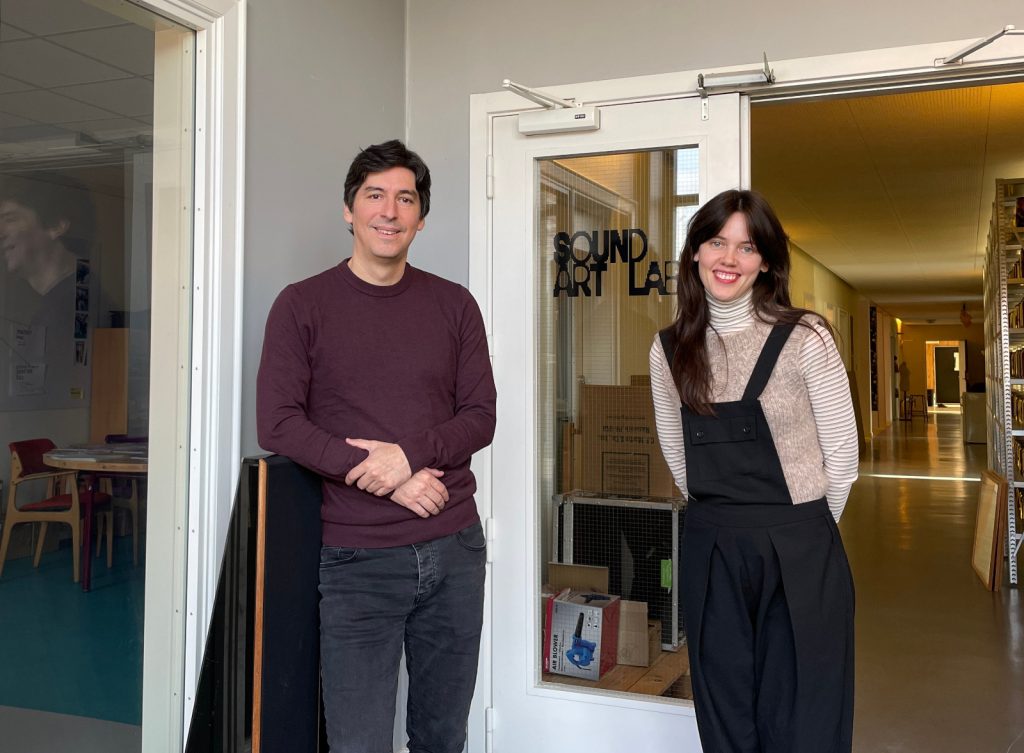
“It is a very intimate film. It is a poetic exploration of psychological abuse, told through images, sound, and music.”
The creative process was deeply immersive. “We spent ten days in Denmark recording sounds and developing musical ideas. It felt like an artistic retreat.” Later, the project continued remotely, with Villalba working from Madrid and the director from Stockholm, before they reunited for the final mix.
The film was recently screened for an international audience, and the response was deeply emotional. “What I hope is that people connect. That they feel empathy, that they enter that visual and sonic universe. If the music manages to touch something inside them, then the project has succeeded.”
Fran Villalba on creative abundance
At present, Villalba is involved in an unusually high number of projects. He is composing for Spanish short films Femenino y Masculino and Cuando éramos siempre (Female and Male and When We Were Always), working on the Paraguayan audiovisual installation Liminal, and completing Maleza, an Argentine short film now beginning its festival run.
He is also developing new projects such as Violeta Epifanía, directed by a Mexican filmmaker, and Silvestre, an animated feature film co-produced with Argentina.
“I actually enjoy working on several projects at the same time. It keeps my ears fresh. If you spend too long on one piece, you lose perspective. When you come back after a few days, you hear things differently.”
Each project, he says, demands a different musical language. “One might be horror, another more intimate, another nostalgic or experimental. That diversity is what I love about film music.”
Returning home
After many years abroad, Villalba has now decided to settle again in Paraguay. “I am very happy to be back. I want to share what I have learned.”
In addition to composing, he plans to organise workshops and training spaces focused on film music and sound design. “There is so much talent here. I would love to help create spaces where people can experiment and grow.”
Top 3 recommendations from Fran Villalba
When asked about his biggest influences, Villalba answers without hesitation. “Number one is Cinema Paradiso by Ennio Morricone. Then Interstellar by Hans Zimmer. And The Skin I Live In by Alberto Iglesias.”
For him, music is ultimately about emotion and connection. “If the music can move someone, even just a little, then it has done its job. That is what I am always looking for.”
As his work continues to travel across borders and screens, Fran Villalba continues with the same impulse he has since he was a child: the desire to tell stories through sound.